Tracked Mobile Stone Crusher Selection for Complex Terrain
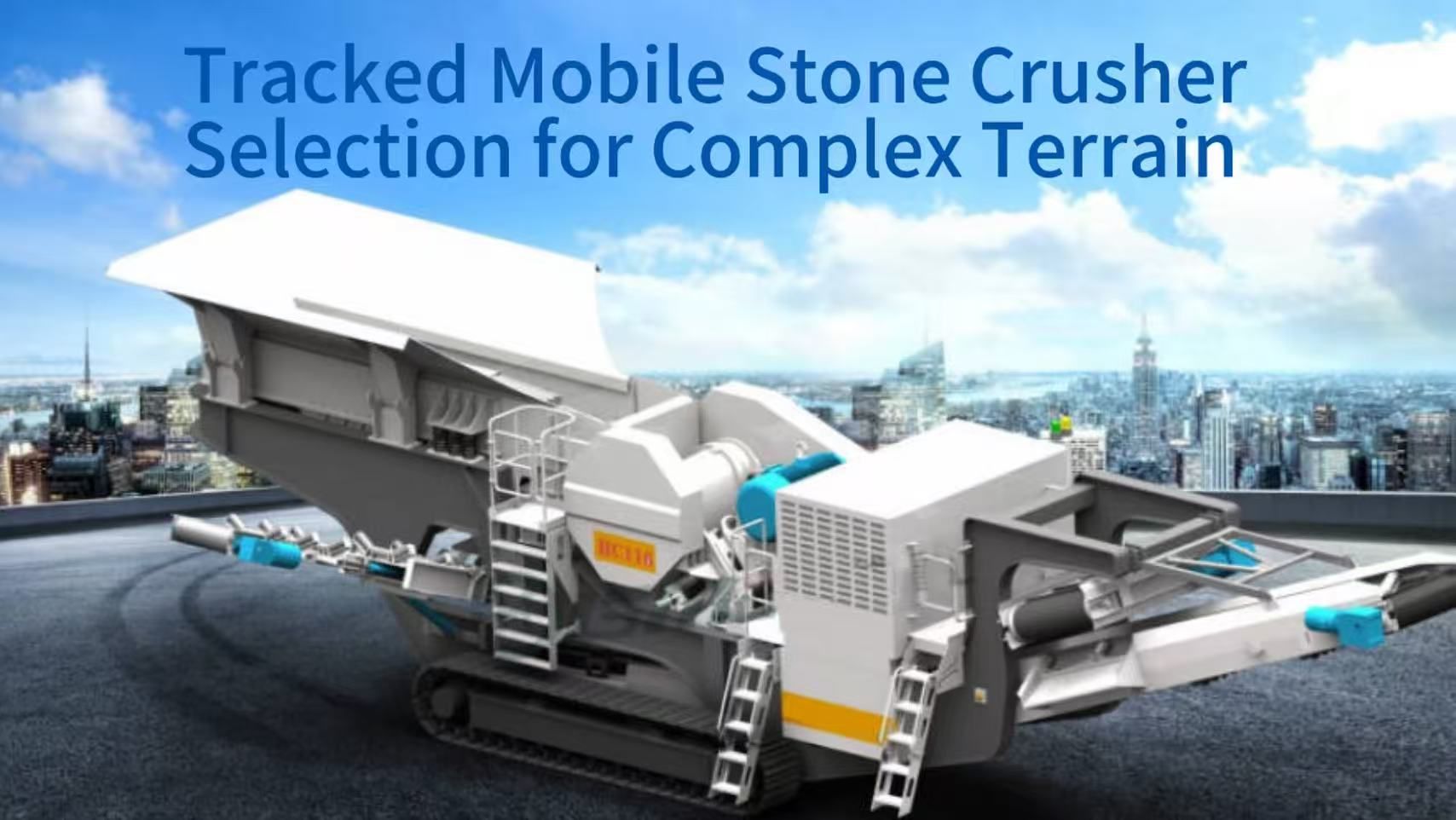
Tracked Mobile Crusher Selection Process
Operations in mountainous regions, muddy mining sites, and remote construction areas demand crushing equipment that moves easily across difficult ground. Traditional stationary crushers cannot follow material sources, while wheeled mobile units often struggle with soft surfaces or steep slopes. Tracked mobile stone crushers address these challenges through a combination of self‑propelled undercarriages and heavy‑duty crushing systems. This guide explains how to match equipment capabilities with terrain conditions, material characteristics, and production goals. It covers the main crusher types, their operating principles, and the key factors that influence successful deployment in demanding environments. MSW Technology brings over fifteen years of experience in manufacturing such equipment for global applications.
Understanding the Challenges of Crushing in Complex Terrain
Key Terrain Challenges & Limits
Complex terrain presents obstacles that affect every phase of crushing operations. Slopes beyond fifteen degrees require machines with low center of gravity and positive track traction. Soft ground conditions demand weight distribution that prevents sinking or becoming stuck. Remote locations without roads require equipment that transports itself to the work area and operates independently for extended periods. These terrain characteristics influence not only mobility but also crushing performance, as unstable machine positioning reduces throughput and increases wear on components. Maintaining consistent crushing capacity becomes significantly more difficult when the machine cannot maintain a stable position.
The relationship between terrain and crusher performance extends beyond simple mobility concerns. A machine that cannot maintain a level orientation will experience uneven feed distribution, leading to variable product quality and potential damage to the crushing chamber. Vibration from uneven surfaces can affect sensor readings and control system accuracy. Dust and moisture common in natural terrain accelerate wear on moving parts and electrical systems. Equipment selection must account for these combined effects rather than treating mobility and crushing as separate considerations.
Slope Gradients and Machine Stability
Operating on slopes requires careful attention to machine geometry and weight distribution. The angle of operation affects how forces transfer through the undercarriage to the ground, influencing both traction and stability. Machines designed for slope work typically incorporate wider track frames, lower chassis heights, and longer track contact lengths compared to equipment intended for level sites. These design features increase the stability envelope without sacrificing mobility. The design of the mobile crusher components directly influences how well the machine maintains stability on uneven ground.
Manufacturers specify maximum operating slopes for their equipment, but actual capability depends on surface conditions, load distribution, and operator technique. A machine rated for twenty degrees on firm ground may be limited to twelve degrees on loose material. The position of the crushing chamber relative to the track frame affects how weight shifts during operation. Machines with centrally mounted crushing units typically perform better on slopes than those with offset configurations, as the center of gravity remains more stable throughout the crushing cycle.
Ground Conditions and Undercarriage Performance
Soft ground conditions such as mud, sand, or disturbed soil create traction challenges that affect both mobility and stability. Tracked undercarriages distribute machine weight across larger surface areas than wheeled configurations, reducing ground pressure. The effectiveness of this weight distribution depends on track width, contact length, and tread design. Wider tracks lower ground pressure but may reduce maneuverability in tight spaces. Selecting the appropriate track configuration for anticipated ground conditions is essential for maintaining operational capability.
Ground bearing capacity varies significantly with moisture content and soil composition. A site that supports heavy equipment during dry conditions may become impassable after rain. Tracked machines with lower ground pressure values maintain mobility across a wider range of moisture conditions. Equipment selection should consider not only typical conditions but also the range of conditions expected during the project duration. Tracked mobile crusher configurations offer superior performance in variable ground conditions compared to wheeled alternatives.
Site Accessibility and Equipment Transport
Remote work locations without established roads require equipment that can navigate natural terrain without site preparation. The ability to cross small streams, climb over obstacles, and traverse narrow paths becomes essential when access roads cannot be constructed. Tracked configurations typically offer superior off‑road capability, though specific performance varies with track design and machine dimensions. Equipment that requires disassembly for transport between sites may be impractical for operations requiring frequent relocation.
Transport considerations extend beyond initial deployment to include movement between work areas within a site. A crushing operation that processes material from multiple locations requires equipment that can reposition efficiently without disrupting production. Machines with higher travel speeds and better maneuverability complete relocations faster, reducing non‑productive time. The trade‑off between travel capability and crushing capacity must be evaluated based on the specific operational requirements.
Environmental Factors Affecting Equipment Durability
Temperature extremes influence hydraulic system performance, engine operation, and component longevity. Cold environments require hydraulic fluids that maintain proper viscosity at low temperatures to prevent cavitation and component damage. Hot environments demand cooling systems with sufficient capacity to maintain operating temperatures during sustained heavy loads. Equipment intended for use across varied climates should incorporate design features that accommodate the full range of expected operating conditions without performance degradation.
Moisture and dust exposure significantly affect equipment reliability and service life. Sealed electrical enclosures prevent water intrusion that causes short circuits and control system failures. Dust suppression systems protect engine air intakes and hydraulic cooling packages from contamination. Corrosion protection for exposed surfaces, particularly on undercarriage components, extends service life in humid or coastal environments. Equipment selection should include evaluation of protective features relative to site conditions.
Core Operating Principles of Tracked Mobile Stone Crushers
Core Operating System Flow
Tracked mobile stone crushers combine a material reduction system with a self‑propelled tracked undercarriage. This integration allows the equipment to move independently across work sites while performing crushing operations. The tracked undercarriage provides the foundation for stability and mobility, while the crushing mechanism determines processing capabilities. Understanding how these systems work together helps operators select equipment suited to their specific applications. The crushing ratio achieved by these machines depends on the interaction between the crushing mechanism and the material being processed.
The engineering approach behind tracked mobile crushers prioritizes operational flexibility without sacrificing processing performance. Unlike stationary installations that require material transport to the equipment, tracked configurations allow the equipment to travel to material locations. This capability reduces handling requirements and enables processing where material generation occurs. The value of this flexibility increases with site complexity and material dispersal across the work area.
Tracked Undercarriage Operation and Ground Interaction
The tracked undercarriage consists of steel or rubber tracks mounted on a system of rollers, idlers, and drive sprockets. Hydraulic drive systems provide power to the tracks, enabling forward, reverse, and turning movements. The large surface area of the tracks distributes machine weight across the ground, reducing ground pressure compared to wheeled configurations. This weight distribution characteristic enables operation on softer surfaces that would not support similarly weighted wheeled equipment.
Ground interaction dynamics determine how effectively a tracked undercarriage performs in different terrain conditions. Track tension affects traction and wear characteristics. Proper tension allows the track to conform to ground irregularities while maintaining drive engagement. Automatic tensioning systems maintain optimal settings without operator intervention, reducing the risk of track derailment or excessive wear during operations on variable terrain. Regular inspection of undercarriage components ensures continued performance in demanding conditions.
Power Transmission and Drivetrain Configuration
Power for tracked mobile crushers typically comes from diesel engines that provide both propulsion and crushing power. The engine drives hydraulic pumps that supply fluid power to motors for both the tracks and the crushing mechanism. This hydraulic configuration allows independent control of travel and processing functions, enabling operators to adjust machine position while maintaining crushing operations. Power management systems balance demands between travel and processing to maintain performance under varying load conditions.
The drivetrain must accommodate the torque demands of both propulsion and crushing under variable terrain conditions. Climbing slopes requires additional tractive effort, while processing dense materials demands high crushing torque. Well‑designed power systems automatically adjust to these demands, maintaining adequate power to both functions without operator intervention. This integration simplifies operation while ensuring consistent performance across diverse conditions. Proper feed size management helps maintain consistent power demands during operation.
Crushing Mechanism Selection and Material Compatibility
Different crushing mechanisms suit different material types and processing requirements. Jaw crushers use compression between fixed and moving plates to fracture rock, making them suitable for primary reduction of hard, abrasive materials. Cone crushers use compression within a gyrating chamber for secondary and tertiary crushing, producing well‑shaped particles. Impact crushers use high‑speed rotors with blow bars to fracture material through impact, offering high reduction ratios for softer materials.
The choice of crushing mechanism affects both the materials that can be processed and the resulting particle characteristics. Hard, abrasive materials such as granite and basalt typically require compression‑based crushing to achieve reasonable wear life. Softer materials such as limestone process efficiently in impact crushers. Recycled concrete and asphalt may be processed in either configuration depending on product requirements. Understanding material characteristics guides appropriate mechanism selection.
Control Systems for Terrain Adaptation
Modern tracked mobile crushers incorporate control systems that simplify operation while providing necessary performance adjustments. Control interfaces typically include joysticks for track operation and touchscreen displays for monitoring and parameter adjustment. The integration of travel and processing controls allows operators to focus on material handling rather than managing separate systems. This integration reduces operator fatigue during extended work periods.
Advanced control features support terrain adaptation through automated adjustments to track speed, crusher settings, and other operating parameters. Slope sensing systems can adjust track power distribution to maintain traction when climbing or descending. Load monitoring systems adjust feed rates to prevent overloading the crushing chamber. These automated functions reduce the operator's workload while maintaining performance across variable operating conditions. The crushing chamber design influences how effectively these control systems maintain consistent output.
Types of Tracked Mobile Stone Crushers for Terrain Applications
Tracked Crusher Types & Applications
Tracked mobile crushers are available in several configurations optimized for different crushing stages and material types. Each configuration offers distinct advantages for specific applications. Jaw crushers excel at primary reduction of large, hard rock. Cone crushers provide efficient secondary and tertiary reduction with excellent particle shape. Impact crushers offer high reduction ratios for softer materials and recycled products. Understanding these differences helps operators select equipment suited to their specific processing requirements.
The tracked configuration of each crusher type adds mobility without compromising crushing performance. Tracked jaw crushers bring primary crushing capability to remote sites where material transport would otherwise be required. Tracked cone crushers enable staged crushing operations in locations without permanent infrastructure. Tracked impact crushers provide on‑site processing for construction and demolition materials. Each configuration serves distinct market segments with specific terrain and material requirements.
Tracked Jaw Crushers for Primary Reduction in Hard Rock
Tracked jaw crushers combine the compressive crushing action of jaw mechanisms with self‑propelled mobility. The jaw chamber features a fixed jaw plate and a moving jaw plate that create a wedge‑shaped crushing zone. Material entering the chamber is progressively compressed until it fractures and passes through the discharge opening. This mechanism efficiently processes hard, abrasive materials such as granite, basalt, and ore. The jaw crusher configuration is particularly well‑suited for primary reduction applications.
Terrain applications for tracked jaw crushers include remote mining operations, mountain road construction, and sites where large rock requires size reduction before handling. The robust construction withstands the high forces generated during compression crushing of hard materials. Tracked mobility allows these machines to follow extraction activities as mining faces advance or quarry operations expand. The combination of primary crushing capability and mobility reduces material handling requirements significantly compared to stationary installations.
Tracked Cone Crushers for Secondary and Tertiary Reduction
Tracked cone crushers utilize a gyrating mantle within a stationary concave to compress and fracture material. This configuration produces well‑shaped particles with consistent gradation suitable for high‑specification aggregate applications. Cone crushers typically process material that has already undergone primary reduction, producing final products for concrete, asphalt, or further processing. The cone crusher design provides efficient size reduction with good particle shape characteristics.
Terrain applications for tracked cone crushers include staged crushing operations in remote areas, mineral processing at isolated mine sites, and aggregate production where product quality requirements are stringent. The tracked configuration enables these secondary and tertiary units to position near primary crushers or directly at material sources. This arrangement reduces conveyor requirements and material handling costs compared to stationary plant configurations.
Tracked Impact Crushers for High Reduction Ratio Applications
Tracked impact crushers use high‑speed rotors equipped with blow bars to accelerate material against impact curtains or anvils. The impact mechanism fractures material through rapid energy transfer, achieving high reduction ratios in a single pass. Impact crushers process softer materials such as limestone effectively and excel at recycling applications where concrete and asphalt require size reduction. The impact crusher design offers flexibility for various feed materials and product specifications.
Terrain applications for tracked impact crushers include construction and demolition recycling sites, quarry operations processing limestone or similar materials, and locations where material characteristics vary over time. The high reduction ratio capability reduces the number of crushing stages required, simplifying plant configuration. Tracked mobility allows these machines to move between material stockpiles or follow demolition activities as they progress across a site.
Tracked Screens and Integrated Plants
Tracked screens complement crushing equipment by separating processed material into multiple size fractions. These units feature multiple deck configurations that classify material by size for further processing or final product stockpiling. Tracked screens operate independently or in combination with crushers to create complete processing trains. The ability to position screening equipment near crushing units reduces material handling requirements.
Integrated tracked plants combine crushing and screening functions on a single tracked chassis. These units reduce the equipment footprint and simplify operation by coordinating crusher and screen functions through a single control system. Terrain applications benefit from the reduced setup time and smaller operational area required compared to separate crusher and screen configurations. The integrated design is particularly valuable in applications with limited space or frequent relocation requirements.
Key Selection Factors for Tracked Mobile Stone Crushers in Complex Terrain
Key Selection Factors
Terrain Compatibility
Slope gradient & machine stability
Ground pressure & track design
Accessibility & transport
Environmental durability
Material Processing
Hardness & abrasiveness
Throughput requirement
Feed & discharge size
Particle shape & gradation
Reliability & Serviceability
Proven performance in harsh terrain
Easy maintenance access
Modular component design
Spare parts availability
Safety Features
Slope stability & anti-tip system
Emergency stop system
Operator protection structure
Good visibility & stable platform
Selecting a tracked mobile stone crusher requires evaluating multiple factors that affect operational success. Terrain characteristics, material properties, processing requirements, and operational constraints all influence the appropriate equipment choice. A systematic evaluation process helps identify equipment that matches site conditions while providing required processing capabilities. Proper selection ensures that the equipment performs reliably throughout the project duration.
The selection process should begin with clear definition of operating conditions and processing objectives. Site visits provide data on terrain features, access routes, and work area dimensions. Material sampling and testing determine hardness, abrasiveness, and moisture content. Throughput requirements establish necessary machine size and power ratings. Product specifications define the target gradation and particle shape requirements. This information forms the basis for comparing equipment options and selecting the appropriate configuration.
Terrain Compatibility Assessment
Evaluating terrain compatibility involves measuring slope gradients, assessing ground conditions, and identifying obstacles that affect equipment movement. Slope requirements influence track design and power requirements for safe operation. Ground bearing capacity determines necessary track configuration and weight distribution. Obstacle clearance requirements affect machine dimensions and undercarriage design. Each terrain characteristic corresponds to specific equipment specifications that must be matched for successful operation. The discharge size requirements may also influence machine positioning and material flow patterns.
Ground pressure calculations help determine whether a particular equipment configuration will operate effectively on soft surfaces. Lower ground pressure values indicate better performance on soft terrain, though the relationship between ground pressure and mobility is not linear. Track design, contact patch geometry, and surface characteristics all affect actual performance. Equipment selection should consider these factors rather than relying solely on ground pressure specifications.
Material Processing Requirements Analysis
Material characteristics determine the appropriate crushing mechanism and power requirements. Material density affects energy requirements for size reduction. Material composition influences wear expectations and crusher selection. Throughput requirements determine necessary machine size and power ratings. Processing objectives including target particle size affect crusher setting selection and screening requirements. Each of these factors guides equipment specification decisions.
Testing material samples in representative equipment provides valuable data for selection decisions. This testing can reveal unexpected processing challenges such as material that packs in the crushing chamber or produces excessive fines. Sample processing also provides data for estimating throughput rates and wear component life. When possible, selection processes should include material testing to validate equipment suitability for the intended application.
Operational Reliability and Serviceability
Equipment reliability becomes more critical in remote applications where service support is limited. Component quality, design margins, and manufacturing standards influence long‑term reliability. Equipment with proven performance in similar applications offers lower risk than unproven designs. Reliability data from equipment manufacturers and user references help quantify expected performance. MSW Technology has developed reliable equipment designs over fifteen years of manufacturing experience.
Serviceability features affect maintenance efficiency and downtime duration. Easy access to service points, modular component design, and clear maintenance procedures reduce the time required for routine service. Availability of replacement parts and service support in the operating region influences the feasibility of maintaining equipment in remote locations. Selection processes should evaluate serviceability alongside initial equipment costs.
Safety Features for Complex Terrain Operation
Operating heavy equipment on challenging terrain introduces safety considerations beyond those of level‑site operation. Slope stability systems help prevent tip‑over incidents by monitoring machine attitude and limiting operations outside safe parameters. Emergency stop systems should be accessible from multiple positions around the machine. Operator protection structures must meet applicable safety standards for the operating environment.
Site‑specific safety planning should address terrain‑related hazards including potential slide areas, overhead obstacles, and unstable ground conditions. Operator training should include terrain assessment skills and emergency procedures for the expected operating conditions. Equipment selection should support safe operation through features such as good visibility from the operator station, stable platform design, and predictable control response.
Operational Practices for Tracked Mobile Stone Crushers in Complex Terrain
Operational Best Practices
Proper operation techniques maximize equipment performance while minimizing wear and safety risks. Terrain conditions influence operating parameters including travel speed, feed rates, and positioning strategy. Operators who understand how terrain affects equipment behavior can adjust practices to maintain productivity while reducing stress on components. Developing these operational skills requires training and experience in the specific equipment type.
Operating practices should be documented in site‑specific procedures that address the terrain conditions present. These procedures should include pre‑operation inspection requirements, travel protocols for slopes and soft ground, feed material management techniques, and shutdown procedures. Regular review and updating of operating procedures ensures that practices remain appropriate as site conditions change.
Pre‑Operation Site Assessment and Planning
Before deploying equipment to a site, operators should conduct thorough assessment of terrain conditions and material locations. Mapping slope gradients, identifying soft areas, and locating obstacles helps plan equipment movement routes and operating positions. This assessment should also identify potential hazards such as overhead power lines, underground utilities, or unstable ground conditions that affect safe operation.
Operating position selection affects both safety and productivity. Positions should provide stable footing for the equipment, good access to material, and efficient material flow after processing. Level areas are preferred for crushing operations when available. When slopes are unavoidable, equipment should be positioned with the slope direction aligned for stability during operation. Multiple operating positions may be needed to process dispersed material efficiently.
Slope Operation Techniques and Limitations
Operating tracked crushers on slopes requires techniques that maintain stability while providing effective material processing. Traveling up and down slopes is typically safer than traversing across slopes, though specific limitations depend on equipment design. When operating on slopes, crushing activities should be oriented to maintain the machine's center of gravity within the stability envelope. Sudden movements or rapid changes in direction should be avoided.
Manufacturer slope ratings provide guidance for safe operation but do not guarantee performance under all conditions. Surface conditions, moisture content, and load distribution affect actual slope capability. Operators should approach slope limits conservatively, reducing operating angles when conditions deteriorate. Experience with specific equipment and site conditions helps develop appropriate safety margins for slope operations.
Material Handling on Variable Terrain
Feeding material to crushers operating on uneven terrain requires attention to equipment stability and material flow. Feed systems should be positioned to maintain balanced loads that do not shift the machine's center of gravity. Excavator or loader operators feeding the crusher should coordinate with the crusher operator to maintain consistent feed rates that match processing capacity. Sudden large loads can affect stability and should be avoided.
Processed material management affects site conditions and subsequent operations. Stockpile locations should be selected for good drainage and access for material removal. When operating on slopes, processed material should be directed downhill when possible to simplify material handling. Regular relocation of stockpile areas prevents excessive ground disturbance that can create soft conditions affecting equipment mobility.
Maintenance Considerations for Challenging Environments
Equipment operating in complex terrain experiences increased wear and contamination exposure compared to level‑site operations. Track systems require more frequent inspection due to increased stress from uneven surfaces. Undercarriage components accumulate mud and debris that can accelerate wear if not regularly cleaned. Hydraulic systems may draw more air and contaminants during operation on slopes, requiring more frequent fluid and filter changes.
Maintenance schedules should be adjusted based on operating conditions rather than following standard intervals. Machines operating in dusty environments need more frequent air filter service. Those working in wet conditions require additional attention to electrical connections and corrosion protection. Establishing maintenance practices appropriate to site conditions extends equipment life and reduces unexpected failures.
Economic Considerations for Tracked Mobile Stone Crusher Investment
Economic Benefits & ROI Structure
Investment in tracked mobile crushing equipment represents a significant capital commitment that should be evaluated against expected returns. The economic case for tracked equipment often centers on reduced material handling costs, increased operational flexibility, and the ability to capture value from on‑site processing. Understanding these economic factors helps operators select equipment that delivers appropriate returns for their applications.
Total cost of ownership calculations should include initial purchase price, financing costs, operating expenses, maintenance costs, and expected residual value. Operating expenses include fuel consumption, wear component replacement, labor, and support equipment costs. Maintenance costs vary significantly based on operating conditions and maintenance practices. Accurate cost estimation requires data from similar applications or careful analysis of expected operating conditions.
Productivity Impact of Terrain‑Adapted Equipment
Equipment that matches terrain conditions achieves higher productivity than machines that struggle with site characteristics. Tracked crushers designed for slopes maintain stable operation where wheeled machines would be unsafe. Those with effective traction operate in soft conditions that would immobilize other configurations. These productivity advantages translate to higher throughput per operating hour and reduced time spent on non‑productive activities such as repositioning or recovery.
Productivity comparisons between equipment options should consider realistic operating conditions rather than ideal scenarios. A machine that achieves high throughput on prepared sites may perform poorly in actual site conditions. Evaluating productivity under conditions representative of expected operation provides more meaningful comparison than manufacturer specifications alone. Site visits to similar applications can provide valuable productivity data.
Cost Structure Across Equipment Types
Different crusher configurations have distinct cost structures that affect operating economics. Jaw crushers typically have lower wear part costs per ton than impact crushers when processing hard, abrasive materials. Impact crushers may have lower energy consumption per ton for softer materials. Cone crushers offer intermediate cost characteristics with good wear life for secondary applications. Understanding these cost structure differences helps match equipment to applications based on operating cost priorities.
Track system design affects both initial cost and ongoing maintenance expenses. Rubber tracks offer lower ground pressure and reduced site disturbance but may wear faster on rocky terrain. Steel tracks provide durability on abrasive surfaces but can damage paved surfaces and create higher ground pressure. Track selection should balance operating requirements with cost considerations for the specific application.
Return on Investment Analysis for Mobile Equipment
Return on investment calculations for tracked mobile crushers should account for benefits beyond direct processing revenue. Reduced material transportation costs, elimination of haulage requirements, and creation of saleable products all contribute to economic returns. Equipment that enables new service offerings or expands geographic reach may generate incremental revenue not captured in simple throughput calculations. Comprehensive ROI analysis captures these broader economic impacts.
Investment timing considerations affect ROI outcomes. Equipment purchased to meet specific contract requirements should be evaluated against contract duration and renewal probability. Equipment intended for multiple applications should demonstrate flexibility to serve diverse markets. Lease or rental options may provide lower initial capital requirements while building experience with equipment types before purchase decisions. MSW Technology's fifteen years of manufacturing experience supports informed investment decisions across various applications.
Long‑Term Value and Equipment Durability
Equipment durability determines service life and long‑term value. Construction quality, material selection, and component sizing influence how well equipment withstands the stresses of mobile operation on challenging terrain. Equipment that maintains performance over extended periods delivers lower average annual costs than less durable alternatives, even when initial costs are higher. Evaluating durability requires examining design details and understanding manufacturer quality standards.
Residual value at equipment replacement time affects total cost of ownership. Equipment with good durability records, strong brand recognition, and broad market appeal typically commands higher resale values. Equipment designed for specific niche applications may have more limited resale markets, affecting residual value expectations. Selection processes should consider expected equipment life and potential resale value alongside initial purchase considerations.