The Definitive Guide to Mobile Crusher vs Fixed Crusher for Recycling: How to Choose the Right Equipment
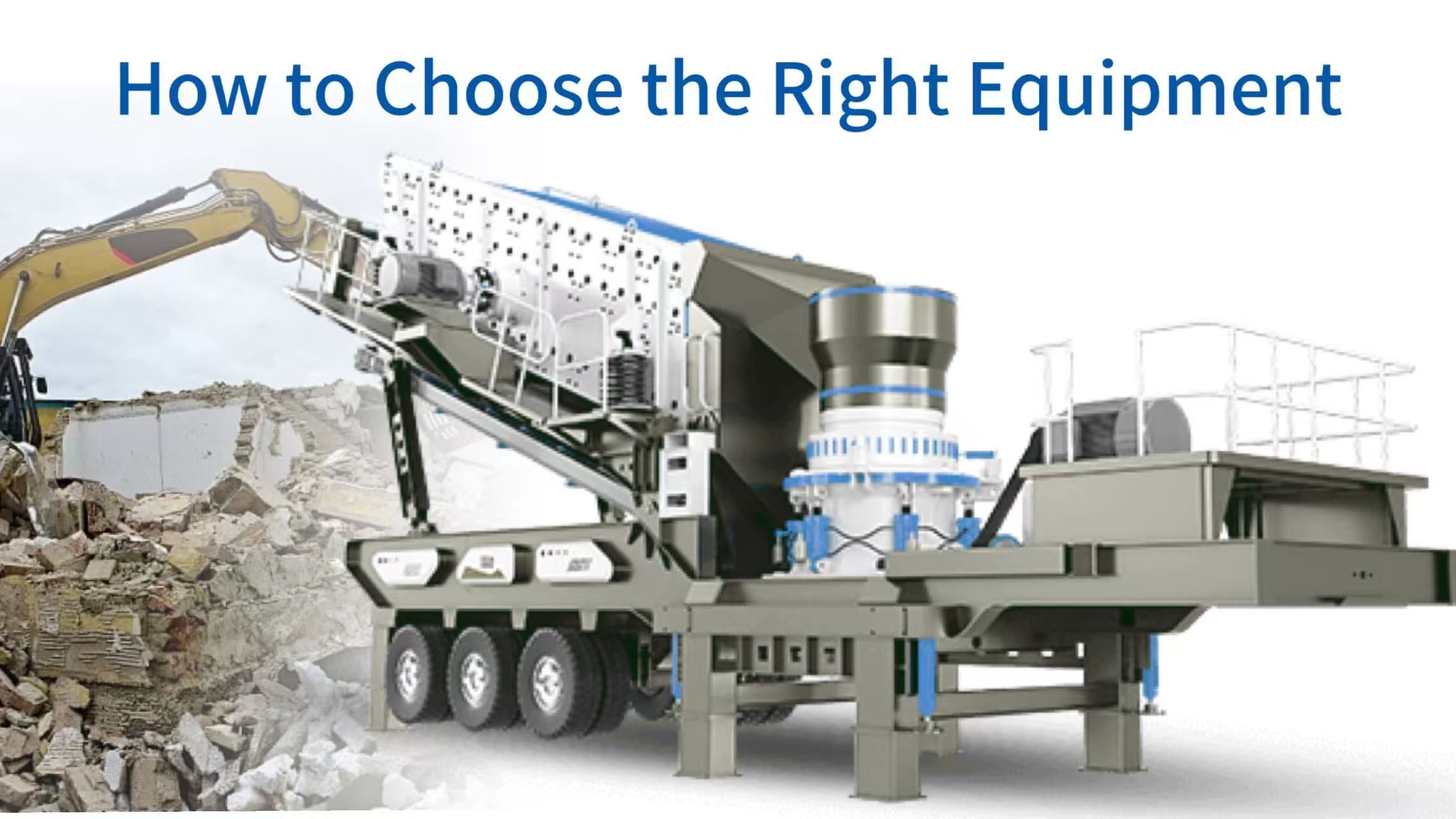
Mobile vs Fixed Crusher Selection Framework
Step 1
Define Timeline
Short-term (≤3yrs) / Long-term (≥5yrs)
Step 2
Calculate Throughput
≤400 tph / ≥500 tph
Step 3
Analyze Material
Type / Contamination / Product Specs
Step 4
Total Cost Analysis
Capital + Operational Costs
Step 5
Consult Experts
Manufacturer / Industry Specialists
In the modern recycling industry, transforming construction and demolition waste, concrete rubble, and asphalt into valuable recycled aggregates is a high-stakes operation. The cornerstone of this operation is the crushing system, and the primary decision faced by recyclers is whether to invest in a mobile crusher or a fixed crusher plant. This choice impacts not only the initial capital outlay but also operational flexibility, long-term profitability, and the ability to meet specific project demands. This comprehensive guide serves as a roadmap for navigating this critical decision. It delves into the fundamental differences between mobile and fixed crushing technologies, analyzes their respective advantages and disadvantages within the recycling context, and provides a structured framework for evaluation. By examining key factors such as material characteristics, desired throughput, site logistics, environmental regulations, and total cost of ownership, readers will gain the clarity needed to select the equipment that maximizes efficiency and return on investment for their specific recycling application.
Understanding the Core Definitions: Mobile vs. Fixed Crushing Plants
Crusher Plant Type Comparison
| Feature | Mobile Crusher | Fixed Crusher Plant | Portable Plant |
|---|---|---|---|
| Mobility | High (tracked/wheeled, rapid deployment) | None (permanent installation) | Medium (wheeled, occasional relocation) |
| Setup Time | Hours | Months (civil works required) | Days to weeks |
| Design Priority | Flexibility | Throughput / Efficiency | Balanced flexibility/robustness |
| Application Scope | Urban recycling, short-term projects | Central processing, long-term quarries | Multi-pit operations (5-10yr lifespan) |
Before diving into the selection process, it is essential to establish a clear understanding of what defines a mobile crusher and a fixed crusher plant. The fundamental distinction lies in their design philosophy regarding portability and site integration. These two categories represent different approaches to material processing, each with its own engineering priorities and operational contexts. A clear definition helps in appreciating how each type fits into various recycling scenarios.
What is a Mobile Crusher?
A mobile crusher is a crushing unit mounted on either a tracked or wheeled chassis, designed for easy transport and rapid deployment. Its primary characteristic is its ability to move around a site or be relocated to entirely different job sites with minimal effort. Tracked crushers are self-propelled and offer superior mobility on rough terrain, making them ideal for demolition sites or mining applications. Wheeled crushers are often designed to be towed by a truck, offering a balance between mobility and size, suitable for road transportation between projects. Key features include an on-board power source, which can be diesel or hybrid, the ability to begin crushing shortly after arrival, and integrated systems like magnets and screens for material separation. The design philosophy prioritizes flexibility and quick setup over absolute production volume.
What is a Fixed Crusher Plant?
A fixed crusher plant, sometimes referred to as a stationary plant, is a permanent installation designed for long-term, high-volume production at a single location. These plants are engineered as integrated systems, often requiring significant civil engineering work, such as concrete foundations and structural steel supports. Fixed plants are modular and can be designed to include multiple crushing and screening stages to produce a wide range of aggregate specifications. Their key features include the highest potential throughput, integration with permanent conveyors for automated material movement, and centralized control systems for optimized material flow. The investment in a fixed plant is justified by decades of continuous operation at the same site.
The Concept of Portable Plants
It is also important to distinguish portable plants, which often sit somewhere in the middle of the mobility spectrum. Portable crushers are typically wheeled and designed to be moved, but they may require more setup time than a mobile tracked unit and function more like a moveable fixed plant. Their operational role is often in multi-pit operations where the plant is moved occasionally, perhaps once every few years, to a new location closer to the material source. This hybrid solution offers some flexibility while retaining the structural robustness of stationary designs.
How Mobility Defines the Application Scope
The mobility of the plant directly dictates the types of projects it can handle. Mobile applications are ideal for urban recycling centers, large-scale demolition projects where material is generated on-site, and temporary projects with a defined lifespan. Fixed applications are best suited for central processing facilities, large quarries that will be operational for decades, and industrial sites with a consistent, long-term supply of material. Understanding this fundamental scope helps recyclers align their equipment choice with their business model. Different mobile crusher configurations are available to match specific project requirements.
Head-to-Head Comparison: Operational Advantages and Disadvantages
Choosing the right system requires a balanced look at the inherent trade-offs between mobility and stability. Each type offers distinct operational benefits and presents unique challenges that must be weighed against the specific goals of a recycling operation. This comparison provides a clear picture of what each technology brings to the job site and where its limitations lie.
The Key Advantages of Mobile Crushers in Recycling
Mobile crushers offer unparalleled flexibility, which is often the deciding factor for contractors and recyclers working on diverse projects. They enable on-site processing, allowing operations to crush on-site and use the material on-site, dramatically reducing transportation costs and carbon emissions associated with hauling raw material to a central plant. A mobile plant can arrive on a site and be operational within hours, allowing for quick response to project needs. They require no concrete foundations or extensive site preparation, lowering the initial barriers to entry for new projects. This rapid deployment capability is a significant competitive advantage in dynamic urban environments.
The Key Advantages of Fixed Crushers for High-Volume Production
When the goal is maximizing throughput and minimizing cost per ton over the long haul, fixed plants are the industry standard. Stationary crushers are built to handle larger volumes of material consistently, often achieving significantly higher tons per hour than mobile counterparts. Due to their robust construction and optimized design for continuous operation, fixed plants typically have lower wear part consumption and better energy efficiency. They allow for seamless integration of multiple processing stages, extensive conveyor systems, and centralized dust and noise control measures. This integration creates a smooth material flow from feed to finished product.
Acknowledging the Limitations of Mobile Crushers
Despite their flexibility, mobile units have limitations that must be considered. They generally cannot match the raw tonnage output of a large fixed plant, with typical capacities ranging from 100 to 400 tons per hour depending on the model. Inconsistent operation and the stresses of frequent relocation can lead to higher operating costs per ton compared to a stable, fixed operation. The vibration and stresses from moving and working on uneven ground can lead to more frequent maintenance requirements. These factors make mobile plants less economical for very high-volume, long-term projects. Understanding crushing capacity limits is crucial when evaluating options.
Acknowledging the Limitations of Fixed Crushers
The permanence of a fixed plant is its greatest strength and its most significant weakness. The cost of engineering, permits, foundations, and structural steel makes the upfront investment substantial, often several times higher than a comparable mobile setup. Once installed, a fixed plant cannot be moved. If the material source is depleted or the business model changes, the plant cannot be easily repurposed for a new site. The plants location necessitates hauling all raw material to it, increasing logistics costs and on-site traffic. This dependency on haulage can erode some of the operational savings if the material source is distant.
Summary of Strengths in Relation to Business Goals
In essence, the choice comes down to whether the primary driver is flexibility or throughput. Mobile crushers excel in scenarios involving diverse, short-term projects or when the goal is to eliminate material hauling costs from demolition or construction sites. Fixed crushers are the logical choice when the operator owns the material source, such as a large, long-term demolition processing center or a quarry, and the priority is maximizing production volume and minimizing long-term operational costs. Aligning the equipment strength with the core business objective ensures a sound investment. Companies like MSW Technology, with over 15 years of industry experience, provide expert guidance in this alignment.
Critical Factor 1: Evaluating Material and Application
Material Type vs Crusher Technology
Hard/Abrasive Materials
Granite, Basalt, High-silica
Cone/Jaw Crushers
Compression-based
Best Fit
Fixed Plant (Better stability)
Soft Materials
Concrete, Asphalt, Brick
Impact Crushers
High reduction ratio
Best Fit
Mobile Plant (Flexibility)
The type of material intended for processing is the first and most critical technical consideration. Different crushers are designed to handle different material characteristics effectively. Evaluating the physical properties of the feed material ensures that the selected crusher can process it efficiently without excessive wear or downtime. This analysis forms the foundation of the equipment selection process.
Material Hardness and Abrasiveness
Hard, abrasive rocks like granite and basalt require different crushing technology than softer materials like concrete and brick. For high-silica content materials, cone crushers or jaw crushers are typically required. These machines use compression to break the material, which is effective against hard rock. These are available in both mobile and fixed formats, but the weight and support structure of a fixed plant can better handle the immense forces involved in crushing very hard materials. Recycled concrete and asphalt are generally less abrasive and are ideal for impact crushers, which are very common in mobile recycling applications for their high reduction ratio and cubical product shape. Impact crushers are often preferred for their efficiency with recycled materials.
Material Size and Consistency
The feed size and its consistency will dictate the crusher's inlet size and power requirements. Mobile crushers on demolition sites must handle highly variable feed, from fine debris to large chunks of concrete with rebar. The mobility allows operators to move away from problematic material or adjust the plant layout to accommodate variations. A fixed plant benefits from a controlled feed stream, which allows for optimized crusher settings and consistent production of high-quality aggregates. When the feed is consistent, the crusher can be tuned to operate at peak efficiency, reducing wear and energy consumption.
Desired End-Product Specifications
The target output influences the entire plant design. Whether the goal is a coarse sub-base material like road base or a fine, clean aggregate, the equipment must be capable of producing that specification. Mobile plants often feature return belts and recirculating systems to create closed circuits, ensuring a consistent, high-quality end product even in a compact design. Fixed plants can incorporate multiple screening decks and crushing stages, such as a jaw for primary crushing and a cone for secondary crushing, to produce a wider range of precisely sized products simultaneously. This multi-stage capability is essential for producing multiple products from the same feed.
Contamination Levels in Recycled Materials
Recycled materials often contain contaminants like steel rebar, soil, or wood. Modern mobile crushers are frequently equipped with integrated overband magnets to remove ferrous metals, and pre-screens can remove fine, dirty material before it enters the crusher, protecting wear parts from damage. Fixed plants can incorporate more extensive and sophisticated sorting systems, including air separators and multiple magnets, to produce a very clean final product. The level of contamination dictates the amount of pre-processing and cleaning required. C&D waste recycling solutions often require robust contamination handling features.
Critical Factor 2: Assessing Project Scale, Duration, and Site Logistics
Project Characteristics vs Crusher Type
<td style="padding: 10px; border: 1px solid #dee2e6; medium (Planned sites)| Project Type | Duration | Space Constraints | Recommended Crusher |
|---|---|---|---|
| Urban Demolition | Months (Short-term) | High (Tight urban spaces) | Mobile |
| Central Processing | Decades (Long-term) | Low (Dedicated facility) | Fixed |
| Multi-site Quarry | 5-10 Years | Portable |
The physical realities of an operation, including how long the operation will be at a site and the layout of that site, are powerful determinants in the mobile versus fixed decision. These logistical factors often override purely technical considerations because they directly impact the feasibility and cost of setting up and running the plant. A thorough assessment of the site ensures that the chosen equipment can be deployed effectively.
Short-Term Projects and Urban Demolition
For projects lasting months rather than years, mobility is non-negotiable. In urban environments or on demolition sites where space is at a premium and the job has a clear endpoint, the ability to bring a crusher in, process the material, and move it out is essential. A company processing concrete from a demolished factory can use a mobile impact crusher to produce road-base material on-site, eliminating thousands of truck journeys. This on-site capability reduces traffic congestion and lowers the carbon footprint of the project. The short project duration simply does not justify the investment in a permanent structure.
Long-Term, High-Volume Central Processing Facilities
If an operator runs a permanent recycling center receiving material from multiple sources, a fixed plant is the logical choice. A central facility with a guaranteed inflow of material for decades justifies the investment in a fixed plant. The goal here is to maximize efficiency and throughput, processing thousands of tons per day. Even some operations that use mobile crushers in a semi-fixed role for long-term production demonstrate that the equipment must be robust enough for continuous use. The stability of a fixed plant allows for optimized material flow and minimal downtime.
Analyzing Site Topography and Space Constraints
The physical space available dictates the type of plant that can be deployed. Tracked mobile crushers are highly maneuverable and can work in tight spaces where setting up a fixed plant is impossible. They can navigate around obstacles and operate in confined urban sites. Fixed plants require significant real estate, not just for the equipment itself, but for stockpiles, haul roads, and maintenance access. The topography of the site, including slopes and ground stability, must also be considered when planning a fixed installation. The components of mobile crushers are designed for compactness and maneuverability.
The Impact of Material Source Location
The location of the material source is a key logistical factor. If the material source moves over time, the plant may need to as well. In quarrying, as the working face advances, the haul distance to a fixed crusher increases. A mobile or portable crusher can be moved closer to the face to reduce these hauling costs, significantly improving operational efficiency. In a recycling yard where all material is delivered, the source is fixed, making a fixed plant the most efficient receiver. The material comes to the plant, so the plant does not need to go to the material.
Critical Factor 3: Financial Analysis and Total Cost of Ownership
Cost Composition Comparison
Mobile Crusher (Total Cost)
Initial: 30%
Fuel: 30%
Maintenance: 25%
Labor: 15%
Fixed Crusher (Total Cost)
Initial: 60%
Power: 15%
Maintenance: 10%
Labor: 15%
The purchase price of the equipment is just the beginning of the financial story. A thorough financial analysis must consider the total cost of ownership over the equipment's life, including energy, maintenance, and labor. Understanding these long-term costs is essential for making a decision that is economically sound over the duration of the project. A focus solely on initial capital outlay can lead to higher expenses later.
Initial Capital Investment
Mobile crushers generally have a lower initial capital cost because they require less site work. The equipment itself is the primary cost. Prices for mobile impact crushers can range significantly based on size and features, but they avoid the high cost of civil engineering. The capital expenditure for a fixed plant is much higher due to foundations, structures, and longer installation times. This upfront investment can be a barrier for smaller companies or short-term projects. However, for large corporations with long-term plans, it is a necessary investment for large-scale production.
Operational Expenditure: Fuel, Wear, and Maintenance
Operational costs are where the long-term differences between mobile and fixed plants become apparent. Mobile units often rely on diesel power, which can be more expensive than grid electricity used by fixed plants. However, many mobile crushers now offer hybrid or electric options to reduce fuel costs and emissions. Inconsistent operation due to movement and varying feed can lead to higher wear costs per ton in mobile units. Fixed plants, with their stable operation, can optimize crushing chambers for longer wear life, reducing the frequency of parts replacement. Jaw crushers in fixed plants are often configured for maximum durability.
Labor and Automation Costs
Automation is changing the labor equation for both plant types. Modern mobile crushers feature user-friendly PLC controls that simplify operation and reduce the need for highly skilled operators. These controls automate many routine tasks and provide diagnostic information. Advanced automation in fixed plants can manage entire multi-stage processes, optimizing throughput and predicting maintenance needs, which reduces manual oversight and prevents costly downtime. The reduction in labor costs through automation can significantly improve the profitability of both mobile and fixed operations. The level of automation should match the available skill set of the operating team.
Calculating Return on Investment and Payback Period
The payback period is a function of revenue generated versus total costs. For a mobile crusher, the payback often comes from savings on material transport and the ability to take on new, diverse projects. The lower initial outlay can mean a faster payback if the machine is kept busy on multiple contracts. For a fixed plant, while the payback period may be longer due to higher capital expenditure, the lower long-term operational costs and higher production capacity lead to superior profitability over the plant's multi-decade lifespan. The calculation must factor in the expected utilization rate and the market value of the finished products.
Navigating Environmental Regulations and Site Permitting
Environmental Compliance Comparison
| Compliance Aspect | Mobile Crusher | Fixed Crusher Plant |
|---|---|---|
| Dust Control | Integrated water sprays (compact design) | Permanent baghouses (high efficiency) |
| Noise Control | Enclosed designs (basic attenuation) | Acoustic enclosures (advanced attenuation) |
| Emissions | Tier 4 Final/Stage V diesel (hybrid/electric options) | Grid power (zero on-site emissions) |
| Permitting | Minimal hurdles (temporary projects) | Extensive EIA, public hearings (permanent) |
Increasingly stringent environmental regulations play a major role in equipment selection, particularly in urban or ecologically sensitive areas. Compliance with these regulations is not optional and can significantly impact both the cost and feasibility of a project. Understanding the regulatory landscape helps in choosing equipment that can operate legally and harmoniously with the surrounding community.
Dust and Noise Control Requirements
Controlling dust and noise is critical for compliance and community relations. Modern mobile crushers feature enclosed designs and integrated dust suppression systems, such as water sprays, to meet urban site requirements. These systems are designed to be effective within the compact footprint of a mobile unit. Fixed plants have the advantage of being able to incorporate massive, permanent dust collection systems, such as baghouses, and acoustic enclosures that are impractical on a mobile unit. These permanent installations can achieve very low emission levels, making them suitable for operation near residential areas. Cone crushers in fixed plants are often housed in sound-attenuated buildings.
Emissions Regulations and Power Options
Diesel emissions are a major concern for regulatory bodies. Mobile crushers must comply with stringent engine emissions standards, such as Tier 4 Final in the United States or Stage V in Europe. Hybrid and all-electric mobile units are gaining popularity to meet zero-emission job site goals and to reduce fuel costs. Fixed plants connected to the grid have a significant environmental advantage, producing zero on-site emissions and allowing for the use of renewable energy sources. This grid connection simplifies compliance with local air quality regulations and reduces the carbon footprint of the operation.
The Permitting Process for Fixed versus Mobile Operations
Obtaining permits can be a lengthy and uncertain process. In many jurisdictions, mobile plants operating on temporary projects face fewer regulatory hurdles than a new permanent facility, allowing work to begin much faster. This expedited process is a major advantage for contractors who need to mobilize quickly. Permitting a fixed plant is a major undertaking that requires extensive environmental impact studies, public hearings, and compliance with zoning laws. This process can add years and significant cost to a project, and there is always a risk that the permit will be denied. The ease of permitting for mobile plants is a key consideration for time-sensitive projects.
Aligning Equipment Choice with Sustainability Goals
The choice of equipment also reflects a company's broader sustainability strategy. By processing materials on-site, mobile crushers drastically reduce transportation-related emissions, a key goal for green building certifications. This on-site processing supports circular economy principles by reusing material exactly where it is generated. Fixed plants can be designed for circular economy principles, producing high-grade recycled aggregates that replace virgin materials, and can be optimized for minimal energy and water consumption. Both approaches contribute to sustainability, but in different ways. MSW Technology, with its 15 years of experience, assists clients in selecting equipment that meets both production and sustainability targets.
Case Studies and Real-World Applications in Recycling
Real-World Application Case Studies
| Case Study | Crusher Type | Throughput | Key Outcome |
|---|---|---|---|
| On-Site Concrete Processing | Mobile Impact Crusher | 100 TPH | Flexible processing of mixed rubble for road base |
| High-Volume Aggregate Production | Fixed Multi-stage Plant | 1,000,000 Tons/Year | Economies of scale for metropolitan supply |
| Multi-Site Quarry Operation | Portable Wheeled Plant | Variable (per site) | Capital optimization across 5-10yr lifespan sites |
Examining how industry peers apply these technologies provides valuable context for the decision-making process. Real-world applications demonstrate the theoretical advantages and disadvantages in practice, offering insights that are not available from specifications alone. These examples show how different operations have successfully matched equipment to their specific missions.
On-Site Concrete Processing with Mobile Crushers
A demolition contractor operating a recycling center utilizes a mobile impact crusher to process mixed rubble and asphalt. The challenge is efficiently processing a mix of materials to produce high-quality road base and reclaimed asphalt pavement for use in their own asphalt plant. The mobile crusher's versatility allows it to switch between applications with ease. Its automatic gap adjustment and low fuel consumption make it highly efficient, producing up to 100 tons per hour. The key takeaway is that mobile crushers can serve as the centerpiece of a high-efficiency, permanent recycling yard, combining flexibility with impressive production capabilities. This application blurs the line between mobile and fixed operations, showing that mobile gear can be used in a semi-fixed role effectively. Mobile impact crushers are particularly well-suited for this type of varied feed.
High-Volume Aggregate Production in a Fixed Plant
A large-scale central recycling facility processes one million tons per year of construction and demolition waste. The challenge is achieving economies of scale to produce a consistent, high-quality range of aggregate products for the local construction market. The solution is a multi-stage fixed crushing and screening plant with a primary jaw crusher, secondary cone crusher, and a tertiary vertical shaft impactor for sand production. Conveyors move material between stages and to massive stockpiles. The key takeaway is that only a fixed plant can deliver the massive throughput and multi-product capability required to serve a large metropolitan area from a central location. This level of production supports large infrastructure projects and reduces reliance on virgin materials.
Using Portable Plants in a Multi-Site Quarry Operation
An aggregate producer operates several small quarries, each with a lifespan of five to ten years. The challenge is avoiding the massive investment of building separate fixed plants at each site, while still achieving efficient production. The solution is a wheeled portable crushing and screening plant that can be moved between sites during off-season periods. While requiring some site work, it avoids the full cost of a permanent foundation. The key takeaway is that portable plants offer a middle-ground solution, providing the benefits of a stationary-style setup with the strategic advantage of occasional relocation. This approach optimizes capital expenditure across multiple sites.
Lessons Learned from Diverse Applications
These examples underscore a central theme: the most successful operations are those where the equipment's capabilities are perfectly aligned with the business mission. A mobile crusher shines in its adaptability and project-specific focus, allowing operators to respond quickly to new opportunities. A fixed plant dominates in scenarios demanding pure, relentless production volume over many decades. Understanding the mission, whether it is flexibility or volume, is the first and most important step in the selection process. The experiences of others in the industry provide a valuable roadmap for avoiding common pitfalls.
Making the Final Decision: A Step-by-Step Selection Framework
To synthesize all the information presented, a structured framework can guide the operator to the optimal choice. This step-by-step approach ensures that no critical factor is overlooked and that the decision is based on a comprehensive analysis of the operation's needs. Following this framework leads to a confident and well-justified equipment selection.
Step 1: Define the Operational Timeline
The first step is to be honest about the expected duration of the operation at its primary location. If the operation is expected to last less than two to three years, or if it involves multiple short-term projects, the operator should strongly consider a mobile crusher. The ability to move the equipment between sites is a clear advantage. If the operation is expected to last more than five to ten years at a single owned site, a fixed plant becomes the most viable option due to its long-term economic benefits. The timeline sets the fundamental context for the entire decision.
Step 2: Calculate Throughput Requirements
The next step is to determine the average and peak tons-per-hour requirements realistically. Many high-capacity mobile crushers can handle throughput rates under 400 tons per hour effectively. For operations requiring over 500 tons per hour, especially with plans for growth, the robust design and higher capacity of a fixed plant are typically necessary. Throughput requirements directly influence the size and type of crusher needed. Accurate calculations prevent under-sizing or over-investing in capacity that will not be used. Aggregate processing solutions are designed around specific throughput targets.
Step 3: Analyze Material and Product Needs
The operator must be specific about what material is being crushed and what products need to be made. Variable, contaminated material from diverse sources benefits from the flexibility of a mobile crusher, with its ability to move and adapt to changing feed conditions. A single, consistent material source and the need for three or more simultaneous products likely require the multi-stage capabilities of a fixed plant. The complexity of the desired product line is a key determinant. Producing multiple spec products often demands multiple crushing and screening stages.
Step 4: Perform a Total Cost of Ownership Analysis
It is essential to go beyond the purchase price and calculate estimated fuel, power, maintenance, and labor costs for both options over a five to ten year period. This analysis must include the cost of material transport, comparing the expense of hauling to a fixed plant against the savings of processing on-site with a mobile plant. This comprehensive view reveals the true economic picture. Often, a machine with a lower purchase price can have higher operating costs that make it more expensive over its lifetime. The total cost of ownership is the ultimate financial metric.
Step 5: Consult with Equipment Experts
The final step is to engage with reputable manufacturers or distributors, providing them with the data gathered in the previous steps. Their experience in configuring plants for applications similar to the operator's is invaluable. It is important to ask about parts availability, local support, and the proven performance of their equipment in recycling applications. Companies with deep industry knowledge, such as MSW Technology with its 15 years of experience, can offer insights that prevent costly mistakes. This collaborative step ensures that the final choice is not just theoretical, but practical and well-supported by real-world expertise.