On-Site Material Recycling: Mobile Crushers in Construction Applications
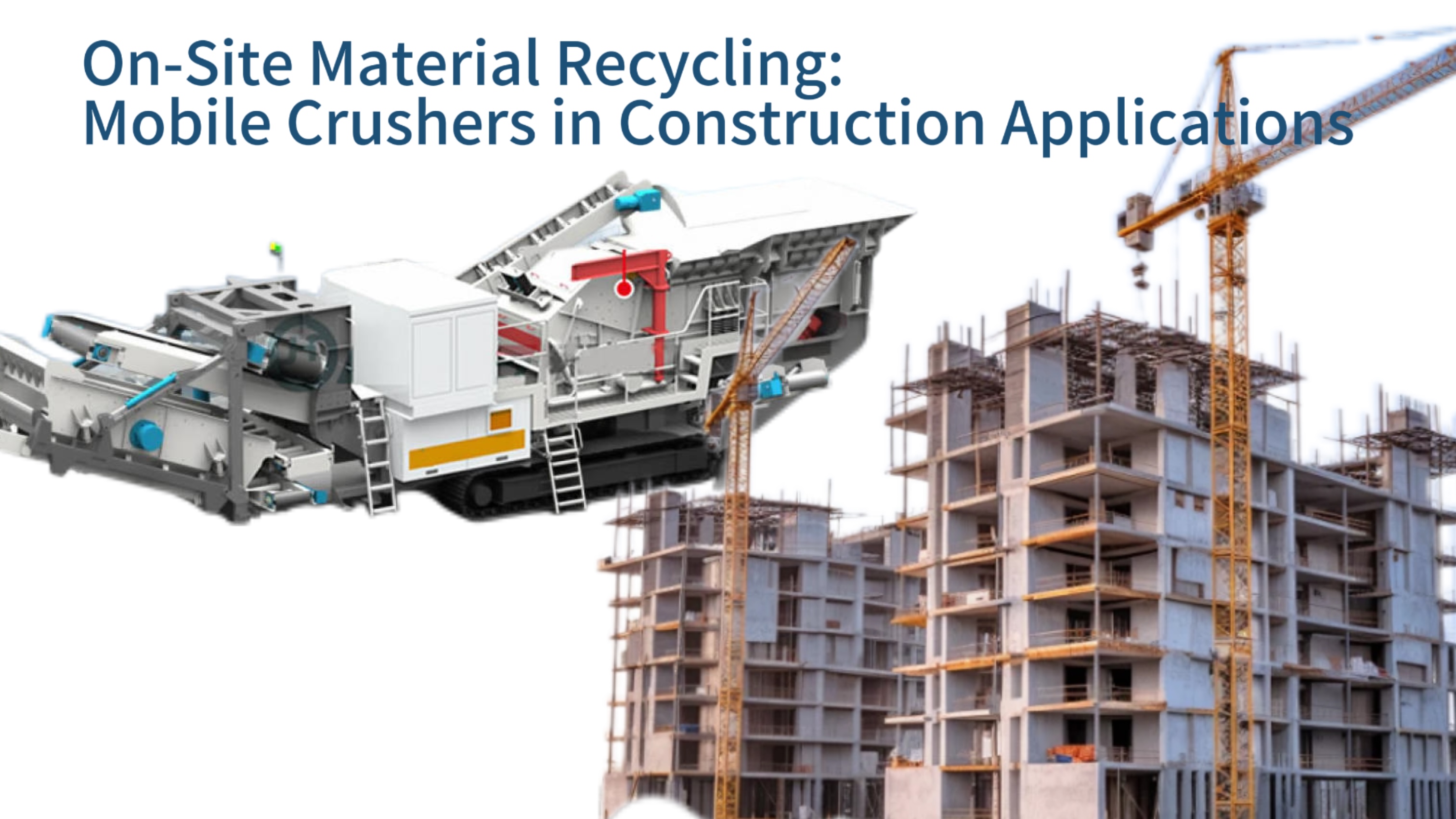
On-Site Material Recycling with Mobile Crushers - Core Process
Construction/Demolition Waste
(Concrete/Asphalt/Brick)
On-Site Mobile Crushing
(Jaw/Impact/Cone)
Screening & Purification
(Steel Removal)
Reusable Aggregates
(Backfill/Road Base/Paving)
Key Benefits: Zero transportation costs, 1.5-2.5 year payback period, reduced carbon emissions, compliance with green building standards
The global construction industry generates enormous quantities of waste concrete, brick, and asphalt each year. The conventional approach to handling this material involves hauling it to distant processing facilities. This method incurs high transportation expenses and contributes to carbon emissions and urban traffic congestion. At the same time, green building standards and circular economy regulations are pushing contractors to improve resource efficiency and reduce landfill disposal. Mobile crushers offer a transformative solution. These units integrate crushing and screening systems onto a movable chassis, enabling waste to be processed directly at the job site. This article explores the application advantages of mobile crushers in construction, covering equipment principles, type selection, core functions, and economic benefits. It aims to help contractors optimize on-site material management, lower project costs, and meet environmental compliance requirements.
Basic Definition and Core Operating Principles of Mobile Crushers
Mobile Crusher Types - Operating Principles & Applications
| Crusher Type | Operating Principle | Primary Application | Output Size |
|---|---|---|---|
| Mobile Jaw Crusher | Compressive force (fixed + moving jaw) | Primary crushing of large concrete chunks | 80-150 mm |
| Mobile Impact Crusher | High-speed blow bar impact | Mixed waste (concrete/asphalt/brick) | 0-40 mm (cubical particles) |
| Mobile Cone Crusher | Layered compression (mantle + concave) | Secondary fine crushing for premium aggregates | 20-40 mm (low flakiness) |
Mobile Crusher Core Components & Power Flow
Diesel Engine
(Power Source)
Hydraulic Pump/
Generator
Crusher Drive +
Track Motors
Crushing +
Conveying
A mobile crusher is a fully integrated processing unit mounted on a tracked or wheeled chassis. It combines feeding, crushing, power generation, and conveying components into one or more compact modules. Unlike stationary plants that require concrete foundations and extensive installation, a mobile crusher can be deployed rapidly upon arrival at a construction site. This mobility is essential for projects that involve frequent relocation. The design philosophy centers on transforming a fixed production line into a movable unit that advances with the work.
What is a Mobile Crusher? Definition and Basic Components
A mobile crusher typically consists of a feeding hopper, a crusher unit, a power pack, discharge conveyors, and a control system, all mounted on a tracked or wheeled undercarriage. The feeding system ensures a steady flow of material into the crusher. The crusher itself reduces the material to the desired size. The power unit, usually a diesel engine or a diesel-electric hybrid, supplies energy to all systems. Conveyors transport the crushed product away from the machine. The control system allows the operator to manage the entire process from a remote or cabin-mounted interface. Because all components are integrated, the machine requires no external support structures and can begin working within minutes of reaching the site.
Core Power Transmission and Drive Principles
The power source of a mobile crusher is most often a diesel engine, though hybrid and fully electric models are becoming more common. The engine drives a hydraulic pump or a generator that supplies power to the crusher's main drive, the track motors, and auxiliary equipment. Modern machines incorporate intelligent power management systems that adjust engine speed and fuel consumption based on the actual load. This ensures efficient operation even in remote locations where grid power is unavailable. The hydraulic drive system provides smooth and precise control over the tracks, enabling the machine to move across rough terrain. The key components of a mobile crusher are engineered for durability and ease of maintenance.
Working Principles of Different Crusher Types (Jaw, Impact, Cone)
Mobile crushers can be equipped with various types of crushing units to suit different materials and applications. A mobile jaw crusher uses compressive force between a fixed jaw and a moving jaw to break hard and abrasive rocks. It is ideal for primary crushing of large concrete chunks or natural stone. A mobile impact crusher employs high-speed blow bars to strike and throw material against impact plates. This action is effective for recycling concrete and asphalt because it produces cubical particles and helps liberate reinforcing steel. A mobile cone crusher works by squeezing material between an eccentrically rotating mantle and a concave liner. This layered compression crushing is suited for secondary and tertiary reduction, producing well-graded aggregates with low flakiness. Contractors select the appropriate type based on the material hardness, feed size, and required output specifications. Different mobile crusher configurations address specific project needs.
Intelligent Control Systems and One-Touch Operation
Modern mobile crushers are equipped with programmable logic controllers and user-friendly touchscreen interfaces. Operators can start, stop, and monitor the entire production process with a single button. The control system continuously tracks critical parameters such as crusher load, bearing temperatures, hydraulic pressure, and engine performance. It automatically adjusts the feed rate to maintain optimal crushing conditions. If an anomaly is detected, the system generates a diagnostic alert, allowing the operator to address the issue before it leads to downtime. This level of automation reduces the need for constant manual intervention and ensures consistent product quality. Many units also offer remote monitoring capabilities, enabling fleet managers to oversee multiple machines from a central office.
Mobility and Rapid Deployment Mechanisms
The tracked undercarriage of a self-propelled mobile crusher provides independent movement across the job site. Hydraulic motors drive the tracks, giving the machine the ability to turn in place and climb moderate slopes. Wheeled models are designed to be towed by a truck between sites, offering faster road travel. Hydraulic legs and folding conveyors allow the unit to be set up or packed up in less than thirty minutes. This rapid deployment minimizes non-productive time and allows the crusher to stay close to the demolition face, reducing material hauling distances within the site.
Main Types of Mobile Crushers and Their Application Scenarios in Construction Recycling
Mobile Crusher Application Scenarios
Mobile Jaw Crusher
Concrete demolition sites
Primary crushing of large concrete chunks (up to 1m diameter)
Handles hard/abrasive materials
Output: 80-150mm fragments
Mobile Impact Crusher
Mixed C&D waste processing
Concrete/asphalt recycling (cubical particles)
Integrated overband magnet for steel removal
Versatile for brick/tile waste
Mobile Cone Crusher
Secondary fine crushing
High-quality aggregates (strict gradation)
Low flakiness index product
Paired with mobile screen (closed circuit)
Mobile Screening Station
Separates into 0-5mm / 5-20mm / 20-40mm fractions
Recirculates oversize material to crusher
Stockpiles different aggregate sizes
Complete on-site processing center
The selection of the right mobile crusher type is critical for achieving efficient on-site recycling. Each type has distinct characteristics that make it suitable for specific materials and project phases. Understanding these differences helps contractors match the machine to the task.
Mobile Jaw Crushers in Concrete Demolition Sites
Demolition of large structures produces massive concrete pieces that often contain reinforcing steel. A mobile jaw crusher is well suited for this primary reduction task. Its large feed opening can accept blocks up to one meter in diameter. The powerful crushing stroke breaks the concrete into fragments of 80 to 150 millimeters. The machine can be positioned close to the excavator, minimizing the distance heavy material needs to be moved. As the demolition progresses, the tracked crusher can follow the work face, maintaining efficiency throughout the project. Mobile jaw crushers are the workhorses of demolition recycling.
Mobile Impact Crushers in Mixed Waste Processing
Construction and demolition waste often includes a mixture of concrete, brick, tile, and asphalt. A mobile impact crusher excels in this environment. Its high reduction ratio quickly breaks down the material, and the impact action produces a cubical product suitable for base courses. The blow bars and impact plates are designed to withstand the abrasion of mixed feed. An integrated overband magnet continuously removes rebar and other ferrous metals, cleaning the final product. The machine's ability to process softer materials like brick without clogging makes it a versatile choice for contractors handling varied waste streams. Mobile impact crushers are often the centerpiece of a recycling operation.
Mobile Cone Crushers in Secondary Fine Crushing
When a project requires high-quality aggregates with strict gradation specifications, a mobile cone crusher can be employed after primary crushing. The cone crusher uses compression to create a dense, well-shaped product with minimal flaky particles. It is commonly used to produce materials like 20 to 40 millimeter crushed stone for road bases. Mobile cone crushers are often paired with a mobile screen to form a closed circuit. Oversized material is returned to the cone for further reduction, ensuring that the final product meets precise specifications. This combination allows contractors to produce premium recycled aggregates on site.
The Synergy Between Mobile Screening Stations and Crushers
A crusher alone cannot produce multiple sized products. A mobile screening station is an essential companion. It receives the crushed material and separates it into fractions such as 0 to 5 millimeter sand, 5 to 20 millimeter gravel, and 20 to 40 millimeter stone. Each fraction is stockpiled separately for different uses. The screen can also recirculate oversize material back to the crusher. Like the crusher, the screening plant is fully mobile and can be repositioned as needed. Together, they form a complete on-site processing center capable of delivering a range of specification aggregates.
Core Functional Advantages of Mobile Crushers on Construction Recycling Sites
Mobile Crusher Core Advantages - Quantifiable Benefits
| Advantage | Quantifiable Benefit | Impact |
|---|---|---|
| Transportation Cost Savings | Tens of currency/ton | Direct cost reduction |
| Setup Time | < 1 hour | Minimal downtime |
| CO2 Emissions Reduction | Eliminates haul truck emissions | Environmental compliance |
| Material Reuse Rate | Near 100% (clean aggregate) | Closed-loop supply chain |
Compared to fixed crushing plants, mobile crushers offer distinct operational benefits that translate directly into cost savings and project efficiency. These advantages are rooted in their ability to move and adapt to the dynamic nature of construction sites.
Complete Elimination of Transportation Costs: Zero-Distance Processing
Hauling demolished concrete to a remote processing plant is expensive. Truck fuel, driver time, and road wear all add to project costs. By processing material on site, a mobile crusher eliminates these expenses entirely. For a typical demolition project with an average haul distance of thirty kilometers, the savings can amount to tens of units of currency per ton. In large projects, these savings can quickly exceed the cost of the equipment. The material is reduced exactly where it is generated, and the resulting aggregate is immediately available for reuse.
Rapid Site Transfer and Multi-Site Coordination
Many construction companies handle multiple small to medium-sized projects simultaneously. A mobile crusher can be moved from one completed site to the next with minimal delay. Tracked models drive onto a low-loader trailer for highway transport, while wheeled units can be towed directly. Once on the new site, setup takes less than an hour. This rapid transfer capability maximizes machine utilization and allows a single crusher to serve several projects over its lifetime. The ability to respond quickly to new contracts gives contractors a competitive edge.
Immediate Production of Usable Aggregates: Shortening Supply Chains
On-site recycling creates a closed-loop material flow. The crushed aggregate can be used immediately for backfilling, road base construction, or site paving. There is no waiting for deliveries from external quarries. This is particularly valuable in time-sensitive urban infrastructure projects where delays are costly. The contractor gains control over the material supply and can adjust production to match the project's pace. Shortening the supply chain also reduces the risk of material shortages and price fluctuations.
Reducing Environmental Load: Meeting Green Construction Requirements
Mobile crushers contribute to sustainability in multiple ways. Eliminating haul trucks cuts fuel consumption and greenhouse gas emissions. On-site recycling reduces the demand for virgin aggregate, preserving natural resources. The machines themselves are designed with environmental controls. Water spray systems suppress dust at the feed point and discharge. Enclosures and sound-dampening materials lower noise levels, making the equipment suitable for use near residential areas. By reducing landfill disposal, contractors can earn credits toward green building certifications such as LEED.
Intelligent Monitoring and Remote Management Capabilities
Modern mobile crushers are equipped with telematics systems that transmit operational data to a cloud-based platform. Fleet managers can monitor the location, operating hours, production rates, fuel consumption, and wear status of each machine from any internet-connected device. This data enables better planning of maintenance, timely ordering of spare parts, and optimization of machine deployment across multiple sites. Digital records also support accurate cost accounting and help identify areas for efficiency improvement. Tracked mobile crushers with advanced telematics offer unprecedented visibility into field operations.
Typical Types of Construction Waste Processed by Mobile Crushers
Construction Waste Types Processed by Mobile Crushers
Waste Concrete
Processed by jaw/impact crushers
Steel removal via overband magnet
Reuse as base material/low-strength concrete
Reclaimed Asphalt (RAP)
Impact crusher (low rotor speed)
Preserves aggregate integrity
Reuse in new asphalt mixes
Brick & Masonry Waste
Impact crusher (adjustable settings)
Fine aggregate output
Reuse as fill/landscaping material
Mixed Demolition Waste
Air classifiers for light contaminants
Processed as fill material
High landfill diversion rate
The composition of construction and demolition waste varies widely. Mobile crushers, through the selection of the appropriate crusher type and parameter adjustments, can effectively process the most common materials encountered on site.
Waste Concrete and Reinforced Concrete
Concrete is the predominant material in demolition waste. It consists of natural aggregates bound by cement paste and often contains embedded reinforcing steel. Both jaw and impact crushers can process concrete effectively. The key challenge is removing the steel reinforcement. Mobile crushers are equipped with powerful overband magnets installed above the discharge conveyor. These magnets lift steel bars and wire mesh out of the aggregate stream and deposit them into a collection bin. The cleaned concrete aggregate can be used for low-strength concrete or as a base material. C&D waste recycling relies heavily on efficient steel removal.
Reclaimed Asphalt Pavement (RAP)
Road rehabilitation projects generate large quantities of milled or broken asphalt. This material contains valuable aggregate and aged bitumen. A mobile impact crusher is well suited for processing RAP. By operating at a lower rotor speed, the crusher breaks the pavement along the bond lines between aggregate particles without excessively pulverizing the asphalt. This preserves the aggregate integrity and produces a material that can be directly incorporated into new asphalt mixes. On-site processing of RAP reduces the need for virgin bitumen and lowers the cost of road maintenance.
Brick and Masonry Waste
Demolition of older buildings often yields large amounts of clay brick, concrete block, and mortar. These materials are softer than concrete but can contain contaminants. An impact crusher effectively reduces brick to a fine aggregate suitable for fill or for manufacturing recycled bricks. The machine's adjustable impact settings allow the operator to control the final particle size. Brick aggregate has good drainage properties and can be used in landscape applications. Processing brick on site avoids the cost of landfilling this bulky material.
Mixed Demolition Waste (Containing Wood, Plastic, etc.)
Real-world demolition debris often includes small amounts of wood, plastic, and paper mixed with the mineral materials. Mobile crushers can handle this heterogeneity, but additional steps are needed to produce a clean aggregate. Some units incorporate air classifiers that use a stream of air to separate light contaminants from the crushed material. Others are designed to work with downstream water baths or picking stations. While the presence of organics reduces the quality of the aggregate for structural uses, the processed material can still be employed as fill in less demanding applications, diverting a significant portion of the waste stream from landfill.
Detailed Explanation of Key Technologies: From Chassis to Crushing Chamber
Mobile Crusher Key Technologies & Components
Tracked Chassis
Hydraulic track drive
Maneuver on rough terrain
Remote control operation
Wear-Resistant Components
High-manganese steel parts
Reversible blow bars
Optimized jaw plate profiles
Iron Removal System
Overband magnetic separators
Continuous steel recovery
Protects downstream equipment
Hydraulic Folding Conveyors
Quick setup/teardown
Road-legal transport dimensions
Automatic locking system
Intelligent Load Regulation
Motor current monitoring
Automatic feed rate adjustment
Plugging prevention system
The reliability and performance of a mobile crusher stem from the engineering of its individual systems. Understanding these technologies helps operators appreciate the machine's capabilities and maintain it properly.
Tracked Chassis and Travel Drive Technology
The tracked undercarriage is built to withstand the harsh conditions of demolition sites. Hydraulic motors provide independent drive to each track, allowing the machine to pivot and maneuver in tight spaces. The track frames are constructed from high-strength steel, and the track pads are made of wear-resistant materials. Some models feature remote control operation, enabling the operator to move the crusher while remaining in the excavator cab. This keeps the machine optimally positioned relative to the material source. The robust components of a mobile crusher ensure long service life under heavy use.
Wear-Resistant Structures and Material Selection for Crushers
The crushing chamber experiences intense abrasion and impact. Wear parts such as jaw plates, blow bars, and impact liners are manufactured from high-manganese steel or high-chromium iron. These alloys work-harden under impact, becoming more durable as they wear. Many impact crushers feature reversible blow bars; when one edge wears down, the bar can be flipped to expose a fresh edge, doubling its service life. Jaw crusher plates have optimized tooth profiles that maximize crushing efficiency while minimizing the risk of slabby material. Proper material selection extends the interval between changeouts and reduces operating costs.
Efficient Iron Removal Systems and Material Purification
To recover steel and protect downstream equipment, mobile crushers are fitted with magnetic separators. A powerful permanent or electromagnet is suspended over the main discharge conveyor. As the crushed material passes underneath, ferrous metals are attracted to the magnet and are continuously removed by a rotating belt that carries them to a side discharge chute. This system recovers valuable scrap metal and prevents damage to screens and conveyors. Some advanced configurations also include eddy current separators for non-ferrous metals, though these are less common on mobile units.
Hydraulic Folding Conveyors and Quick Setup
Transport dimensions are critical for road mobility. Mobile crushers use hydraulically folding conveyors to reduce width and height during travel. Upon arrival at the site, the operator activates the hydraulics, and the conveyors unfold and lock into place automatically. Hydraulic legs stabilize the machine during operation. This system eliminates the need for cranes or heavy lifting equipment during setup, allowing a single person to prepare the crusher for work in minutes. The same hydraulics facilitate quick teardown when the job is finished.
Intelligent Load Regulation and Plugging Prevention Systems
Sensors monitor the crusher's motor current, which reflects the load on the machine. The control system uses this data to regulate the feed rate. If the current rises too high, indicating an overload, the feed is reduced to prevent stalling. If the current drops, the feed is increased to maximize throughput. Additional sensors detect blockages in the crushing chamber or at the discharge point. When a blockage is detected, the system can automatically reverse the conveyor or adjust the crusher settings to clear the jam. This automation reduces the need for manual intervention and keeps production running smoothly. Understanding feed size limits helps in avoiding plugging issues.
Core Value and Return on Investment for Construction Companies Using Mobile Crushers
Mobile Crusher Financial Metrics (200,000 Tons/Year Operation)
| Financial Indicator | Value (Currency Units) | Notes |
|---|---|---|
| Equipment Investment (200-300 TPH) | 300,000 - 500,000 | Mobile impact crusher |
| Annual Cost Savings | > 200,000 | Hauling + disposal + material purchase |
| Savings for 100,000 Tons Waste | Millions of currency units | Mid-sized project |
| Payback Period | 1.5 - 2.5 Years | Faster with high utilization |
The decision to invest in a mobile crusher is justified by its tangible impact on project economics and business competitiveness. The benefits extend beyond immediate cost savings to strategic advantages in the marketplace.
Substantial Reduction in Waste Disposal and Material Procurement Costs
In the traditional linear model, contractors pay to haul waste away and then pay again to buy new aggregate. A mobile crusher transforms waste into a resource. The cost of producing recycled aggregate on site is a fraction of the combined disposal and purchase costs. For a mid-sized project generating 100,000 tons of concrete waste, the annual savings can reach millions of units of currency. This direct improvement to the bottom line makes the investment highly attractive. Companies like MSW Technology, with fifteen years of industry experience, offer proven solutions to maximize these savings.
Enhanced Project Bidding Competitiveness and Green Image
Owners of large infrastructure projects, particularly government agencies, increasingly require contractors to demonstrate sustainable practices. A company that owns and operates mobile crushers can highlight its ability to recycle waste on site, reducing the project's environmental footprint. This capability can be a deciding factor in competitive bids. Furthermore, using recycled materials contributes to achieving green building certifications, which are valued by many clients. The equipment thus becomes a marketing asset that differentiates the contractor from competitors.
Flexibility to Handle Various Project Types: Increasing Equipment Utilization
A single mobile crusher can serve a wide range of contracts. It might process concrete from a city subway excavation one month and crush asphalt from a rural road project the next. By equipping the machine with interchangeable crusher units, a contractor can tackle materials of varying hardness. Some companies even offer on-site crushing services to other contractors, generating additional revenue streams. High equipment utilization shortens the payback period and improves overall return on investment.
Payback Period Analysis
The financial payback period for a mobile crusher depends on the project volume and local material prices. As a general benchmark, a mobile impact crusher with a capacity of 200 to 300 tons per hour represents an investment of 300,000 to 500,000 units of currency. In a project handling 200,000 tons of waste annually, the combined savings from avoided hauling and aggregate purchases can exceed 200,000 units per year. Factoring in potential revenue from selling recycled products, the payback period typically ranges from 1.5 to 2.5 years. For companies that keep the machine fully employed across multiple projects, the return can be even faster.
Enhancing Overall Efficiency Through Digital Management
The data generated by modern mobile crushers can be integrated into a company's enterprise resource planning system. Managers gain real-time visibility into production rates, fuel consumption, and wear part usage across all sites. This information enables proactive maintenance scheduling, reduces unplanned downtime, and optimizes inventory levels for spare parts. Digital tools also support accurate job costing and help identify which projects are most profitable. By leveraging these insights, contractors can continuously refine their operations and extend the life of their equipment. Aggregate processing solutions from experienced providers incorporate these digital capabilities for maximum efficiency.