A Professional Guide to Selecting Fine Crushing Roll Crushers Based on Mineral Liberation Requirements
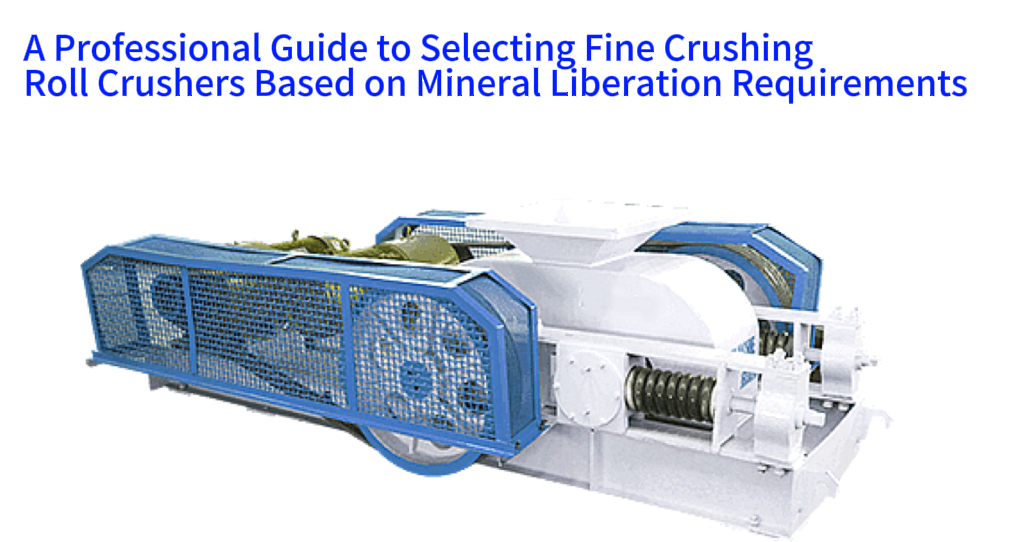
This article provides a systematic framework for engineers and plant managers in mineral processing. It focuses on the critical task of selecting a fine crushing roll crusher where the primary objective is achieving optimal mineral liberation. The degree to which valuable minerals are freed from the waste rock matrix fundamentally dictates the efficiency of downstream separation processes such as flotation or magnetic separation, directly impacting overall plant economics. We will explore the concept of liberation, examine the operational principles that make roll crushers uniquely suited for controlled fine crushing, and detail a comprehensive selection methodology that progresses from ore characterization through equipment specification, system integration, and final validation.
Fundamentals of Mineral Liberation as a Crushing Objective
| Key Concept | Definition | Impact on Processing |
|---|---|---|
| Liberation Size | Specific particle dimension where target mineral is sufficiently freed from gangue | Defines target product size distribution; primary benchmark for crusher selection |
| Overgrinding | Excessive comminution creating ultra-fine slimes beyond liberation requirement | Increased energy consumption; reduced reagent efficiency; metal losses in separation |
| Particle Shape | Geometric characteristics of crushed particles (cubic, flaky, elongated) | Affects gravity separation/dewatering; cubic particles improve downstream performance |
| Controlled Fracture | Breakage along mineral grain boundaries rather than random fragmentation | Maximizes liberation efficiency; minimizes fines generation |
The process of mineral liberation involves the physical separation of valuable mineral grains from the host gangue through comminution. Effective fine crushing aims not merely at size reduction but at inducing fractures along grain boundaries. Achieving a high liberation degree requires generating a product with a specific particle size distribution where a maximum number of particles consist of a single mineral. Inadequate liberation leaves valuable minerals locked in composite particles, reducing recovery. Conversely, excessive overgrinding creates ultra-fine slimes that are difficult to process, increases energy consumption, and can lead to metal losses. Therefore, the selection of fine crushing equipment must prioritize controlled fracture mechanics over raw breaking force.
The Relationship Between Liberation Size and Target Product Specification
Different ore types possess distinct mineralogical textures and grain sizes. The concept of a "liberation size" refers to the specific particle dimension at which a target mineral achieves sufficient freedom from its gangue. Determining this parameter through mineralogical analysis is the first technical step. The fine crusher must then be capable of reliably producing an output where a significant proportion of the mass falls within a defined range below this critical size. This target particle size distribution becomes the central performance benchmark for equipment selection, moving beyond a simple maximum feed and discharge size specification.
Detrimental Effects of Overgrinding and Its Mitigation
Overgrinding during the fine crushing stage has several negative consequences. It consumes energy disproportionately for diminishing returns in liberation. The generation of excessive fines, or slimes, increases slurry viscosity in wet processes, hampers reagent efficiency in flotation, and complicates solid-liquid separation. Equipment that applies gradual compressive force, such as a roll crusher, promotes interparticle breakage and minimizes the violent impact events that typically generate unwanted fines. This controlled breakage mode is a key advantage in liberation-oriented circuits.
Particle Shape Implications for Downstream Processing
The shape of crushed particles influences subsequent beneficiation. Flaky or elongated particles behave differently in sorting streams compared to more cubical grains. Crushing mechanisms that produce a higher proportion of cubic particles can improve performance in gravity separation or dewatering stages. The compression-dominant action of a roll crusher often yields a product with fewer internal micro-cracks and a more uniform shape compared to impact crushers, contributing positively to the overall process flow.
Quantitative Assessment of Liberation for Equipment Specification
Modern tools like automated mineralogy scanners provide quantitative data on liberation efficiency. This data translates directly into technical requirements for the crushing stage. When specifying a fine crushing roll crusher, engineers can use this information to model required throughput at a target product size, estimate potential circulating loads, and predict the crusher's role within a broader liberation recovery curve. This moves the selection process from qualitative judgment to a data-driven engineering decision.
Operational Advantages of Roll Crushers for Controlled Liberation
Interparticle Breakage Mechanism
Packed bed between rolls enables particles to crush against each other, promoting selective breakage at mineral hardness interfaces and enhancing liberation efficiency.
Precise Gap Adjustment Control
Mechanically/hydraulically adjustable roll gap directly controls maximum product size, enabling real-time adjustments to maintain consistent liberation performance.
Low Speed & High Torque Operation
Lower circumferential speeds reduce particle acceleration, minimizing dust/fines generation while delivering high torque for efficient, energy-saving comminution.
Moist/Clay-Bearing Ore Handling
Open geometry and positive roll pulling action reduce plugging; specialized surface patterns improve feed grip for consistent processing of sticky materials.
Roll crushers function on the principle of two counter-rotating cylinders, or rolls, between which ore is subjected primarily to compressive and shear stresses. This mechanism offers distinct benefits for achieving targeted liberation when compared to jaw, cone, or impact crushers. The relatively slow application of high pressure facilitates a more predictable fracture propagation, which is conducive to breaking ore along its natural weaknesses and mineral boundaries rather than creating random fragmentation.
Interparticle Breakage and Selective Liberation Mechanisms
The confined space between the rolls creates a packed bed of material, enabling a phenomenon known as interparticle or bed breakage. In this regime, particles are crushed not only against the roll surfaces but also against each other. This multi-point loading promotes a more efficient transfer of energy and can enhance selective breakage at the interfaces between minerals of different hardness, a direct contributor to improved liberation. The design of the roll crusher is inherently supportive of this beneficial crushing mode.
Precise Control Over Product Size via Gap Adjustment
A defining feature of roll crushers is the adjustable gap between the rolls. This gap directly determines the maximum size of the crusher product. Through mechanical screws or hydraulic cylinders, operators can modify this setting with precision, allowing for real-time adjustments to maintain a consistent product size distribution despite variations in feed characteristics. This level of control is paramount for stabilizing the liberation performance of the downstream milling and separation circuit.
Benefits of Low Rotational Speed and High Torque Delivery
Operating at lower circumferential speeds than impact crushers, roll crushers deliver high rotational torque. This operational profile reduces the violent acceleration of particles, minimizing dust generation and the unwanted ejection of fine material. The result is a more contained process with lower energy loss per ton of processed material, aligning with the efficiency goals of modern mineral processing plants. The direct mechanical drive common in these systems contributes to robust and reliable power transmission.
Handling Characteristics for Moist or Clay-Bearing Ores
Ores with significant moisture or clay content present challenges, often causing plugging in crushers with complex internal chambers. The relatively simple, open geometry of a roll crusher's intake and the positive pulling action of the rolls can offer better handling for such materials. Specially designed roll surfaces, such as corrugated or waffle patterns, can further improve feed grip and prevent slippage, ensuring continuous operation which is a prerequisite for stable liberation performance.
Technical Parameter Specification Guided by Liberation Targets
Technical Parameter Selection Matrix
| Parameter | Key Considerations | Liberation Impact | Selection Criteria |
|---|---|---|---|
| Roll Surface Profile | Smooth, Corrugated, Toothed | Fines generation; particle shape; grip on feed | Smooth for minimal fines; toothed for hard ores; match ore friability |
| Roll Diameter/Width | Nip angle; capacity; length/diameter ratio | Feed size acceptance; product consistency; throughput | Larger diameter for coarser feed; width matching upstream capacity |
| Hydraulic Pressure System | Gap adjustment; pressure setting; overload protection | Consistent crushing force; stable product quality | Pressure matching ore compressive strength; auto-adjustment for feed variations |
| Drive Configuration | Single vs Dual drive; torque distribution | Operational stability; maintenance requirements | Dual drive for heavy-duty; single drive for cost-sensitive applications |
Selecting the correct technical parameters for a roll crusher bridges the gap between liberation goals and mechanical reality. Each parameter influences the crushing force profile, product gradation, and operational stability, requiring careful alignment with the ore's physical properties and the plant's production targets.
Selection of Roll Surface Profile: Smooth, Corrugated, or Toothed
The choice of roll surface is a critical design decision. Smooth rolls generate a product with a narrower size range and minimal fines, suitable for ores where precise sizing is needed before concentration. Corrugated or toothed rolls provide aggressive gripping and additional shear action, beneficial for harder ores or feeds with a wider size range. The selection must balance the need for effective size reduction against the risk of increasing fines generation, which is evaluated against the ore's friability and the target liberation size. The jaw crusher used in primary stages typically deals with larger feed, whereas the fine crushing roll crusher refines this product.
Influence of Roll Diameter and Width on Capacity and Reduction Ratio
The diameter of the rolls determines the angle of nip, which governs the maximum feed size the crusher can accept. Larger diameters allow for coarser feed. The width of the rolls dictates the machine's volumetric capacity. The ratio of length to diameter influences the crusher's ability to produce a consistent product across the entire roll face. An appropriately sized unit must accommodate the required feed from upstream processes, such as a cone crusher, while delivering the necessary throughput at the designed product size.
Integration of Hydraulic Pressure Systems for Force Control
Modern roll crushers often incorporate hydraulic systems to adjust the roll gap and, more importantly, to set a specific operating pressure. This system acts as both an adjustment tool and an overload protection device. By setting an optimal pressure based on the ore's compressive strength, the crusher can maintain consistent crushing force, ensuring stable product quality even with minor feed fluctuations. This consistency is crucial for achieving a steady liberation degree in the final product stream.
Comparative Analysis of Single versus Dual Drive Systems
The drive configuration impacts performance and reliability. A single-motor drive using gears to power both rolls is a common and cost-effective solution. A dual-drive system, employing two synchronized motors, eliminates gear components and provides balanced torque application to each roll. This configuration is advantageous for heavy-duty applications, offers superior operational smoothness, and reduces maintenance complexity, factors that contribute to long-term stability in meeting precise liberation specifications.
Advanced Selection Criteria for Specific Mineral Types
Highly Abrasive/Hard Ores
High-chrome white iron/carbide roll shells
Larger roll diameters to reduce specific wear
Tramp metal protection systems
Toothed/corrugated surface profiles
Dual drive systems for balanced torque
Examples: Gold ore, taconite, quartz-rich ores
Friable/Soft Minerals
Smooth roll surfaces to minimize fines
Wider roll gaps with lower operating pressure
Controlled compression (no pulverization)
Single drive for cost efficiency
Hydraulic gap adjustment for precision
Examples: Rock salt, gypsum, industrial minerals
High Moisture/Clay Ores
Self-cleaning roll designs with scrapers
Corrugated surfaces for improved grip
Open intake geometry to prevent plugging
Continuous cleaning systems
Adjustable plows for buildup control
Examples: Phosphate, clay-rich ores, wet aggregates
Complex Texture Ores
Staged crushing configuration
Highly adjustable gap settings
Variable speed drives for flexibility
Closed-circuit screening integration
Automated control systems
Examples: Polymetallic ores, heterogeneous grain size deposits
The generic selection process requires refinement based on the unique characteristics of the target ore. A crusher ideal for brittle limestone may be unsuitable for abrasive iron ore or plastic clay-rich phosphate. Diving deeper into mineral-specific considerations ensures the selected roll crusher will perform effectively throughout its service life.
Configuration for Highly Abrasive and Hard Ores
Processing hard, abrasive ores like quartz-rich gold ore or taconite demands exceptional wear resistance. In these cases, the selection focuses heavily on roll shell material. Alloys like high-chrome white iron or carbide-reinforced composites are standard. The design may also favor larger roll diameters to reduce specific wear and incorporate efficient tramp metal protection systems to safeguard the crushing surfaces from uncrushable objects that could cause catastrophic damage.
Optimization for Friable and Soft Mineral Processing
Minerals like rock salt, gypsum, or certain industrial minerals are relatively soft and friable. The primary challenge shifts from wear resistance to controlling excessive fines generation. Here, smooth roll surfaces operating with wider gaps and lower pressures are typically preferred. The goal is to achieve the necessary size reduction through cleavage and mild compression rather than pulverization, preserving product value and minimizing downstream handling issues related to ultra-fine material.
Managing Adhesive Ores with High Moisture or Clay Content
Ores that are wet or contain sticky clays can cause buildup on crusher components, leading to reduced capacity and uneven product flow. Selection for such ores involves seeking crushers with self-cleaning features, such as spring-loaded scrapers or specially designed roll cleaners. In extreme cases, a hammer crusher with its impacting and grinding action might be considered for preliminary breaking, though for controlled fine crushing, a properly configured roll crusher with cleaning aids is often the preferred solution to avoid overgrinding.
Adapting to Complex Ore Textures with Variable Grain Size
Some ore bodies exhibit a wide range of valuable mineral grain sizes, from coarse to very fine. A single crushing stage may be insufficient. The roll crusher's role in such circuits is often within a staged process. Its adjustable gap allows operators to tune the product size for optimal performance of intermediate concentration stages, treating middlings or scavenger concentrates. This flexibility makes it a valuable component in complex flowsheets designed to maximize recovery from heterogeneous ores.
System Integration for Maximized Liberation Efficiency
System Integration Strategies for Liberation Optimization
Pre-Screening & Closed-Circuit Configuration
Remove product-sized material before crushing to save energy; return oversize material for re-crushing to maintain strict size control and consistent liberation levels.
Consistent Feed Management
Use vibratory/belt feeders with scales to ensure uniform feed distribution across roll width, optimizing bed breakage and preventing uneven wear/liberation.
"More Crushing, Less Grinding" Implementation
Maximize particle size reduction in crusher stage to minimize energy-intensive ball mill grinding; finer crusher product reduces mill power requirements while maintaining liberation targets.
Dust Containment & Material Handling
Integrate enclosed conveyors and baghouse filters to control dust; design chutes to minimize material degradation and preserve liberated particle integrity.
A fine crushing roll crusher operates within an interconnected system. Its performance is contingent upon proper feed preparation and effective integration with screening and subsequent grinding stages. Optimizing these interactions is essential for translating the crusher's mechanical performance into tangible gains in mineral liberation and plant economics.
Implementing Pre-Screening and Closed-Circuit Configurations
Feeding already fine material to the crusher wastes energy and increases wear. Installing a screen before the crusher to remove product-sized material significantly improves efficiency. More importantly, operating the roll crusher in a closed circuit with a screen is a highly effective strategy. The screen returns oversize material for re-crushing, allowing the crusher to be set for a specific product size without being constrained by occasional larger feed particles. This tight control over the circuit's product is fundamental to achieving a consistent and high degree of liberation.
Ensuring Consistent Feed for Stable Crusher Operation
The efficiency of the bed breakage mechanism in a roll crusher depends on a consistent and evenly distributed feed across the full width of the rolls. Uncontrolled feeding leads to uneven wear, fluctuating power draw, and variable product quality. A regulated feeding device, such as a vibratory feeder or belt feeder equipped with a scale, is not optional but a necessity. It ensures the crusher operates at its design capacity and maintains the stable conditions required for predictable liberation performance.
Synergy with Ball Mills and the "More Crushing, Less Grinding" Principle
In a typical comminution circuit, grinding in ball mills is far more energy-intensive than crushing. The strategic role of the fine crushing roll crusher is to reduce the particle size as much as economically possible before the mill. This practice, known as "more crushing, less grinding," lowers overall specific energy consumption. The crusher's product size directly influences the required grind size in the mill; a finer, well-liberated crusher product allows for a coarser and more energy-efficient grind to achieve the final liberation target.
Dust Containment and Material Handling for Fine Products
The product from a fine crushing stage is prone to dust generation, posing health, safety, and environmental concerns. Effective integration requires planning for dust control at transfer points, using enclosed conveyors, and integrating baghouse filters or other dust collection systems. Proper handling also involves selecting conveyors and chutes with designs that minimize material degradation and buildup, ensuring the liberated product is efficiently and cleanly transported to the next process stage, such as a fine crusher or mill feed system.
Practical Validation and Lifecycle Cost Considerations
| Evaluation Aspect | Key Evaluation Criteria | Liberation & Economic Impact |
|---|---|---|
| Pilot-Scale Testing |
| Validates theoretical liberation targets; identifies unexpected material behaviors; de-risks capital investment |
| Installation Planning |
| Minimizes downtime; ensures long-term operational efficiency; maintains consistent liberation performance |
| Total Cost of Ownership |
| Balances initial investment with long-term operational costs; optimizes cost per ton of liberated mineral |
| Advanced Control Systems |
| Maintains consistent product size; prevents unplanned failures; optimizes energy use; enables predictive maintenance |
The final step in the selection process involves moving from theoretical specification to practical verification and a comprehensive evaluation of the total cost of ownership. This pragmatic assessment ensures the chosen crusher will deliver the promised liberation benefits reliably and economically over its operational lifespan.
The Imperative of Pilot-Scale Testing with Representative Ore
Before committing to a major capital investment, conducting a pilot-scale crushing test is highly recommended. Reputable equipment suppliers often offer test facilities. Processing a representative bulk sample through a pilot roll crusher provides critical data: actual product size distribution, specific energy consumption, potential throughput, and observable wear rates. This empirical evidence validates theoretical selections and can reveal unexpected material behaviors, de-risking the final purchase decision.
Installation Planning for Operational and Maintenance Accessibility
A roll crusher, especially large dual-drive models, requires a robust, vibration-isolated concrete foundation. The layout must account for more than just the machine's footprint. Ample space must be allocated around the crusher for the safe removal and replacement of heavy components like roll assemblies or bearing cartridges. Easy access for routine lubrication, inspection, and liner adjustments is crucial for minimizing maintenance downtime and ensuring the crusher remains in optimal condition to meet its performance targets.
Analyzing Total Cost of Ownership Beyond the Initial Purchase
The true cost of a roll crusher encompasses far more than its invoice price. A thorough Total Cost of Ownership analysis must factor in the expected lifespan and replacement cost of wear parts like roll shells, the energy consumption per ton of ore processed, and the labor cost associated with maintenance. A machine with a higher initial price but superior energy efficiency and longer wear life will often provide a lower cost per ton over a decade of operation. This long-term perspective is essential for sound financial planning. Companies like MSW Technology, leveraging fifteen years of field experience, emphasize designing for lifecycle cost efficiency, ensuring their roll crusher recommendations are based on sustained operational value rather than short-term savings.
Evaluating Advanced Control Systems and Smart Features
Modern roll crushers can be equipped with advanced control and monitoring systems. These may include automatic gap adjustment to compensate for wear, load-based feed rate control, continuous vibration monitoring for bearing health, and remote diagnostic capabilities. Investing in these smart features can yield significant returns by maintaining consistent product size for liberation, preventing unplanned failures, and optimizing energy use. The data collected also provides valuable insights for process improvement and predictive maintenance scheduling. The integration of such intelligent systems represents the evolution of crushing from a brute-force operation to a precisely managed unit process. This level of control is also seen in advanced mobile systems, where a mobile cone crusher might use similar telematics for remote management.