The Practical Application of Roll Crusher Technology in the Processing and Recycling of Brick and Masonry Waste Materials
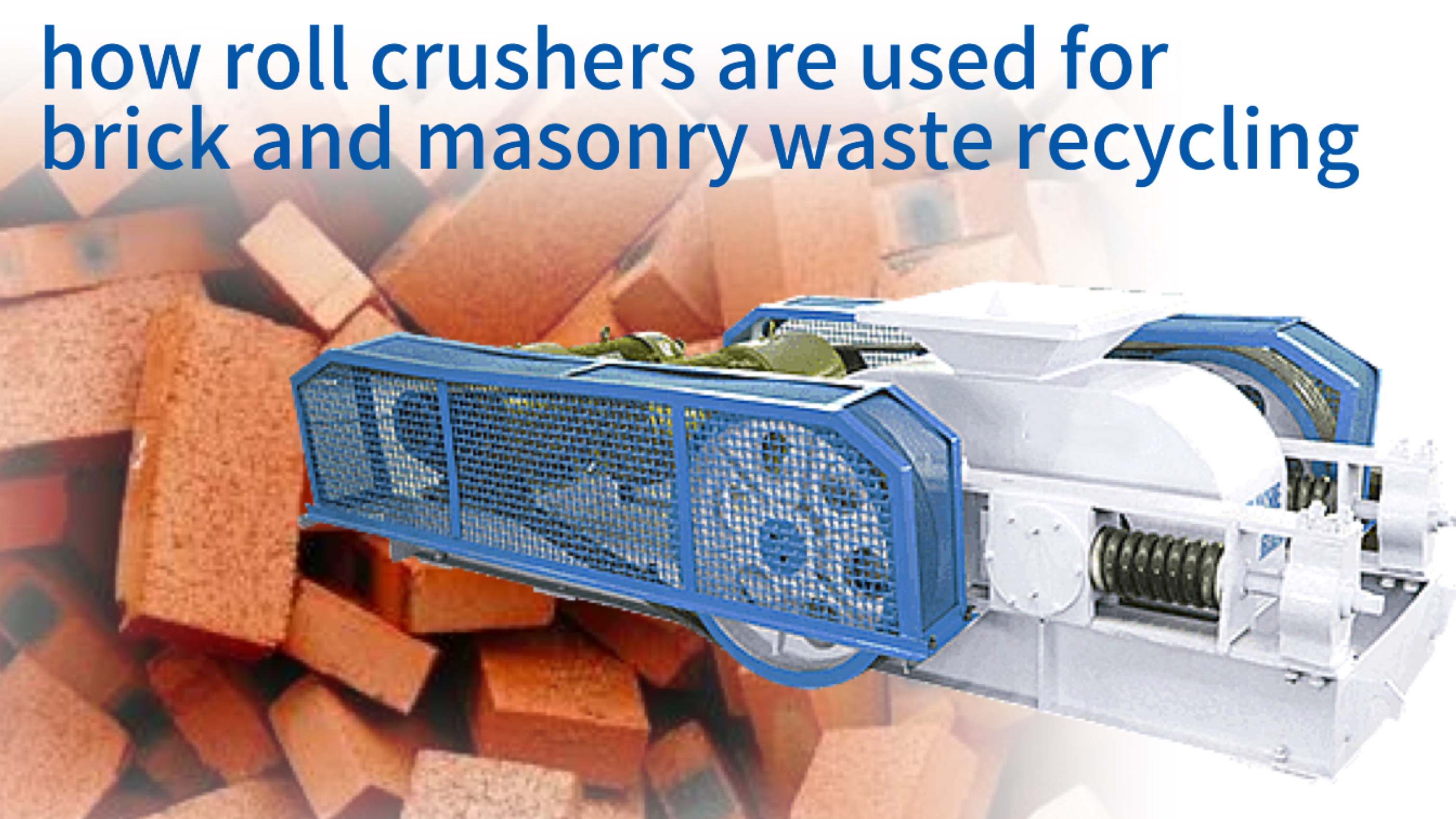
The recycling of construction and demolition debris represents one of the most significant challenges and opportunities in modern waste management. Among the various materials found in this waste stream, brick and masonry products constitute a substantial volume that often ends up in landfills. The practical application of roll crusher technology offers a highly efficient solution for processing these materials, transforming discarded bricks into valuable secondary raw materials. This type of processing equipment utilizes a pair of counter-rotating cylinders to apply continuous compressive and shear forces to the material. When bricks, which are characterized by their brittle nature and high compressive strength, are fed into the machine, they are gripped by the rotating rolls and crushed into smaller, more uniform fragments. The primary objective of this operation is to reduce the particle size of the waste material to a specification that allows for its reuse in various construction applications, such as aggregate for new concrete, base material for roads, or feedstock for the manufacturing of new masonry units. This method stands out for its ability to produce a consistent output with a relatively low generation of fine dust particles, a common issue with other crushing methods that utilize impact forces.
The operational principle of a roll crusher in brick recycling is distinct from other crushing equipment because of its reliance on compression. As the two heavy cylindrical rolls rotate towards each other, the gap between them, often referred to as the closed side setting, determines the maximum size of the crushed product. Bricks, which may range from whole units to larger broken pieces, are drawn down into this widening gap on the top side and are subjected to immense pressure as they pass through the narrowing space at the bottom. This crushing action is particularly effective for materials like fired clay bricks, which have defined fracture planes. The process is generally considered a form of secondary or tertiary crushing, meaning it is most effective when the feed material has already been reduced in size from massive demolition debris. The applied mechanical stress is carefully controlled; too much force is unnecessary and wastes energy, while too little fails to reduce the material adequately. By precisely adjusting the distance between the rolls, operators can exert exact control over the dimensions of the recycled aggregate, ensuring it meets the stringent requirements of civil engineering projects.
Understanding the Mechanism of Material Size Reduction in Roll Crushers for Masonry Debris
Key Parameters in Roll Crusher Size Reduction
| Parameter | Typical Range | Impact on Crushing |
|---|---|---|
| Closed Side Setting | 2-40 mm | Determines maximum product particle size |
| Roll Rotational Speed | 50-300 rpm | Affects throughput and fines generation |
| Roll Surface Profile | Smooth/Corrugated | Influences material traction and particle shape |
| Compressive Force | 50-200 MPa | Must exceed material compressive strength |
The size reduction process within a roll crusher is governed by the principles of compressive stress and shear, specifically tailored for hard and brittle materials. When a piece of brick enters the crushing chamber, it comes into direct contact with the surface of the rotating rolls. The friction between the roll surface and the brick draws the material downward. The rotating element's surface speed is a critical factor, as it must be sufficient to pull the material in but not so fast as to cause the material to skid or bounce, which would reduce efficiency. As the brick progresses, the space available for it decreases continuously. The applied compressive force eventually exceeds the material's internal compressive strength, causing it to fracture. This method is often described as a choke-fed or layer-crushing process, where the material fills the entire width of the rolls, creating a dense bed of particles that are crushed against each other as well as against the roll surfaces. This inter-particle crushing action contributes to the production of a more cubical and consistent final product, a highly desirable characteristic for construction aggregates derived from feed size material that is often irregular.
In contrast to machines like hammer crusher units that shatter material with high-speed impact, the compression mechanism of a roll crusher results in a different particle morphology. Impact crushers can sometimes produce a higher proportion of elongated or flaky pieces, while the slow, squeezing action of rolls tends to create more equidimensional particles. This is particularly advantageous when the goal is to produce a recycled sand or gravel substitute. The design of the roll shells plays a significant role in this process. For brick recycling, smooth-faced rolls are common for fine crushing applications, while corrugated or toothed rolls are utilized for larger feed sizes to improve material traction and initial breakage. The machine's frame must be exceptionally robust to withstand the immense forces generated during the crushing of dense masonry materials. These forces are contained and directed through the bearings and into the base of the equipment, ensuring that the energy is focused entirely on breaking down the construction waste efficiently and without excessive vibration.
Analyzing the Core Advantages of Using Compressive Crushing for Recycled Brick Aggregate Production
Roll Crusher vs. Impact Crusher for Brick Recycling
| Performance Aspect | Roll Crusher (Compression) | Impact Crusher (Impact) |
|---|---|---|
| Particle Shape | Cubical/equidimensional | Elongated/flaky |
| Dust Generation | Low (controlled compression) | High (violent impact) |
| Wear Rate | Gradual, predictable | Rapid, impact-based erosion |
| Moisture Handling | Excellent (no grate blinding) | Poor (grate clogging issues) |
| Noise Level | Low to moderate | High |
Utilizing a compression-based system offers distinct operational advantages when processing waste bricks, primarily in the quality of the output. One of the most significant benefits is the low noise and dust generation compared to impact-based technologies. Since the material is slowly compressed rather than violently struck, there is less air dispersion of fine silica particles, which are a health concern in construction and demolition recycling. This characteristic makes the operation of such equipment more suitable for urban environments or sites with strict environmental regulations. Furthermore, the wear and tear on the crushing surfaces, known as the roll shells, is generally lower and more predictable. While impact hammers and blow bars in impactors can suffer from rapid, impact-based erosion, the wear on rolls is a more gradual abrasion. This leads to extended intervals between maintenance interventions and a more consistent particle size over the lifespan of the wear parts. The reduced mechanical shock also places less stress on the bearings and drive components of the machine, contributing to higher overall mechanical availability and lower maintenance costs.
Another primary advantage lies in the machine's ability to handle materials with high moisture content without clogging. Brick waste often contains residual mortar or has been exposed to damp conditions, making it sticky or plastic. The direct compression and absence of a screening grate at the discharge point in many roll crusher components designs mean that wet material passes through the machine without building up and blocking the flow. This is a notable improvement over other types of crushers that rely on grates to control product size, which can become blinded by wet, fine material. The adjustable gap setting provides precise control over the final dimensions of the crushed brick. This allows operators to switch between producing a coarse sub-base material, perhaps 40mm in diameter, and a fine aggregate of 10mm, simply by modifying the machine's settings. This flexibility ensures that a single piece of equipment can serve multiple market demands, producing material suitable for everything from drainage layers to the manufacture of new, low-carbon, recycled-content building blocks.
The Integral Role of Roll Crushers in Comprehensive Construction and Demolition Waste Processing Workflows
Within a complete waste recycling facility, the roll crusher usually occupies a specific and vital position in the process flow, often following primary crushing stages. Initially, bulky demolition waste containing bricks, concrete, and timber is fed into a primary unit, such as a jaw crusher, which reduces the material to a manageable size. This primary stage liberates reinforcing steel and reduces large slabs to a fraction of their original volume. The output from this primary machine then undergoes screening and magnetic separation to remove ferrous metals. It is at this point that the processed material, now consisting of clean, mixed rubble, is introduced to the roll crusher for final refinement. The machine's role is to provide a precise, controlled reduction to meet a specific grading envelope. It is not designed to handle the initial brute force reduction of massive slabs but excels at perfecting the particle size and shape of the pre-processed aggregate. This placement in the circuit maximizes the efficiency of the entire plant, allowing each machine to operate within its optimal design parameters.
The integration of a roll crusher into a recycling line must be carefully managed to ensure consistent quality. The material fed into the rolls must be relatively free of contaminants like plastics or wood, although the compression action can sometimes help break weak bonds between aggregate and these materials. The use of a variable frequency drive on the motors allows for adjustments in rotational speed, which, combined with the gap setting, gives the operator fine control over the throughput and the final particle shape. After passing through the crusher, the material typically reports to a final screening station. This screen separates the crushed brick into various size fractions, such as fine brick dust, medium-grade sand, and coarse aggregate. Oversized material from this screen is usually returned via a conveyor for another pass through the rolls. This closed-circuit arrangement ensures that all the final product meets the specification, maximizing the yield of marketable recycled aggregate and minimizing waste. This systematic approach turns an expensive disposal problem into a revenue-generating resource stream.
Evaluating the Economic and Environmental Benefits for Operators and Contractors
Economic & Environmental Benefits of Brick Recycling with Roll Crushers
| Benefit Category | Quantifiable Value | Impact |
|---|---|---|
| Landfill Cost Savings | 100% | Elimination of disposal fees for brick waste |
| Virgin Aggregate Savings | 30-50% | Reduced purchase of quarried materials |
| Payback Period | 2-3 years | Rapid return on equipment investment |
| Carbon Footprint Reduction | 40-60% | Lower emissions from quarrying and transport |
| Fuel Savings (On-site Use) | 80%+ | Elimination of aggregate transportation |
From an economic standpoint, the deployment of a roll crusher for brick recycling presents a compelling business case for demolition contractors and waste management companies. The primary financial driver is the avoidance of landfill disposal fees, which have risen dramatically in many regions. By processing material on-site or at a centralized facility, operators can eliminate these costs entirely. Furthermore, the crushed brick product itself has inherent market value. It can be sold as a low-cost alternative to virgin aggregate for applications like pipe bedding, fill material, or landscaping. In many projects, the crushed material is reused immediately on the same site, eliminating the need to import expensive quarried stone and simultaneously avoiding the cost of trucking waste out. This dual saving on both disposal and material purchase can significantly enhance the profitability of a project. Data from operational facilities suggests that c and d waste recycling operations utilizing compression technology can achieve a payback period on their equipment investment in a relatively short timeframe, often within two to three years, based on these operational savings alone.
Environmentally, the benefits are equally substantial and align with global sustainability goals. Recycling brick waste through mechanical means drastically reduces the demand for virgin natural resources, preserving landscapes and reducing the carbon footprint associated with quarrying and transporting stone. The manufacturing of new bricks is energy-intensive, involving firing at high temperatures; therefore, every ton of brick that is recycled is a ton that does not need to be produced from raw materials. Additionally, the proximity of a mobile crushing unit to a demolition site eliminates thousands of truck miles, significantly lowering diesel fuel consumption and associated greenhouse gas emissions. Modern machines are engineered for efficiency, often using hydraulic systems that consume less power per ton of material processed than older technologies. By transforming a waste stream into a valuable resource, this technology embodies the principles of a circular economy, where materials are kept in use at their highest value for as long as possible. The use of recycled brick aggregate in new construction also contributes to green building certification schemes, adding further value to the end product.
Addressing Operational Challenges and Maintenance Protocols for Longevity
Preventive Maintenance Schedule for Roll Crushers in Brick Recycling
| Maintenance Task | Frequency | Key Objectives |
|---|---|---|
| Roll Surface Inspection | Daily | Detect uneven wear or damage from tramp metal |
| Bearing Lubrication | Weekly | Prevent premature failure from heavy radial loads |
| Drive System Inspection | Bi-weekly | Check belt tension, gearbox condition, alignment |
| Roll Shell Hardfacing | Quarterly/As needed | Restore worn surfaces to maintain crushing efficiency |
| Complete Overhaul | Annual/20,000 hours | Replace worn components, verify structural integrity |
Despite their robust construction, roll crushers require diligent operational oversight to maintain peak performance in the abrasive environment of brick recycling. The most common challenge is the presence of tramp metal, such as rebar or misplaced tools, in the feed stream. While the machine is designed to handle some level of metallics, particularly if it is fitted with spring-loaded or hydraulic roll protection, large pieces can cause significant damage to the roll shells or even the main frame. Therefore, effective magnetic separation and manual picking prior to the crusher are essential. Another operational consideration is the even distribution of feed across the entire width of the rolls. If material is fed only to one side, it causes uneven wear, creating grooves or flat spots on the roll surface that reduce crushing efficiency and produce inconsistent particle sizes. To mitigate this, a properly designed feed chute that spreads the material is critical. Operators must also monitor the power draw of the motors; a sustained increase in amperage can indicate that the gap is set too tight or that an uncrushable object has entered the chamber, necessitating an immediate stop.
Maintenance routines are fundamental to ensuring the longevity and reliability of the equipment. The most critical component is the roll shell itself. Over time, the surface will wear down from the constant abrasion of crushing brick and concrete. When the profile of the shell degrades, it must either be built up through hard-facing welding or replaced entirely. Modern machines are designed with segmented rolls or relatively easy replacement procedures to minimize downtime. Bearing maintenance is another high priority; the immense radial loads exerted during crushing place significant stress on these components. Regular greasing and temperature monitoring are standard practices to prevent catastrophic failure. Additionally, the drive systems, which may consist of gearboxes and v-belts, require routine inspection and tensioning. By adhering to a strict schedule of preventive maintenance, operators can ensure that their fine crusher equipment remains operational for thousands of hours. A well-maintained machine not only produces a higher quality product but also commands a higher resale value, contributing to a better total cost of ownership over its lifespan.
Optimizing Process Parameters for Enhanced Material Properties and Throughput Efficiency
Troubleshooting Common Roll Crusher Performance Issues
| Performance Issue | Common Causes | Recommended Solutions |
|---|---|---|
| Inconsistent Particle Size | • Uneven roll wear • Variable feed rate • Incorrect gap setting • Material bridging | • Resurface/replace roll shells • Stabilize feed system • Recalibrate gap measurement • Adjust moisture content |
| Low Throughput | • Excessively tight gap • Roll speed too low • Feed material too large • Drive system slippage | • Optimize gap setting • Increase rotational speed • Improve primary crushing • Tension drive belts/check gears |
| Excessive Fines Generation | • Roll speed too high • Overly aggressive compression • Feed material too dry • Worn roll surfaces | • Reduce rotational speed • Adjust gap for less compression • Add controlled moisture • Resurface roll shells |
Achieving the desired final product specifications in brick recycling is a matter of fine-tuning several key machine parameters. The most obvious variable is the closed side setting between the rolls. This gap directly dictates the nominal top size of the crushed aggregate. For producing a material suitable as a sand replacement in concrete, the gap may be set as narrow as 2 to 4 millimeters. For a coarser, drainage-grade aggregate, the gap might be opened to 20 or 30 millimeters. However, the gap alone does not determine the entire particle size distribution. The rotational speed of the rolls plays a subtle but important role. Higher speeds can increase throughput but may also lead to a slightly higher percentage of fines due to increased shear, while slower speeds allow for more controlled compression and a coarser, more uniform product. The type of profile on the roll shell also influences the result. Corrugated shells can help grip larger pieces and produce a more varied output, while smooth shells are preferred for the final stages of fine grinding where uniformity is paramount. The goal is to find the combination of settings that yields the maximum tonnage of on-spec product, as this directly drives the profitability of the operation.
The characteristics of the input material also dictate how the machine should be set up. Brick from different sources varies greatly in hardness and abrasiveness. Engineering bricks, fired at very high temperatures, are extremely hard and will cause wear rates significantly higher than those of softer, more porous house bricks. In cases of extreme hardness, such as when processing certain types of stone, it may be necessary to look at other machine configurations, such as a cone crusher specifically designed for high-compression crushing of the hardest materials. For standard brick recycling, the feed moisture content can be used to an advantage. A small amount of moisture can help control dust without causing the material to become sticky enough to pack. However, if the moisture level exceeds certain thresholds, it may necessitate a reduction in feed rate to prevent bridging in the hopper. By carefully analyzing the feed material and adjusting the machine's crushing ratio accordingly, plant operators can maximize the value of their output. This level of control makes the modern roll crusher a precision tool in the field of material processing, transforming a simple mechanical action into a finely tuned industrial process that consistently meets market specifications.
MSW Technology brings over fifteen years of hands-on experience to the field of material processing, providing robust machinery designed for the demanding realities of construction and demolition waste recycling. Our engineering team understands that successful brick recycling hinges on equipment that delivers consistent performance with minimal downtime. The design of our roll crusher series reflects this philosophy, incorporating heavy-duty bearings, wear-resistant alloy shells, and practical maintenance features that operators appreciate. We focus on building machines that provide a reliable solution for transforming waste brick into a valuable, saleable aggregate, supporting our clients in their efforts to build a more sustainable and profitable future. Our history in the industry has provided us with deep insights into the specific challenges of processing recycled materials, allowing us to continuously refine our technology to meet the evolving needs of the market. We are committed to providing not just equipment, but complete processing knowledge to ensure our customers achieve the highest possible return from their recycling operations.