Strategies for Improving Phosphate Ore Beneficiation Efficiency through Roll Crusher Optimization
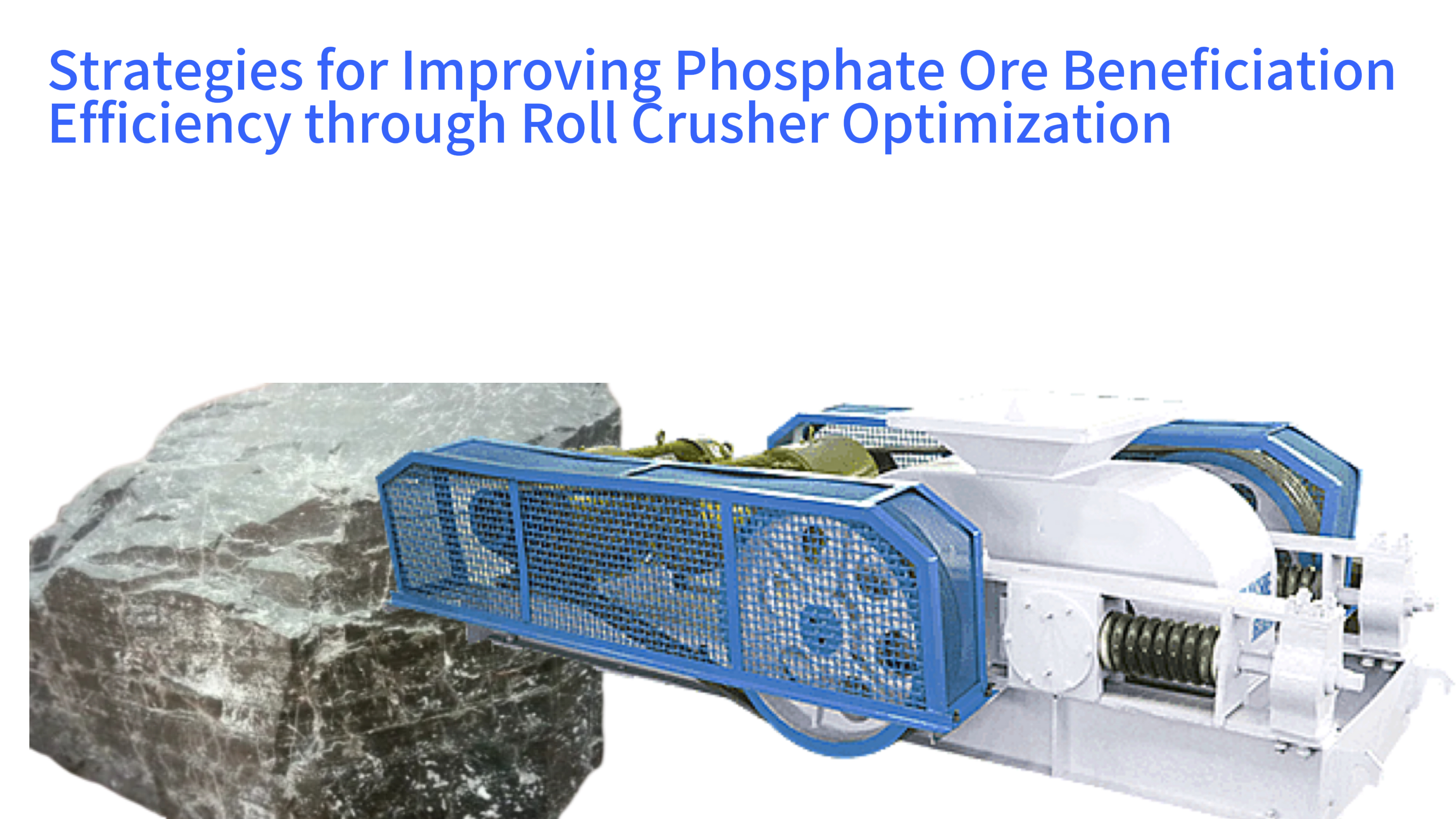
This document presents a comprehensive examination of methodologies aimed at enhancing the efficiency of phosphate ore beneficiation processes, with a specific focus on the strategic application and optimization of roll crusher technology. The central thesis argues that the comminution stage, particularly when executed by roll crushers, exerts a disproportionately significant influence on the overall economic and technical viability of phosphate recovery operations. By carefully aligning the mechanical action of the crusher with the unique physical and mineralogical characteristics of phosphate ores, operators can achieve superior control over product size distribution. This precise control directly facilitates improved mineral liberation in downstream processes such as flotation or washing, thereby maximizing the recovery of P2O5 while concurrently minimizing energy consumption and operational waste. The following sections will systematically deconstruct the relationship between ore properties and crusher performance, provide a framework for equipment selection, and outline operational and maintenance protocols designed to sustain peak efficiency throughout the crusher's service life. A thorough understanding of these interconnected factors is indispensable for any operation seeking to optimize its phosphate beneficiation circuit for both yield and cost-effectiveness.
The Influence of Phosphate Ore Characteristics on Comminution Requirements
Hardness/Moisture/Plasticity
Complex Texture (Phosphate+Gangue)
Overgrinding (Slimes) / Undergrinding
Reduced P2O5 Recovery
Compressive-Shear Action
Narrow Size Distribution
Minimized Slimes
Better Mineral Liberation
Higher P2O5 Recovery
Lower Energy Waste
The efficacy of any crushing operation is fundamentally dictated by the inherent properties of the feed material. Phosphate ores, whether of sedimentary phosphorite or igneous apatite origin, present a distinct set of challenges that necessitate a tailored approach to comminution. These ores frequently exhibit complex textures where valuable phosphate minerals are intimately intergrown with gangue materials like silica, carbonates, or clay. The primary objective of crushing in this context transcends mere size reduction; it must initiate a process of selective liberation, creating particles where phosphate grains are sufficiently exposed for subsequent separation. An inappropriate crushing strategy can precipitate one of two detrimental outcomes: excessive fines generation, known as overgrinding, or inadequate particle fracture, termed undergrinding. Overgrinding increases slime content, which adversely affects the efficiency of flotation reagents and complicates dewatering, while undergrinding fails to liberate enough phosphate, trapping it within composite particles and reducing overall recovery. The controlled, compressive-shear action inherent to roll crusher operation offers a significant advantage in this delicate balance, promoting fracture along grain boundaries and generating a more uniform product with a reduced proportion of undesirable fine particles compared to high-impact crushing methods.
Assessing the Impact of Hardness, Moisture, and Plasticity on Crusher Design
The mechanical behavior of phosphate ore during fragmentation is a function of its hardness, moisture content, and inherent plasticity. Hardness, quantified on scales such as Mohs or Bond Work Index, determines the magnitude of force required to induce fracture. More critically, many phosphate deposits are associated with clay minerals that impart significant plasticity and adhesion, especially under conditions of elevated humidity. This characteristic can lead to material agglomeration and clogging within the crusher's feed zone. Consequently, crushers employed for such duties must incorporate design features that counteract these tendencies. Enhanced material grip is often achieved through the use of corrugated, toothed, or waffle-patterned roll surfaces. Furthermore, integrated cleaning systems, such as rigid scrapers or rotating brushes, are essential to prevent the buildup of sticky material on the roll faces, ensuring consistent feed intake and uninterrupted operation. The selection of a crusher without due consideration for these material-handling aspects can result in chronic blockages, reduced throughput, and accelerated, uneven wear on crushing components.
Aligning Product Size Distribution with Subsequent Beneficiation Processes
The specification of the target product size from the crushing stage is not an arbitrary decision but a critical parameter dictated by the requirements of the following beneficiation step. Different downstream processes demand specific feed size distributions to function optimally. For instance, a washing and desliming circuit, designed to remove clay contaminants, requires the ore to be crushed to a size where the clay binders are effectively disaggregated from the phosphate pellets or nodules. In contrast, a froth flotation circuit requires a finer grind to achieve a high degree of liberation between apatite and gangue minerals, but within a controlled range to avoid excessive slimes. The discharge size from a roll crusher is primarily governed by the adjustable gap between the two counter-rotating rolls. This allows for precise control over the top size of the product, enabling operators to tailor the output to the exact needs of the subsequent process, thereby creating a more efficient and streamlined beneficiation flow sheet where each stage is optimally fed.
The Advantage of Roll Crushers in Minimizing Overgrinding and Slime Formation
A persistent challenge in mineral processing is the generation of an excess of ultra-fine particles, a phenomenon detrimental to phosphate recovery. These fines, or slimes, increase surface area disproportionately, consuming large quantities of flotation reagents without proportional recovery, and they often report to tailings streams, carrying locked or liberated phosphate with them. The breakage mechanism of a roll crusher, which applies a slow, compressive force to particles drawn into the nip angle, tends to produce a product with a narrower size distribution and a lower fines content compared to crushers that rely on high-velocity impact, such as certain types of impact crusher. The compressive action is more likely to cause particles to fracture along existing weaknesses and grain boundaries, rather than shatter indiscriminately. This characteristic makes roll crushers particularly suitable for the intermediate crushing stages in phosphate processing, where preparing a well-graded feed for final grinding without prematurely creating problematic slimes is a key objective for overall plant efficiency.
Strategies for Processing Complex Ores with Hard Inclusions or Waste Layers
Phosphate ore bodies are rarely homogeneous and often contain hard, siliceous bands, chert nodules, or other competent waste material. The occasional entry of such non-crushable or extremely hard objects into the crusher poses a significant risk of catastrophic damage, including bent shafts, broken rolls, or severe gear train failures. Modern roll crushers address this risk through engineered protection systems. These commonly involve a hydraulic or spring-loaded mechanism that allows one roll to move laterally against a pre-set pressure, creating a temporary, enlarged gap to permit the passage of the uncrushable object. Following this event, the system automatically returns the roll to its original working position. This tramp metal protection feature is a critical safety consideration during equipment selection, as it safeguards the substantial capital investment in the crusher and prevents prolonged, unscheduled downtime that would disrupt the entire beneficiation plant's production schedule.
Selection and Application of Roll Crushers within the Phosphate Beneficiation Circuit
| Crusher Type | Primary Application | Reduction Ratio | Key Advantage |
|---|---|---|---|
| Double Roll Crusher | Intermediate Crushing (Post Jaw/Gyratory) | High (Single Pass) | Compact Footprint, Easy Maintenance |
| Four-Roll Crusher | Fine Product Generation (2-Stage in 1 Unit) | Very High (Staged Reduction) | Tight Size Control, Uniform Product |
| Specialized Surface Roll Crusher | Adhesive/High-Moisture Ores | Customizable | Anti-Clogging, High Grip on Sticky Material |
Jaw/Gyratory Crusher (Run-of-Mine Ore)
Double Roll Crusher (150mm → 30-50mm)
Four-Roll Crusher (Custom Fine Size)
Flotation/Washing/Grinding
The integration of a roll crusher into a phosphate processing plant requires a deliberate selection process based on its intended role within the multi-stage comminution circuit. These machines are rarely used for primary, run-of-mine crushing due to limitations on acceptable feed size, but they excel in secondary and tertiary reduction roles. Their propensity to produce a cubical product with minimal fines makes them ideal for preparing feed for closed-circuit grinding or for direct production of a specified aggregate size. The selection process must reconcile several competing factors: the nature of the ore, the required feed and product sizes, the desired capacity in tons per hour, and the total cost of ownership. Choices between single-roll, double-roll, and even multi-roll configurations each offer distinct advantages for specific applications, and the optimal selection hinges on a clear definition of the crusher's process duty within the broader context of plant mining and quarrying objectives.
The Role of Double Roll Crushers in Intermediate Crushing Stages
Following primary reduction by a jaw crusher or gyratory crusher, which handles the largest feed sizes, double roll crushers are frequently deployed for intermediate duty. They are adept at taking a feed of, for example, minus 150mm material and reducing it consistently to a product of minus 30mm to 50mm. This size range is often ideal for feeding vibrating screens that separate material destined for further fine crushing or grinding from that which is already at the required size. The double roll crusher's design, with two parallel rolls rotating inward, provides a relatively high reduction ratio in a single pass and offers a compact footprint compared to some other secondary crushers. Their mechanical simplicity often translates to easier maintenance and lower spare parts inventory costs, making them a robust and economical workhorse for the middle of the phosphate crushing circuit.
Utilizing Multi-Roll Crushers for Precise Size Control and Fine Product Generation
In applications demanding a finer, more tightly controlled product size, or where two stages of reduction are desired in a single machine envelope, four-roll crushers present a compelling solution. This configuration essentially pairs two double roll crushers in series within a single frame. The first set of rolls performs an initial coarse reduction, and the crushed product then feeds directly into the second, closely spaced set of rolls for final sizing. This staged approach allows for a higher overall reduction ratio and produces a product with a more uniform particle size distribution than might be achievable in a single crushing pass. For phosphate operations that require a specific, relatively fine feed size for direct chemical processing or as a feedstock for a fine crusher or grinding mill, the four-roll crusher offers a high degree of process control and can help simplify the overall plant layout by combining two crushing functions into one unit.
Specialized Roll Surface Designs for Handling Adhesive and High-Moisture Ores
The challenge of processing sticky, high-clay phosphate ores has driven the development of specialized roll surface technologies. Standard smooth rolls can struggle with adhesive materials, leading to packing and slippage. To combat this, manufacturers offer rolls with aggressive surface profiles. Deep, sharp corrugations, staggered pyramid-style teeth, or heavy-duty waffle patterns are engineered to aggressively grip and tear apart moist, plastic feed material. Beyond the surface pattern, some advanced designs incorporate self-cleaning features. These may include rotating brush assemblies that continuously clean the roll grooves or even mechanical systems that flex the roll surface to dislodge packed material. In extreme cases, applications have utilized heated rolls to dry the surface layer of sticky ore, preventing adhesion. Specifying the correct roll surface configuration during the purchase phase is a critical decision that directly impacts the crusher's ability to handle the specific ore type reliably and maintain design capacity.
Capacity Sizing Based on Plant Throughput and Ore Competency
Correctly sizing a roll crusher for its intended duty is a fundamental engineering task with long-term operational consequences. An undersized crusher will become a bottleneck, limiting overall plant throughput and potentially causing upstream equipment to stall. An oversized crusher represents unnecessary capital expenditure, occupies more floor space, and typically operates at less than optimal efficiency, often with higher specific energy consumption per ton processed. Sizing calculations must be grounded in reliable data: the plant's required hourly throughput, the crusher's anticipated duty cycle, and the ore's competency or crushability index. Key crusher dimensions, notably roll diameter and roll width, are selected based on these parameters. The diameter influences the nip angle and the crusher's ability to draw in large particles, while the width is a primary determinant of capacity. Reputable equipment suppliers use empirical formulas and historical performance data to recommend a machine size that meets capacity requirements with an appropriate operational margin, ensuring the crusher can handle normal feed variations without becoming overloaded.
Operational Parameter Optimization for Maximizing Crusher Performance and Beneficiation Yield
Key Operational Parameters & Impacts
Roll Gap Setting
✓ Direct control of discharge size
✓ Adjust for ore hardness/moisture
✗ Uneven gap = inconsistent product
Feed Rate/Distribution
✓ Uniform feed = even wear
✓ Optimal rate = max throughput
✗ Surge/starvation = poor performance
Roll Speed (m/s)
✓ Higher speed = more throughput
✓ Balanced speed = minimal wear
✗ Excess speed = coarse product/slimes
Automation Benefit: PLC-based control adjusts feed rate/gap in real-time to maintain optimal load/size, reducing manual intervention by 40%+ and improving product consistency by 25%.
Optimal crusher performance is not guaranteed by correct selection alone; it must be actively achieved and sustained through the diligent management of key operational variables. The gap setting between the rolls, the rotational speed of the rolls, and the method of feed presentation collectively form a triad of parameters that govern the crusher's output in terms of size, shape, and throughput. A systematic approach to tuning these parameters in response to feed characteristics and product requirements can yield substantial improvements in downstream beneficiation efficiency. For example, a precisely controlled product size from the crusher reduces the load and energy demand on subsequent grinding mills while improving mineral liberation. Therefore, the operation of the roll crusher should be viewed not as an isolated task but as the first critical, adjustable step in a coordinated process chain aimed at maximizing phosphate recovery.
Gap Adjustment as the Primary Mechanism for Product Size Control
The distance between the two crushing rolls, known as the gap or closed-side setting, is the most direct and influential operational control for determining the maximum dimension of the crusher's discharge product. This gap must be periodically verified and adjusted to compensate for the gradual wear of the roll surfaces, which causes the effective gap to increase over time, leading to a coarser product. Precision in this adjustment is paramount; the gap must be uniform across the entire working length of the rolls to ensure a consistent product and prevent localised wear. For phosphate ores, which may exhibit variations in hardness or moisture between different mining zones or batches, the optimal gap setting might require fine-tuning. A slightly wider gap may be used for harder, more abrasive ore to reduce roll wear rates, while a tighter gap can be employed for softer material to achieve a finer product. Maintaining meticulous records of gap settings correlated with product screen analyses is a best practice for process control.
Ensuring Uniform Feed Distribution and Optimal Feed Rate
The performance and longevity of a roll crusher are heavily dependent on the condition of the material presented to it. An uneven feed, where material is concentrated on one side of the roll width, causes asymmetric loading. This leads to accelerated and uneven wear on the rolls and bearings, increases power consumption, and produces an inconsistent product size distribution. The solution lies in the proper selection and operation of the feeding device. A vibratory feeder is typically the preferred choice, as it can spread material evenly across the full width of the crusher intake. The feed rate must also be carefully regulated. Feeding too quickly overwhelms the crusher's capacity, causing material to bypass proper nipping, resulting in poor breakage and potential spillage. Feeding too slowly underutilizes the machine and can cause cyclical loading. Modern systems often link the feeder speed to the crusher's main motor amperage, creating a feedback loop that maintains a consistent, optimal feed rate based on the real-time power draw, a key indicator of crushing load.
Balancing Roll Speed to Achieve Desired Throughput and Product Specifications
The surface speed of the crushing rolls, usually measured in meters per second, is a key variable influencing both capacity and product gradation. Higher roll speeds generally allow a greater volume of material to pass through the crusher per unit time, increasing throughput. However, this increase often comes at a cost. At very high speeds, particles may have less time to be properly nipped and compressed, leading to a lower reduction ratio and a coarser product with more uncrushed or partially crushed fragments. Furthermore, higher speeds typically correlate with increased wear rates on the roll surfaces and drive components. For phosphate ore processing, an optimal speed is determined empirically, seeking a balance that delivers the required product size specification at the design capacity without inducing excessive wear or vibration. This speed setting, once established for a given ore type and target product, should be maintained as a standard operating parameter.
Implementing Automated Control Systems for Consistent and Efficient Operation
Advancements in industrial automation have made sophisticated control of roll crushers both accessible and economically justifiable. A modern crusher can be equipped with a programmable logic controller that continuously monitors critical operating parameters. Sensors track the main motor's current, indicating load; bearing temperature sensors warn of potential lubrication failures; and sometimes even online particle size analyzers provide real-time feedback on product quality. This data can be used to implement advanced control strategies. For instance, the control system can automatically adjust the vibratory feeder's speed to maintain the crusher motor at a pre-set load point, optimizing throughput. In more advanced setups, it can even initiate small, automatic adjustments to the roll gap via hydraulic rams to correct for minor deviations in product size. This level of automation moves operation from reactive to proactive, ensuring the crusher runs consistently at its peak efficiency point, protects itself from damaging conditions, and provides valuable operational data for process analysis and optimization, forming a core component of a modern mobile crusher or fixed-plant control philosophy.
Strategic Maintenance Protocols to Ensure Crusher Reliability and Sustained Efficiency
| Component | Inspection Frequency | Maintenance Action | Failure Risk if Neglected |
|---|---|---|---|
| Roll Surfaces | Daily (visual), Weekly (dimensional check) | Hardfacing welding / Roll shell replacement | Coarse product, uneven wear, structural damage |
| Roll Bearings | Daily (temperature check), Monthly (lubrication) | Grease/oil replacement, vibration analysis | Catastrophic bearing failure, unplanned downtime |
| Drive/Transmission | Weekly (gear/belt inspection) | Belt tension adjustment, gear alignment | Power loss, accelerated wear, gear breakage |
| Overload Protection | Monthly (functional test) | Pressure relief valve check, hydraulic cylinder test | Shaft bending, roll breakage from uncrushable objects |
(Temperature/Vibration/Wear)
(Wear Rate/Trend Tracking)
(Scheduled Shutdown/Repair)
(Gap Check/Load Test)
(Minimal Downtime/Optimal Output)
The abrasive nature of phosphate ore guarantees that wear will occur on all crusher components exposed to the material stream. A reactive maintenance philosophy, addressing failures only after they happen, leads to unpredictable downtime, costly emergency repairs, and periods of operation with degraded performance. In contrast, a proactive, scheduled maintenance strategy is an investment in plant reliability and consistent product quality. Such a strategy is predicated on regular inspection, planned component replacement, and systematic lubrication. By adhering to a disciplined maintenance regimen, operators can extend the operational life of the crusher, maintain its design performance characteristics—especially its critical gap setting and product size control—and avoid the substantial production losses associated with unplanned stoppages. Effective maintenance is not merely a cost center but a fundamental contributor to the long-term profitability and stability of the beneficiation operation.
Systematic Monitoring and Management of Roll Surface Wear
The crushing rolls are the heart of the machine and its primary consumable wear part. Their surface profile directly governs feed intake, crushing efficiency, and product sizing. As the rolls wear, their effective diameter decreases, and patterns like corrugations become less pronounced. This wear leads to a gradual increase in the operational gap, which in turn produces a coarser product if not corrected. A systematic wear management program involves regular dimensional checks, using calipers or templates to measure roll diameter or tooth height at multiple points along the barrel. Plotting this data over time creates a wear rate curve, which is invaluable for predictive planning. Based on this curve, maintenance can be scheduled during planned shutdowns to either rebuild the roll surface through hardfacing welding techniques or to replace the roll shells entirely. Timing this intervention correctly is crucial; waiting too long sacrifices product quality and risks damaging underlying roll structures, while changing too frequently increases direct parts costs and downtime.
Proactive Lubrication and Condition Monitoring of Bearing Assemblies
The bearings supporting the crushing rolls are subjected to extreme and fluctuating radial loads. Their failure is among the most serious and disruptive mechanical breakdowns a crusher can experience. Preventing such failures hinges on a rigorous lubrication protocol. This involves using the manufacturer-specified grade of grease or oil at precisely recommended intervals and quantities. Over-lubrication can be as harmful as under-lubrication, causing seals to fail and allowing contaminants to enter. Complementing scheduled lubrication is condition monitoring. Regularly checking bearing housing temperatures with an infrared thermometer provides an early warning of lubrication failure or bearing distress. Vibration analysis, whether performed with simple handheld meters or permanent online systems, can detect imbalances, misalignment, or bearing defects long before they lead to catastrophic failure, allowing for planned corrective action.
Regular Inspection and Adjustment of Drive and Transmission Components
The power from the electric motor is transmitted to the rolls via a system of gears, belts, or chains. The integrity of this transmission is vital for efficient operation. For gear-driven crushers, regular inspections should check gear tooth contact patterns and look for signs of pitting, spalling, or unusual wear. Proper alignment between gear sets is essential to prevent noise and accelerated wear. In belt-driven systems, the focus shifts to belt tension and condition. Belts that are too loose will slip, especially under start-up load, reducing power transmission efficiency and generating heat that degrades the belts. Belts that are too tight place excessive stress on motor and crusher bearings. A regular schedule should include checking belt tension with a tension gauge and inspecting belts for cracks, fraying, or glazing, replacing them in matched sets when necessary to maintain balance.
Functional Verification of Overload Protection and Safety Systems
The hydraulic or spring-based overload protection system is a critical safety feature designed to safeguard the crusher's structural and mechanical integrity from the forces exerted by uncrushable material. The mere presence of this system is not sufficient; its functionality must be periodically verified to ensure it will activate when needed. This verification, performed during scheduled maintenance windows with the crusher isolated and de-energized, involves simulating an overload condition. For a hydraulic system, this might mean checking pressure relief valve settings and ensuring the hydraulic cylinders retract and extend smoothly. The goal is to confirm that when a pre-set force threshold is exceeded, the movable roll can and will retreat, creating an escape path for the foreign object. Neglecting these checks risks a scenario where the protection system fails to operate, potentially resulting in a bent shaft, broken roll, or other severe damage that requires extensive and expensive repair.
Integration with Auxiliary Equipment for a Cohesive and Optimized Processing Circuit
A roll crusher does not function in isolation; its performance is intrinsically linked to the equipment that feeds it and that processes its discharge. The overall efficiency of the crushing station, and by extension the beneficiation plant, is determined by how well these individual units work together as a synchronized system. Poor feed preparation can cripple an otherwise excellent crusher, and inefficient handling of the crusher's product negates its carefully controlled output. Optimizing this integration involves careful selection of auxiliary equipment like feeders and screens, implementing effective material transfer points, and considering environmental controls. A holistic view of the crushing circuit as an interconnected process, rather than a collection of independent machines, is essential for unlocking the full potential of the roll crusher investment and achieving the highest levels of system productivity and reliability, a principle equally vital in dedicated aggregate processing or more complex mineral beneficiation.
Establishing Closed-Circuit Operations with Screening Equipment
One of the most effective methods for boosting the overall efficiency of a crushing stage is to operate the roll crusher in a closed circuit with a screening device. In this configuration, the entire discharge from the crusher is sent to a screen, such as a vibrating screen. The screen separates the material into two or more size fractions. The undersize material, which has already met the target product specification, is sent forward to the next process stage. The oversize material, which is still too coarse, is returned as "recycle" or "circulating load" back to the crusher's feed hopper. This closed-loop system ensures that the crusher's energy is focused exclusively on breaking particles that require further reduction. It guarantees that 100% of the final product stream meets the size specification, improves the crusher's effective capacity by removing finished product from its load, and allows the crusher to be operated with a tighter setting than might be possible in open circuit, as any slight over-size is recirculated rather than accepted.
Selecting and Tuning Feeders for Optimal Material Presentation
The interface between the supply conveyor and the crusher is a critical process point managed by the feeder. Its primary role is to regulate the flow of material into the crusher at a controlled and steady rate. More importantly, a well-designed feeder distributes the material evenly across the full intake width of the crusher. Vibrating pan feeders or apron feeders are common choices for this duty. The key operational parameters of a vibrating feeder—amplitude and frequency—can often be adjusted. Tuning these settings ensures the material is conveyed at the correct speed to match the crusher's capacity and is spread into a consistent, uniform bed as it enters the crushing zone. An improperly set or undersized feeder will cause surging, starvation, or uneven loading, all of which degrade crusher performance, increase wear, and produce an inconsistent product. The feeder is the gatekeeper of crusher efficiency.
Implementing Dust Suppression and Collection Systems for Environmental and Mechanical Protection
The crushing of dry phosphate ore inevitably generates airborne dust, a significant concern for both environmental compliance and equipment health. Uncontrolled dust creates hazardous working conditions, can lead to regulatory violations, and represents a loss of valuable product. From a mechanical perspective, dust is abrasive and can infiltrate bearing housings, gearboxes, and electrical components, causing premature wear and failures. Therefore, an integrated dust control strategy is mandatory. This often involves a combination of suppression and collection. Dust suppression systems use finely atomized water sprays at strategic transfer points to agglomerate dust particles, causing them to settle. For finer control or in dry processing circuits, dedicated dust collection systems, such as baghouse filters or cartridge collectors, capture dust-laden air, filter it, and return clean air to the atmosphere while collecting the dust for disposal or recovery. Protecting the crusher's internal mechanisms from dust ingress also involves maintaining effective seals around shafts and inspection doors.
Advancing Towards a Centralized and Data-Driven Process Control Philosophy
The modern trend in mineral processing is toward greater integration and intelligence in plant control. A roll crusher station can be a key node in this networked environment. By equipping the crusher and its associated equipment with sensors—for power draw, bearing temperature, oil pressure, vibration, and even online particle size analysis—a wealth of operational data is generated. This data stream can be fed into a central plant control system or a dedicated supervisory control and data acquisition system. Operators can then monitor the health and performance of the entire crushing circuit from a control room, receiving alerts for abnormal conditions. More advanced implementations use this data for process optimization, automatically adjusting feeder speeds or crusher parameters to maintain target setpoints. This shift from manual, periodic checks to continuous, data-informed management enhances overall plant stability, allows for more precise optimization of the crushing ratio and product size, and provides a detailed historical record for diagnosing issues and planning improvements.
Economic Evaluation of Roll Crusher Implementation and Optimization Initiatives
Economic Benefits of Roll Crusher Optimization (Annual)
Any decision to invest in new capital equipment or to undertake a process optimization project must ultimately be justified by a rigorous economic analysis. The value proposition of implementing or optimizing a roll crusher in a phosphate beneficiation plant extends far beyond the simple purchase price of the machine. A comprehensive evaluation must adopt a life-cycle cost perspective, accounting for capital expenditure, operational costs, and the financial benefits derived from improved process performance. The most significant benefit often stems from enhanced metallurgical recovery in downstream stages, which directly increases revenue. Concurrently, reductions in energy consumption, maintenance expenses, and waste disposal costs contribute to lower operating expenditures. Constructing a detailed financial model that quantifies these interrelated factors is essential for securing project approval, comparing different technological options, and demonstrating the tangible return on investment that such process improvements can deliver to the operating company.
Quantifying the Revenue Impact of Improved Phosphate Recovery
The most compelling economic argument for optimizing the crushing circuit is its direct link to the final recovery of saleable phosphate concentrate. Even a marginal improvement in the overall P2O5 recovery rate can translate into substantial annual revenue gains for a large-scale operation. Optimized crushing achieves this by providing a better-prepared feed to flotation or other separation processes. A more suitable size distribution with less slime improves reagent efficiency and flotation kinetics, while better mineral liberation increases the mass of recoverable phosphate. To quantify this, engineers model the entire beneficiation process. They estimate the potential recovery increase attributable to the crusher optimization—for example, a 1.5% absolute increase in recovery. This percentage is then applied to the plant's annual ore throughput and the market price of phosphate concentrate to calculate the incremental annual revenue. This revenue stream, projected over the crusher's expected service life, often dwarfs the associated capital and operating costs, providing a clear financial justification for the investment.
Analyzing Operational Cost Reductions in Energy and Consumables
Beyond revenue enhancement, a well-optimized roll crusher contributes to lower operating costs. Energy consumption is a major operational expense. Compared to alternative crushing technologies that may be less efficient for certain duties, a properly selected and operated roll crusher can exhibit a lower specific energy consumption per ton of product. This saving accrues continuously over the machine's operating life. Furthermore, strategic choices during selection influence long-term costs. Selecting rolls fabricated from advanced, highly wear-resistant materials like chrome-white iron or ceramic-metal composites may carry a higher initial cost. However, their extended service life drastically reduces the frequency of roll replacements. This translates to lower annualized parts costs and, critically, less downtime for change-outs, which in turn maintains higher plant availability and production. A thorough cost analysis compares the total cost of ownership of different options, factoring in purchase price, energy use, expected wear part life, and the cost of downtime.
Developing a Comprehensive Return on Investment Model
To make a definitive business case, all cost and benefit streams must be consolidated into a formal Return on Investment model. This financial model spans the project's lifecycle. It begins with the total capital investment, encompassing the crusher purchase price, shipping, installation, civil works, and any necessary modifications to auxiliary equipment. Against this capital outlay, the model plots the annual operational benefits. These include the incremental revenue from improved recovery and the cost savings from reduced energy and maintenance. The annual net benefit is the sum of these gains minus any increased operational costs associated with the new equipment. Using discounted cash flow techniques, these future annual benefits are brought back to a present value and compared to the initial investment to calculate metrics like Net Present Value, Internal Rate of Return, and Payback Period. A positive NPV and an acceptable payback period, typically under three to five years for such industrial projects, provide the quantitative proof needed to demonstrate that the optimization of the main shaft of the process—the crushing stage—is a sound financial decision that will enhance the plant's profitability for years to come.