Remote Mobile Cone Crusher Selection: A Mobility Guide
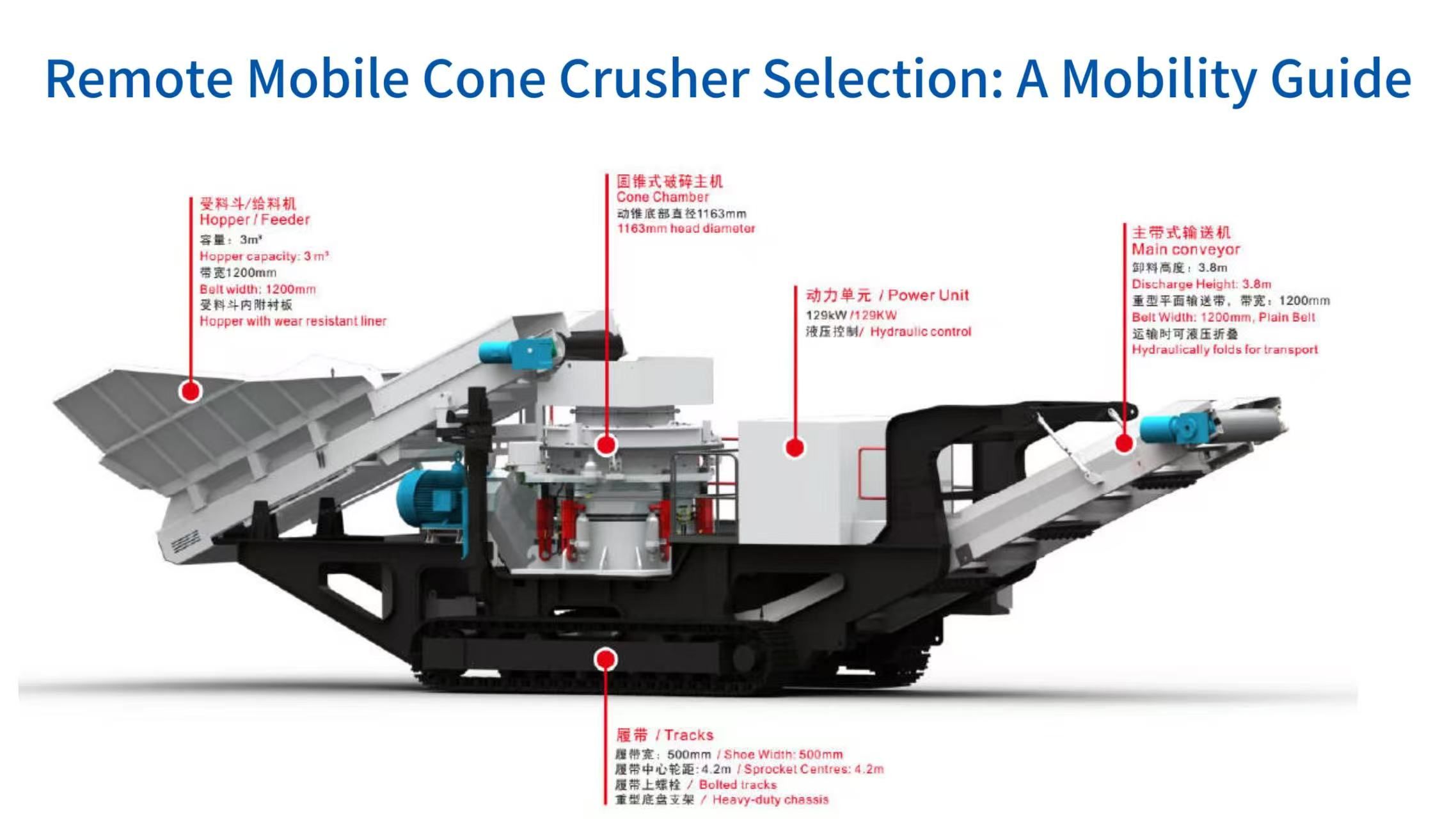
6-Step Selection Process for Mobile Cone Crusher in Remote Sites
Site Survey & Requirement
Mobility Metrics Check
Terrain Adaptation
Mobility & Efficiency Balance
Avoid Selection Mistakes
Commission & Maintenance
Selecting a mobile cone crusher for a remote construction site requires a different approach compared to a standard quarry or an urban demolition project. The core challenge lies in the logistics of getting the equipment to the site and moving it around once it arrives. Many remote locations lack paved roads, stable power grids, and nearby service centers. A traditional stationary crushing plant is often impossible to install in such environments. This guide focuses on the critical need for mobility convenience. It explains how to evaluate terrain, mobility performance, and practical operational principles. The goal is to help you choose machinery that reduces overall operational costs while maintaining efficient on-site crushing.
This article provides a structured framework for decision making. We will explore the unique characteristics of remote work sites first. Then we will define the essential selection metrics for a mobile cone crusher that prioritizes easy movement. The discussion includes terrain adaptation strategies for mud, hills, and tight spaces. We will also address the necessary balance between mobility and crushing efficiency. Common mistakes are identified to prevent costly errors. Finally, a step by step selection procedure offers a clear path from initial site survey to long term maintenance. Each section builds on the previous one to create a complete guide for professionals working in challenging, isolated environments.
Understanding Remote Site Conditions and the Value of Mobile Cone Crusher Mobility
Remote construction sites present a set of physical and logistical problems that directly influence equipment selection. Transportation routes to these locations are often narrow, unpaved, or subject to weather damage. Heavy rainfall can turn a simple dirt road into a muddy trap for heavy machinery. The distance from supply centers means that spare parts and technical support are not readily available. Fuel and electricity supplies may be inconsistent or completely absent. In this context, a mobile cone crusher is not just a convenience but a necessity. Its ability to move under its own power reduces the need for additional cranes and transport vehicles. This self propelled nature allows the crusher to follow the work face directly.
The value of mobility extends beyond simple relocation. A mobile unit can be positioned close to the excavation area, eliminating long haul trips for dump trucks. This reduces fuel consumption and vehicle wear across the entire site operation. When one area is depleted of material, the crusher simply drives to the next active zone. This flexibility is impossible with fixed equipment. For remote projects where time and resources are limited, the capacity to deploy crushing capacity exactly where needed and then move it again within hours is a transformative advantage. It changes the entire material flow logic of the project.
Typical Remote Work Scenarios and Their Crushing Demands
Remote projects commonly include mountain road construction, isolated mining claims, and small scale infrastructure like bridges or dams far from cities. Each scenario presents a unique material composition. Mountain roads often produce hard, angular rock fragments from blasting. Mining operations generate metal bearing ores that require consistent particle size for downstream processing. Small infrastructure projects may process a mix of native rock and imported materials. In all these cases, the crushing demand involves both secondary and fine crushing stages. The mobile cone crusher must reduce material from a primary crusher's output to a specific, smaller size. Speed of deployment is a major factor. A contractor cannot wait weeks for a concrete foundation to cure before starting work.
How Mobility Lowers Costs and Increases Flexibility in Remote Areas
The direct cost savings from a mobile cone crusher come from reduced material handling. In a conventional setup, blasted rock is loaded onto trucks, driven to a fixed crusher, and then the crushed product is hauled back to the work area. A mobile crusher positioned at the working face cuts this transport distance dramatically. Each ton of material moved a shorter distance saves fuel, tires, and labor hours. The indirect savings are equally important. A mobile unit adapts to a dispersed work site. If the project moves two kilometers down a valley, the crusher follows. This eliminates the need to build new access roads or conveyor systems for every shift in activity. The project gains a level of agility that directly counters the uncertainties of remote terrain.
Key Selection Differences Between Remote and Standard Work Sites
A standard quarry operation prioritizes maximum throughput and consistent product quality above all else. Equipment is installed on concrete pads and connected to permanent power. Maintenance schedules are predictable because support is nearby. For a remote site, these priorities shift dramatically. Mobility and terrain adaptability become the top criteria. A machine that can produce 500 tons per hour but cannot cross a seasonal stream is useless. The remote site operator must also consider energy independence. A diesel powered unit with good fuel efficiency may be more valuable than a slightly more efficient electric model that requires a grid connection. Maintenance ease is another major difference. Remote sites need components that a field mechanic can replace with basic tools, not specialized factory equipment.
Negative Impacts of Poor Mobility on Remote Project Success
Choosing a crusher with insufficient mobility for a remote site creates a cascade of operational failures. The first sign of trouble is often an inability to reach the work zone. A machine that is too wide for the access road or too heavy for a small bridge becomes stuck before it ever processes a single rock. Once on site, a poorly mobile unit struggles to reposition. The operator must then resort to trucking material over longer distances, which adds time and cost to every cycle. In a worst case scenario, the crusher becomes stranded in a muddy area after rain. Recovery requires additional heavy equipment brought in at great expense. Project timelines slip as crushing capacity is unavailable. The initial savings from buying a less mobile machine are quickly consumed by these logistical penalties.
Core Selection Metrics for a Mobility Focused Mobile Cone Crusher
Selecting the right machine requires a structured evaluation of specific metrics. Do not simply look at the horsepower or the maximum feed size first. For remote work, the starting point is how the machine moves. This includes its undercarriage type, its overall dimensions, and its weight. These physical characteristics determine if the crusher can even reach the site. After confirming basic mobility, the next metrics involve the drive system and setup time. A machine that takes hours to unfold and secure is not suitable for a site that moves weekly. Finally, consider the crusher's internal design. The crushing chamber and adjustment mechanisms must be robust enough to handle the specific rock type found at your location, but this comes after mobility is assured.
Establish a clear priority list before contacting any suppliers. Write down the maximum width of the narrowest road leading to your site. Measure the load rating of any bridges. Identify the typical ground condition at the work face. Is it hard packed dirt, loose gravel, or soft clay? These factors determine the necessary ground pressure and traction. With this data in hand, evaluate each potential mobile cone crusher against these physical constraints first. Only consider machines that pass this mobility test. From that filtered list, then compare production rates and maintenance requirements. This method prevents the common mistake of selecting a powerful but immobile machine that cannot perform its basic function in the remote environment.
Choosing Tracked vs. Wheeled Mobile Cone Crusher Designs
The choice between tracked and wheeled mobility is the most important decision for remote terrain. A tracked mobile crusher uses a continuous band of steel or rubber pads. This design distributes the machine's weight over a large surface area. The result is low ground pressure, which prevents sinking into soft soil or mud. Tracks also provide excellent traction on slopes and loose surfaces. They can climb grades that would cause a wheeled machine to spin. The main trade off is a lower maximum travel speed. A tracked unit typically moves between work zones at a few kilometers per hour. For a remote site with rough, uneven ground and no prepared roads, the tracked design is almost always the superior choice. It sacrifices speed for the ability to go almost anywhere.
A wheeled mobile crusher is mounted on an axle with rubber tires. It requires a towing vehicle, like a large truck, to move between sites. On a highway or a well graded dirt road, a wheeled unit can travel much faster than a tracked one. This is an advantage if the machine must move dozens of kilometers between different projects. However, the wheeled design concentrates the machine's weight on a few small contact patches. This creates high ground pressure. On soft ground, the wheels sink. On slopes, traction is limited. For a remote site with no prepared roads, a wheeled unit may become stuck immediately after leaving the pavement. The wheeled design is best suited for sites with existing road infrastructure or very firm, dry ground.
Adapting Equipment Size and Weight to Transport Limitations
The physical dimensions and total weight of a mobile cone crusher directly control its transportability to a remote area. Road legal limits for width and height vary, but a machine wider than 3 meters often requires special permits and escort vehicles. These permits are difficult to obtain for remote routes. Height is another constraint. Low bridges or power lines along narrow mountain roads can block passage. Weight is equally critical. A machine that weighs 50 tons requires a heavy duty lowboy trailer and a powerful tractor unit. The combined vehicle weight may exceed the capacity of small rural bridges. Before selecting a model, obtain its transport dimensions and weight. Compare these numbers to the physical limits of the access route. A compact machine with a folding discharge conveyor can often fit within standard transport envelopes. A larger, heavier unit might be impossible to deliver.
The machine's weight also affects its on site mobility. A very heavy crusher on tracks has higher ground pressure than a lighter model. In wet or soft conditions, the heavier machine will sink deeper. This increases rolling resistance and fuel consumption. It also raises the risk of becoming stuck. The ideal machine for remote work is as light as possible while still having a robust crushing chamber. Modern design uses high strength steel and optimized structures to reduce weight without losing durability. Seek out these lightweight, high strength designs. They offer the best combination of transportability and on site stability.
Selecting the Right Drive System for Power Limited Locations
Remote sites often lack access to a reliable electrical grid. A mining and quarrying operation far from a city cannot depend on utility power. In this situation, a diesel engine is the practical choice. A diesel powered mobile cone crusher carries its power plant with it. The operator only needs to deliver fuel periodically. Modern diesel engines are efficient and reliable. They can run for a full shift on a single tank. The exhaust aftertreatment systems meet emission standards while operating in isolated areas. The main downside is the ongoing fuel cost and the logistics of fuel delivery. For a very long term project, bringing fuel in by truck adds a recurring expense.
An electric drive mobile cone crusher requires a generator or a grid connection. If the site has a large diesel generator for other equipment, an electric crusher can share that power source. Electric drives are quieter and have lower maintenance costs than diesels. They have no engine oil changes or fuel filters to replace. However, adding a generator to power an electric crusher creates a two piece system. The generator must be moved separately. This reduces the overall mobility convenience. A hybrid drive system offers a compromise. It uses a diesel engine to power a generator, which then runs electric motors for the tracks and the crusher. This provides the independence of diesel with the smooth control of electric drives. For most remote sites, a pure diesel drive or a diesel electric hybrid offers the best balance of independence and simplicity.
Evaluating Setup and Dismantling Convenience for Rapid Deployment
Time spent setting up a crusher is time not spent crushing rock. In a remote location, labor is often limited. A machine that requires a crew of four people and a crane to unfold is a liability. Look for a mobile cone crusher with hydraulic folding systems. The operator should be able to lower the feed hopper, extend the discharge conveyor, and raise the working platform from a single control panel. This process should take minutes, not hours. The machine should also have integrated leveling jacks. On uneven ground, these jacks stabilize the unit without requiring separate blocking or cribbing. A fast setup time allows the crusher to move frequently. The site manager can reposition the unit each time the work face advances a few hundred meters. This keeps the crushing action close to the material source at all times.
Dismantling for a move should be equally simple. The operator reverses the setup sequence. The conveyors fold back against the frame. The hopper folds up. The whole machine reduces to its transport configuration. Locking pins engage automatically or with minimal manual effort. Some machines have remote control systems for these functions. The operator can stand at a safe distance and watch the machine transform. This speed of transformation directly enables the operational flexibility that defines the value of a mobile crusher in a remote setting. A machine that is slow to set up will not be moved as often, and the project will lose the benefits of close in pit crushing.
Terrain Adaptation Techniques for Mobile Cone Crusher Mobility
Mobile Cone Crusher Terrain Adaptation Selection Flow
Terrain is the primary obstacle in remote locations. A flat, dry, hard packed surface is rare. More common conditions include rocky slopes, muddy flats, and narrow canyons. Each terrain type demands specific features from a mobile cone crusher. The machine's ability to adapt to these changing conditions determines its overall usefulness. Do not assume that a single design works everywhere. Evaluate the specific range of terrains present on your site. If the site includes both steep hills and wet bottomlands, the crusher must handle the worst case. The following sections describe targeted selection techniques for the most challenging remote terrain types.
The selection process should include a physical site survey. Walk the access route. Observe the ground after a rain event. Note the steepest slope the crusher must climb. Measure the narrowest passage. Take samples of the soil to understand its load bearing capacity. With this data, compare the specifications of different machines. Look at ground pressure measured in kilograms per square centimeter. Look at approach and departure angles. Look at the width of the machine's tracks or the spacing of its wheels. These numbers translate directly to real world performance in difficult terrain. A machine with good specifications on paper will still succeed or fail based on how well those specifications match your actual ground conditions.
Selecting a Crusher for Steep and Rocky Mountain Terrain
Mountain terrain presents two main challenges: slope climbing and stability on uneven surfaces. A tracked mobile cone crusher is the only practical choice here. The tracks provide a long, flat contact area. This prevents the machine from tipping sideways when one track is on a rock and the other is in a depression. Look for a machine with a low center of gravity. The heaviest components, like the crusher itself and the engine, should be mounted as low as possible in the chassis. A high mounted engine creates top heaviness. When climbing a steep slope, a top heavy machine can tip backward. The undercarriage should have high ground clearance to clear rocks and stumps. A ground clearance of 400 millimeters or more is desirable for rough mountain tracks.
The tracks themselves should have aggressive tread patterns for rocky surfaces. Steel tracks with deep grousers provide the best grip on rock. They bite into the uneven surface. However, steel tracks can damage paved roads if the machine must cross a highway. Rubber tracks are quieter and gentler on surfaces but may wear quickly on sharp rocks. The drive motors must provide high torque at low speeds. Climbing a 20 percent grade requires significant tractive effort. The machine's hydraulic system should have a cooling system rated for continuous climbing. A climb that takes ten minutes at full power generates a lot of heat. Without adequate cooling, the hydraulic fluid overheats and the machine loses power.
Selecting a Crusher for Muddy and Lowland Wet Areas
Mud and soft clay are the enemies of heavy machinery. The key to working in mud is flotation. A machine floats on soft ground when its weight is spread over a large area. Tracked machines naturally have better flotation than wheeled machines. For extreme mud conditions, look for wide tracks. Some manufacturers offer swamp track options. These tracks are 600 millimeters wide or more. They spread the machine's weight over a very large footprint. The resulting ground pressure can be as low as 0.3 kilograms per square centimeter. A human foot exerts about 0.5 kilograms per square centimeter. A machine with such low ground pressure will walk across mud that would swallow a person.
Water protection is the second requirement for wet areas. All electrical connectors should be sealed to IP67 standards. This means they can be submerged briefly without damage. The engine air intake must be mounted high, away from splashing mud. The cooling fan should pull air from above the machine, not from ground level. The undercarriage components should have sealed bearings and grease fittings that are easy to access for regular service. After working in mud, the operator must be able to wash down the undercarriage. A built in high pressure water system or easily accessible wash ports make this task possible. Without regular cleaning, mud builds up on the tracks and frame. This added weight increases ground pressure and reduces mobility.
Selecting a Compact Crusher for Narrow Mountain Roads and Small Sites
Narrow spaces are common in mountain road projects and small mining claims. The access road might be only 3 meters wide with a rock wall on one side and a drop off on the other. In these conditions, a full size mobile cone crusher simply does not fit. The solution is a compact or mini tracked crusher. These machines have a width of 2.5 meters or less. They can pass through narrow gates and along tight trails. Their short wheelbase allows a small turning radius. The operator can pivot the machine within its own length to aim down a new heading. The compact size does come with a trade off in production capacity. A compact crusher may only process 100 tons per hour instead of 300 tons per hour. For many remote projects, this lower rate is still sufficient. The ability to access the work zone is more valuable than a high production rate that cannot be used.
The design of a compact mobile cone crusher must be carefully integrated. The feed hopper, crusher, and discharge conveyor all compete for space on a short chassis. Look for a machine with a variable speed feeder. This allows the operator to control the flow of material into the crusher. A folding discharge conveyor is essential. When folded, the conveyor reduces the transport length. When deployed, it extends to clear the tracks and place the crushed product into a stockpile. The machine should also have a remote control system. The operator can stand outside the machine and walk alongside it during tight maneuvers. This line of sight control is much safer and more precise than sitting in an operator's cab with limited visibility.
Selecting an Adaptable Crusher for Mixed Terrain with Hills and Flats
Many remote sites are not uniform. The project may start on a flat river terrace, then move up a hillside, and later cross a wet drainage channel. A crusher that works well on flats may fail on the hillside. A machine optimized for mud may be slow and inefficient on hard packed ground. The solution is a machine with adjustable features. Some tracked mobile cone crushers have adjustable track tension and suspension. The operator can soften the suspension for soft ground to increase flotation. For hard ground, the suspension stiffens to provide a stable platform for crushing. Track height can also be adjustable on some designs. Raising the track frames increases ground clearance for rough terrain. Lowering them reduces the center of gravity for slope work.
The drive system should have multiple speed ranges. A low speed, high torque mode is for climbing steep slopes or pulling through mud. A high speed mode is for traveling long distances on flat, firm ground. The machine should have a variable displacement hydraulic pump. This pump automatically adjusts its output to match the demand. When climbing, it provides maximum torque. When cruising on flat ground, it shifts to a higher speed with lower torque. The operator should not have to manually switch between modes. The machine's control system should sense the terrain and adjust automatically. This seamless adaptation allows the machine to handle whatever the site presents without stopping for reconfiguration.
Balancing Mobility and Crushing Efficiency in Remote Site Selection
The ideal mobile cone crusher for a remote site does not exist. Every machine involves trade offs between mobility and crushing efficiency. A highly mobile machine is small, light, and has a modest engine. Its production rate is limited. A highly efficient crusher is large, heavy, and powerful. It is difficult to move. The remote site operator must find the balance point that matches the specific project. This balance starts with an honest assessment of the required output. Does the project need 500 tons per day or 500 tons per hour? A lower daily requirement allows the use of a smaller, more mobile machine. A higher requirement forces the acceptance of a larger, less mobile unit.
The rock type also influences this balance. Soft limestone is easy to crush. A small cone crusher with moderate power can achieve a good reduction ratio. Hard granite or basalt requires more crushing force. A small crusher will struggle, wearing out liners quickly and producing low throughput. For hard rock, a larger, heavier machine is necessary. The operator must accept the mobility penalties that come with that size. The balance is not a single formula. It is a calculation based on tonnage required, rock hardness, and the severity of the transport route. Write down these three numbers. Then compare candidate machines against them. The machine that comes closest to meeting all three requirements without failing any one of them is the correct choice.
Adapting to Material Hardness Without Sacrificing Mobility
Rock hardness is measured on scales like the Mohs scale or the compressive strength in megapascals. A soft rock like limestone has a compressive strength below 100 megapascals. A hard rock like basalt can exceed 300 megapascals. A cone crusher for hard rock needs a heavy duty frame, a large diameter main shaft, and thick manganese liners. These components add weight. A lightweight mobile chassis may not support them. For hard rock, the minimum acceptable weight is higher. The operator must look for a machine that uses high strength alloys to keep weight down while maintaining rigidity. The crushing chamber geometry also matters. A long parallel zone provides more grinding action. This is good for hard rock but requires a taller crusher. A taller crusher raises the machine's center of gravity.
For soft to medium rock, the mobility focus can shift. A lighter duty crusher with a shorter parallel zone works well. The machine can have a smaller engine and lighter tracks. The reduction in weight improves transportability and on site flotation. The operator can choose a machine with a larger feed opening relative to its weight. This allows direct feeding from a small excavator without a separate feeder. The key is to match the crusher's capability to the hardest rock expected on the site. If the site has mostly soft rock but occasional hard boulders, the crusher must handle the hard boulders. A single boulder that cannot be crushed will stop production. Over specifying the crusher for the hardest possible material is a safe, conservative strategy.
Balancing Production Capacity with the Need for Easy Movement
Production capacity is measured in tons per hour at a specific closed side setting. A high capacity machine needs a large engine, a wide feed opening, and a big crushing chamber. These features make the machine physically larger and heavier. For a remote site with a production requirement under 200 tons per hour, a compact or mid size machine is appropriate. These machines weigh between 30 and 40 tons. They fit on standard transport trailers. They can be moved with a medium sized excavator or a wheel loader for positioning. For a requirement over 300 tons per hour, the machine weight approaches 50 tons or more. This size requires heavy haul permits and specialized transport. On site, the large machine needs more space to turn and maneuver.
The project timeline influences the acceptable production rate. A short project with a tight deadline may require a high production rate to finish on time. A long project with a relaxed schedule can use a lower production rate. The lower rate machine is smaller, cheaper, and more mobile. The operator should calculate the required monthly production. Divide the total tons by the number of working days. This gives a daily target. Divide the daily target by the number of operating hours per day. This gives the required hourly rate. Add a 25 percent safety factor for delays. This final number is the target production rate. Select the smallest machine that meets or exceeds this rate. This method prevents overbuying capacity that cannot be fully utilized due to mobility constraints.
Adjusting Product Size Requirements on a Mobile Platform
The final product size is controlled by the crusher's closed side setting. This is the minimum gap between the mantle and the concave at the bottom of the crushing chamber. A smaller setting produces finer material but reduces capacity and increases liner wear. On a mobile cone crusher, adjusting the closed side setting must be quick and easy. Remote sites do not have machine shops or specialized tools. Look for a machine with a hydraulic setting adjustment system. The operator should be able to change the setting from a control panel in minutes. Mechanical systems with threaded rings and locking nuts are too slow for a site that may need to change products frequently.
The crusher should also have a consistent product size regardless of liner wear. As the liners wear, the closed side setting increases. The product becomes coarser. Automatic wear compensation systems sense the wear and adjust the setting to maintain the target size. This feature is valuable in remote sites where frequent liner changes are difficult. The system can extend the time between liner changes by several days. When liners do need changing, the process should be simple. The concave liner should be held in place with wedge blocks, not bolts. The mantle should be secured with a single bolt or a clamping ring. A full liner change should take one shift for a two person crew, not multiple days.
Managing Energy Use While Maintaining Mobility and Crushing Power
Energy efficiency matters greatly in remote sites due to the cost of delivering fuel or running generators. A diesel powered mobile cone crusher consumes fuel at a rate between 20 and 50 liters per hour depending on load and machine size. At remote fuel prices, this cost adds up quickly. The machine's fuel efficiency depends on the engine technology and the hydraulic system design. Modern common rail diesel engines with electronic control are more efficient than older mechanical injection engines. Variable displacement pumps that only draw power when crushing are more efficient than fixed displacement pumps that waste energy as heat.
The operator can improve energy efficiency through operating practices. Keep the crusher choke fed. A choke fed crusher has a full crushing chamber. The material on top presses down on the material being crushed. This improves inter particle crushing and reduces the power needed per ton. Avoid running the crusher empty. An empty crusher wastes fuel. Use the automatic start stop system if available. This system shuts down the engine after a period of inactivity. For electric drive machines, use a variable frequency drive on the crusher motor. This matches motor speed to the actual load. A soft starter reduces the inrush current when starting. These small efficiency gains add up to significant fuel savings over a long project.
Avoiding Common Selection Mistakes That Harm Mobility Convenience
Common Mistakes to Avoid for Mobility Convenience
Selecting a mobile cone crusher for remote work is a complex decision. Many buyers make predictable mistakes. These errors often stem from applying standard quarry selection logic to a remote environment. The result is a machine that looks good on paper but fails in the field. The most common mistakes relate to an overemphasis on one feature at the expense of others. A buyer might focus entirely on mobility and choose a machine that is too light for the rock. Another buyer might focus on production rate and choose a machine that is too heavy for the access road. The following sections describe the most damaging mistakes and how to avoid them.
The cost of a selection mistake is high in a remote location. Returning a machine to a dealer for exchange involves weeks of transport time and significant freight costs. Downtime during the exchange period stops the project. The best strategy is to slow down the selection process. Visit an operating site with similar conditions if possible. Rent a candidate machine for a trial period before purchasing. Talk to other contractors who work in remote areas. Their direct experience is more valuable than any specification sheet. The small upfront cost of a thorough selection process prevents much larger costs later.
The Trap of Extreme Flexibility at the Expense of Stability
Some buyers seek the most flexible machine possible. They want the smallest, lightest tracked crusher on the market. The goal is maximum mobility. However, extreme lightness comes with a stability cost. A very light machine has a small track footprint. When crushing hard rock, the crushing forces create vibration. The light machine shakes and bounces. This movement reduces crushing efficiency. The bouncing also stresses the chassis and the track components. Cracks can develop in the frame. Track links can break under the dynamic loads. The operator may need to slow down the feed rate to keep the machine stable. This reduces production below the rated capacity.
The correct approach is to seek adequate mobility, not extreme mobility. The machine must be stable during crushing. The track footprint should be long and wide enough to absorb the crushing forces. The machine weight should be sufficient to dampen vibration. A well designed machine of moderate weight will be more stable than an ultra light machine. It will also be more durable. The extra weight from robust construction pays for itself in longer component life and higher sustained production rates. Do not sacrifice stability for a small reduction in transport weight. The stability of the crushing platform is fundamental to consistent operation.
Overlooking Transport Convenience While Focusing Only On Site Mobility
A machine that moves well on site may be impossible to transport to the site. This paradox catches many buyers. They test drive a tracked crusher on a dealer's lot. It turns easily and climbs a small ramp. They approve the purchase. Then the transport company arrives to deliver it. The machine is 3.5 meters wide. The route includes a bridge with a 3 meter clearance. The machine cannot pass. The only alternative is a 500 kilometer detour. The detour adds days and thousands of dollars to the delivery cost. The buyer focused only on how the machine moves on site. They ignored how it moves between sites.
The solution is to design the transport route before selecting the machine. Measure every potential obstacle. Include low bridges, narrow tunnels, weight restricted bridges, and sharp turns. Consider the seasonal conditions. A road that is passable in dry summer may be closed by mud in spring. If the route has any constraints, select a machine that fits within those constraints. This may mean choosing a machine with folding components. The feed hopper and discharge conveyor may fold to reduce transport width. The machine may have removable parts to reduce height. A slightly less convenient on site machine that arrives on time is better than a perfect on site machine that never gets delivered.
Neglecting Maintenance Access and Part Commonality in Remote Locations
Maintenance in a remote site is difficult. The nearest dealer may be 500 kilometers away. A service call costs a full day of travel time plus the service fee. The buyer who neglects maintenance access will face long downtimes. Every repair becomes a major event. The key to remote maintenance is simplicity. The machine should have easy access to all service points. The engine oil dipstick and fill cap should be reachable from ground level. The fuel filter and oil filter should be in a central bank. The hydraulic tank should have a sight glass, not just a electronic gauge. These simple features allow the site mechanic to perform daily checks quickly.
Part commonality is equally important. A machine that uses unique, proprietary parts is a problem. The buyer should ask about parts sharing with other common machines. Does this crusher use the same track chain as other models? Is the hydraulic pump a standard off the shelf unit? Are the manganese liners shared with a popular stationary crusher? Common parts are available from multiple sources. They can be delivered quickly. Unique parts come only from the original manufacturer. If that manufacturer has a backorder, the machine sits idle. Before purchasing, check the availability of the top ten most common wear parts. If any part has a lead time over one week, consider a different machine.
Confusing Travel Speed With Overall Mobility Convenience
Travel speed is one component of mobility, but it is not the most important component for remote sites. A wheeled crusher can travel at 80 kilometers per hour on a highway. That is fast. However, that speed is useless on a muddy mountain track. The wheeled machine will travel at zero kilometers per hour when it gets stuck. A tracked machine moves at 3 kilometers per hour. That is slow. But it moves continuously across soft ground and up slopes. The tracked machine arrives at the work face while the wheeled machine is still waiting for a tow truck. The buyer who confuses speed with mobility will choose the wrong undercarriage.
Mobility convenience is the ability to move from point A to point B without external assistance. It includes climbing ability, flotation, and maneuverability. Travel speed is only relevant on hard surfaces. For a remote site, most movement is on soft or uneven surfaces. On these surfaces, a tracked machine is more convenient regardless of its lower speed. Evaluate mobility based on the ground conditions where the machine will actually move. If the machine will spend 90 percent of its travel time on unimproved surfaces, ignore highway speed entirely. Focus on tractive effort, ground pressure, and obstacle clearance. These features define true mobility in the remote environment.
Practical Selection Steps and Long Term Adaption for Remote Sites
Step-by-Step Selection & Long-Term Adaptation
A systematic selection process reduces risk. Do not jump directly to comparing machine specifications. Start with information gathering. Understand the site thoroughly. Then define requirements clearly. Only then should you look at specific models. The following steps provide a framework. This framework applies to any remote project, from a small gravel pit to a major mining operation. The key is to follow the steps in order. Skipping a step introduces uncertainty. The process takes time, but that time is an investment in a successful outcome. A rushed selection leads to a poor match between machine and site.
After selecting and deploying the machine, the work continues. Long term adaption keeps the machine operating well. The site changes over time. The work face moves. The rock type may change. The operator must adapt the machine's setup and maintenance practices to these changes. A machine that works well on day one may struggle on day one hundred if not adapted. The following sections describe both the initial selection process and the ongoing adaptation. Together, they form a complete guide from project start to project finish.
Initial Site Survey and Requirement Definition Steps
The site survey is the foundation of good selection. Visit the site in person. Walk the entire access route from the nearest paved road to the work face. Note every narrow point, every steep hill, and every soft spot. Take photos and measurements. Note the overhead clearances. Locate potential turning areas. At the work face, assess the ground stability. Take soil samples. Determine the rock type by collecting samples or consulting geological maps. Estimate the required production rate based on project documents. Talk to the project manager about the schedule. A rushed schedule needs a higher production rate.
With survey data in hand, write a requirement document. Start with the non negotiable items. The machine must fit through the narrowest point on the access route. It must cross the softest ground without sinking. It must climb the steepest grade. These are physical limits. A machine that fails any of these cannot work. After listing the non negotiables, list the desirable features. A remote control system is desirable. A fast setup time is desirable. A fuel efficient engine is desirable. Use this document to evaluate candidate machines. Eliminate any machine that fails a non negotiable requirement. Rank the remaining machines by how many desirable features they offer. This method produces a shortlist of viable options.
Comparing and Filtering Candidate Machine Models
With a shortlist of three to five models, begin detailed comparisons. Obtain specification sheets from each manufacturer. Verify the specifications with independent tests if possible. Some manufacturers list optimistic numbers. Pay special attention to the machine's weight and ground pressure. Calculate the ground pressure using the machine's weight and track contact area. Compare this number to the soil bearing capacity from your site survey. A safe ground pressure is less than half the soil's bearing capacity. If the ground pressure is too high, the machine will sink. Also compare the machine's height to your overhead clearances. A machine that fits on paper may have a component that stands up higher during transport.
Request a demonstration if possible. A live demonstration on similar terrain is invaluable. Watch how the machine handles slopes. Observe the setup time. Listen to the engine noise and hydraulic system. Talk to the operator about their experience. Ask about common problems and how the manufacturer resolves them. After the demonstration, check references. Call other owners who use the same model in remote conditions. Ask about reliability, parts availability, and dealer support. A machine with a slightly lower specification but better dealer support is often the better choice for a remote site. The support network matters more when you are far from help.
On Site Commissioning and Setup Techniques After Delivery
When the machine arrives at the remote site, commission it carefully. Do not assume it is ready to work. Check every fluid level. Grease every fitting. Inspect all hoses and fittings for damage during transport. Start the engine and let it warm up. Cycle all hydraulic functions slowly to purge air from the system. Check for leaks. After the initial checks, perform a test run. Feed a small amount of material into the crusher. Check the product size. Adjust the closed side setting if needed. Run the machine at partial load for the first hour. This break in period allows components to seat properly.
Set up the work area before starting production. The machine needs a stable, level area to operate. Use a dozer or excavator to prepare the pad. Remove large rocks and fill soft spots. Establish a clear traffic pattern for haul trucks. The feed material should come from one direction. The crushed product should discharge to a stockpile area. Mark the ground to show the machine's parking position. This marking allows the operator to return the machine to the same spot after moving for service. A consistent work area reduces setup time each day. It also improves safety by establishing predictable traffic flows.
Daily Maintenance Routines to Preserve Mobility Over Time
Daily maintenance preserves the machine's mobility. The tracks or tires are the first priority. Inspect the tracks for damage. Look for broken track pads, loose bolts, or debris wrapped around the sprockets. Clean the undercarriage with a pressure washer if mud has built up. Built up mud adds weight and can freeze solid in cold weather. Check the track tension. A track that is too tight wears quickly. A track that is too loose can derail. Adjust the tension according to the manufacturer's specification. For wheeled machines, check tire pressures daily. A low tire increases rolling resistance and risks a blowout.
The drive system is the second priority. Check the final drive oil level. Listen for unusual noises from the drive motors. Check the hydraulic oil level and look for leaks. A small leak that loses a liter per day will empty the tank in a few weeks. In a remote site, that leak means downtime. Fix leaks immediately. The fuel system also needs daily attention. Drain water from the fuel filter. Water in diesel fuel damages injection pumps. Keep the fuel tank full at the end of each day. A full tank reduces condensation inside the tank. Condensation adds water to the fuel. These simple daily checks take 15 minutes. They prevent failures that would cost days of repair time in a remote location.