Thermal Management Solutions for Explosion-Proof Control Cabinets in Underground Copper Mine Jaw Crushers
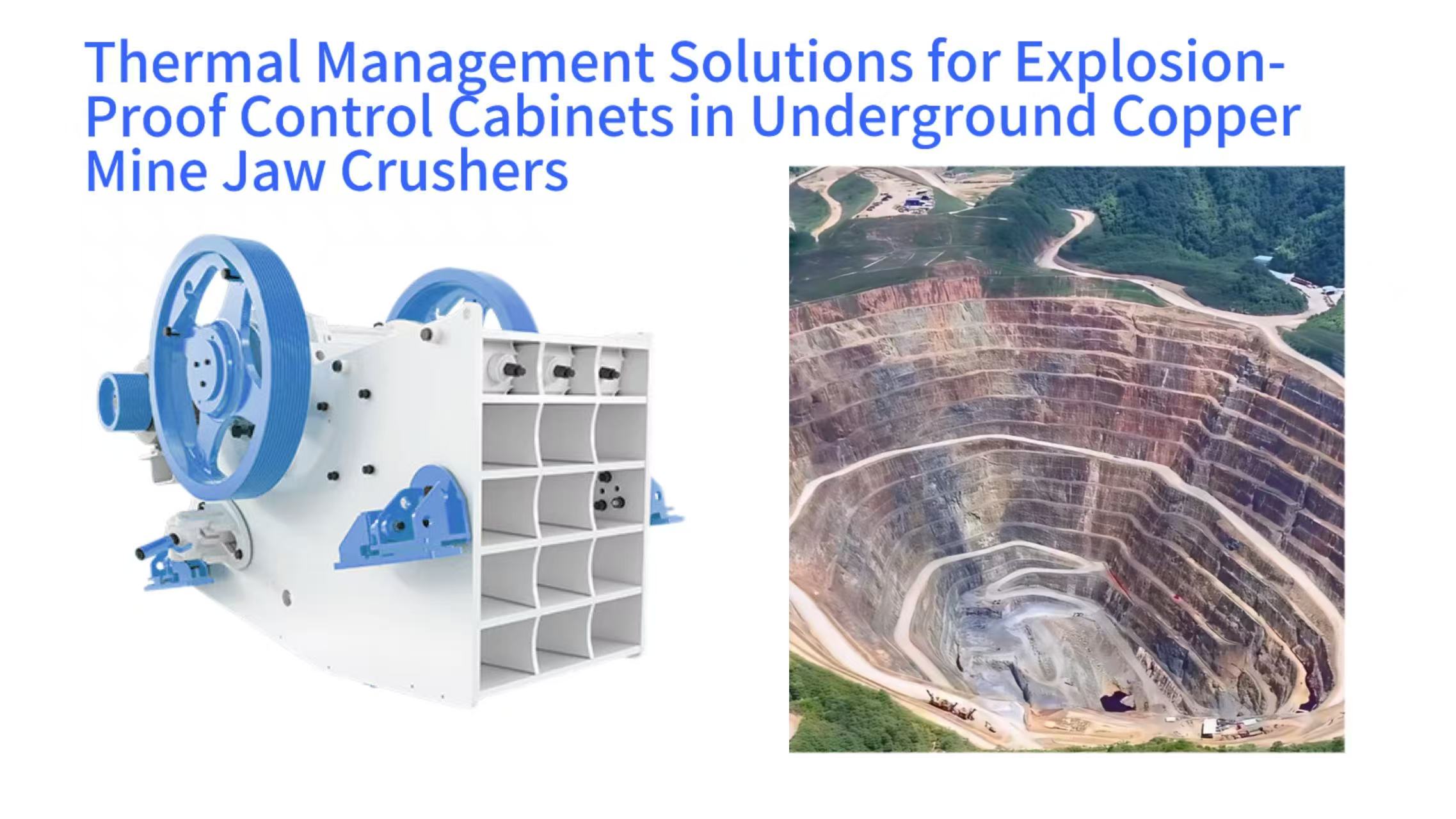
This article examines the critical challenge of heat dissipation for explosion-proof electrical control cabinets operating in the harsh environment of underground copper mines. It explores integrated design strategies that balance rigorous safety standards with effective thermal management to ensure the reliable operation of jaw crushing equipment.
Environmental Challenges in Underground Copper Mines
The underground mining environment presents extreme conditions that severely impact electrical components. High ambient temperatures, consistently exceeding 35 degrees Celsius, and humidity levels often above 90 percent create a constant thermal load on control systems. These factors accelerate insulation degradation and reduce the lifespan of sensitive electronic components.
Atmospheric contaminants pose an additional complication. Fine copper ore dust and corrosive gases can infiltrate and accumulate on surfaces, acting as an insulating blanket that impedes heat transfer. Furthermore, the essential explosion-proof enclosure design, while preventing ignition of flammable atmospheres, inherently creates a significant barrier to natural convection cooling, trapping heat within the cabinet.
Passive Heat Dissipation Through Advanced Materials
Passive cooling methods form the first line of defense against overheating. Engineers employ finely engineered heat sinks with optimized fin geometry to maximize surface area for heat radiation and convection. The strategic use of materials with high thermal conductivity, such as copper alloys and aluminum composites, helps to quickly draw heat away from critical components.
Innovative solutions like embedded heat pipes efficiently transfer thermal energy from hot spots to cooler areas of the enclosure or to external heat sinks. For managing sudden thermal spikes caused by the crusher's high-power demands, phase-change materials integrated within the cabinet absorb excess heat, temporarily storing it and releasing it gradually during lower-load periods.
Active Cooling Systems for Demanding Applications
When passive methods are insufficient, active systems provide precise temperature control. Explosion-proof rated axial fans, specifically designed to contain any internal ignition, force air across heat sinks and through enclosed ducting. The selection of these fans involves careful consideration of airflow volume, static pressure capability, and their power consumption relative to the heat load.
For the most demanding applications, a sealed liquid cooling loop can be implemented. This system circulates a coolant to an external heat exchanger, effectively moving thermal energy outside the hazardous area. Thermoelectric coolers offer another solution for localized spot cooling of high-heat-density components, allowing for precise temperature management of specific motor drives and controllers.
Integrating Cooling with Explosion-Proof Integrity
The paramount requirement in mine design is maintaining the explosion-proof integrity of the enclosure. Any cooling solution must not compromise the certified safety standards. This involves designing specialized air-to-air heat exchangers that allow thermal transfer across the enclosure wall without permitting the passage of flames or hot gases.
Sealing is critical at all penetration points. Cable glands and conduit entries for power and sensors must be meticulously selected and installed to preserve the ingress protection rating while managing the heat from current-carrying conductors. Viewing windows, often required for status indicators, are treated with coatings that reflect infrared radiation to minimize solar heat gain while maintaining optical clarity.
Validation Through Simulation and Testing
Prior to deployment, thermal management systems undergo rigorous analysis. Computational Fluid Dynamics software models airflow patterns and heat distribution within the complex geometry of the control cabinet. These simulations help identify hot spots and optimize the placement of components, heat sinks, and fans before physical prototypes are built.
Prototypes are then subjected to accelerated life testing in environmental chambers that replicate the mine's temperature, humidity, and dust conditions. This testing validates the simulation models and ensures the system can handle the dynamic thermal loads generated by the jaw crusher's operation, including frequent start-stop cycles and material jams.
Operational Monitoring and Lifecycle Maintenance
Ensuring long-term reliability requires continuous monitoring and proactive maintenance. Temperature sensors strategically placed inside the cabinet provide real-time data to the control system, enabling alarms or automatic power reduction if safe limits are approached. This data can be logged to track thermal performance over time and predict maintenance needs.
Maintenance protocols emphasize keeping cooling pathways clear. Regular cleaning schedules are established to remove dust buildup from heat sink fins and fan filters, a process crucial for maintaining thermal performance. The modular design of active cooling components, such as fans, allows for quick replacement without requiring a full shutdown of the crushing operation, thereby supporting continuous productivity in mining and quarrying applications.