The Jaw Crusher: A Primary Machine for Rock Reduction in Mining and Quarrying
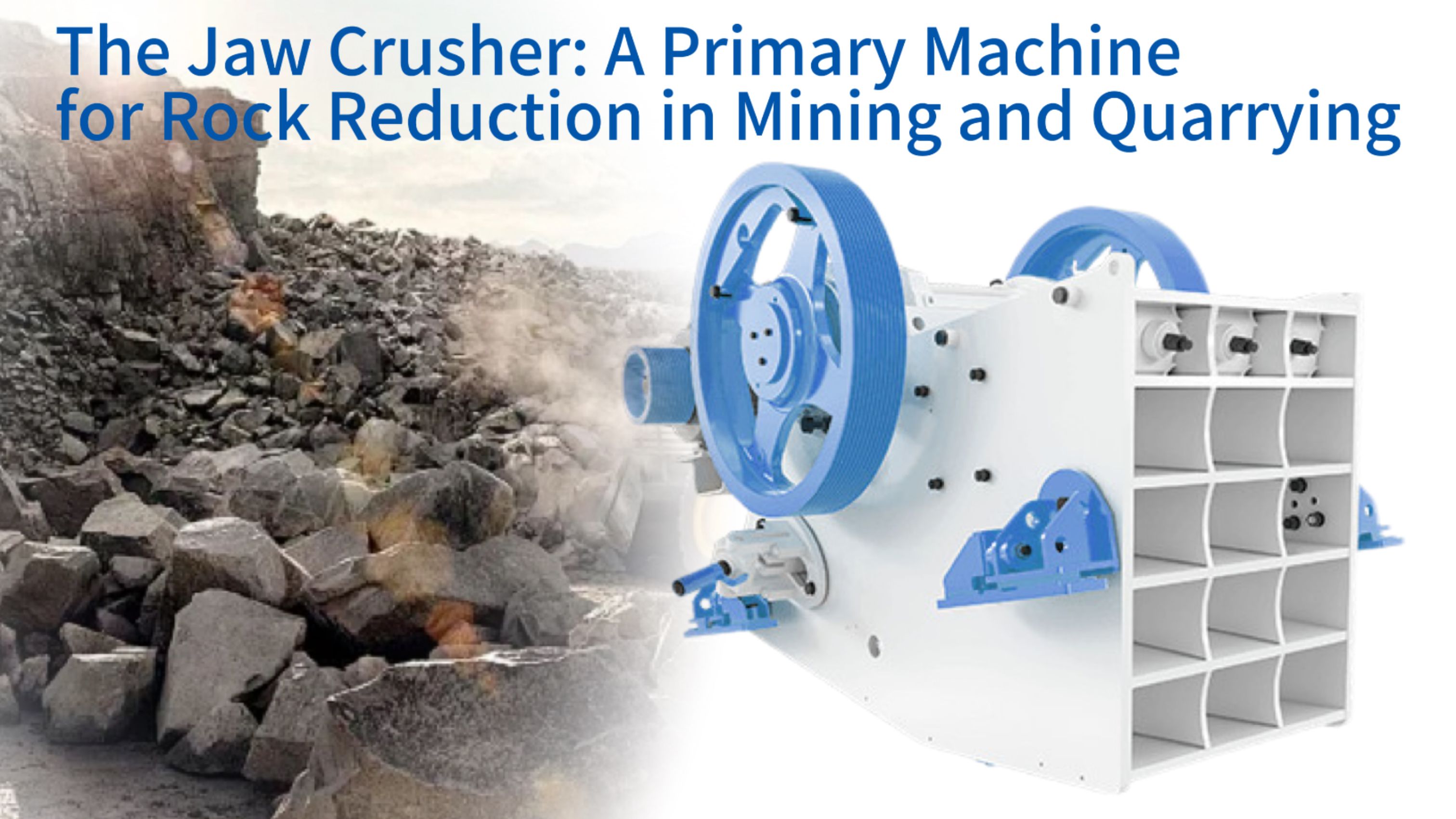
In the world of heavy industry, reducing large, natural rocks into smaller, manageable fragments is a fundamental process. This task is the primary responsibility of the jaw crusher. These machines are engineered to apply immense mechanical force to break down materials with high compressive strength, such as granite, basalt, and various metal ores. The resulting smaller particles are essential for subsequent processing stages. These stages include grinding in a mill, transportation via conveyor belts, or direct use as construction aggregate. The operation of a jaw crusher is based on a simple yet highly effective principle: the compressive action of two heavy-duty plates. The fixed jaw acts as an anvil, while the movable jaw applies periodic pressure to crush the material trapped between them. This design has proven its reliability and efficiency for over a century, making it an indispensable asset in mining, quarrying, and recycling operations worldwide.
The Fundamental Working Principle of a Jaw Crusher
Jaw Crusher Working Principle Flow
The core of a jaw crusher's operation lies in its ability to convert rotational energy into powerful compressive force. This is achieved through a carefully engineered system of mechanical components working in precise sequence. The process begins with the introduction of material into the top of the crushing chamber. This chamber is defined by two opposing jaw plates. Understanding this basic cycle is key to appreciating the machine's capability to handle the hardest rocks. The efficiency of this method lies in its direct application of force, making it ideal for primary crushing duties where throughput is a critical factor.
Energy Conversion and the Eccentric Shaft
A large electric motor provides the rotational power for the crusher. This rotation is transferred to the machine's core component, the eccentric shaft, via a system of belts and pulleys. The eccentric shaft is not a perfectly cylindrical piece of metal. Its central portion, where the movable jaw is attached, is offset from its main rotational axis. As this shaft rotates, this offset section moves in a circular path. This circular motion is the fundamental source of energy that drives the entire crushing action. The precision engineering of this shaft is vital for the machine's long-term reliability.
The Cyclical Motion of the Movable Jaw
The offset motion of the eccentric shaft is transmitted to the movable jaw, often called the swing jaw. This connection causes the swing jaw to move in a complex, elliptical path. At the top of the crushing chamber, near the pivot point, the movement is relatively small and powerful, primarily used to grip and break the largest rocks. As the motion travels down the jaw, it becomes a more pronounced horizontal stroke. This lower section provides the powerful squeezing force needed to complete the crushing process. This optimized motion ensures maximum efficiency across the entire height of the chamber.
Creating the Crushing Force with the Toggle Plate
The toggle plate is a seemingly simple but critically important component. It acts as a mechanical fuse and a force transmitter. The bottom of the movable jaw rests against this plate. When the eccentric shaft pushes the top of the jaw forward, the bottom pivots, pressing against the toggle plate. The toggle plate transmits this massive force to the rigid rear frame of the crusher. This creates a powerful leverage system. The force generated at the jaw plates can exceed several hundred mega-Pascals, sufficient to fracture even the toughest igneous rock formations like granite.
The Role of the Flywheel in Energy Storage
Crushing rock requires an immense amount of energy in short bursts. A jaw crusher uses two heavy flywheels to manage this power demand. These large metal wheels are mounted on the eccentric shaft. During the idle or return stroke of the movable jaw, the flywheels store rotational energy. This stored energy is then released during the crushing stroke to help drive the jaw forward with maximum force. This system smooths out the power draw from the motor. It allows for a smaller motor to be used while still achieving a high peak crushing force.
Anatomy of the Machine: Key Components and Their Functions
Key Components of Jaw Crusher
A jaw crusher is more than just its crushing action. It is a complex assembly of specialized parts, each designed for a specific purpose under extreme conditions. The durability and performance of the entire machine depend on the quality and design of these individual components. From the heavy steel frame that withstands immense stresses to the wear liners that are sacrificed to protect the core structure, every part has a role. Understanding these components provides insight into the machine's robustness and the engineering philosophy behind its design.
The Frame: The Foundation of the Crusher
The frame is the primary structural component of a jaw crusher. It is a large, rigid fabrication, typically made of high-grade cast steel or thick, welded steel plates. This structure must be incredibly strong to withstand the immense crushing forces generated internally without flexing or deforming. All other major components, including the fixed jaw, the eccentric shaft bearings, and the toggle plate seat, are mounted directly onto or within the frame. The frame's design and construction are fundamental to the machine's overall stability, alignment, and long-term operational life.
The Fixed and Movable Jaw Plates
The jaw plates are the only parts of the crusher that directly contact the rock. The fixed jaw plate, or fixed jaw plate, is bolted to the front wall of the frame. The movable jaw plate is mounted on the swing jaw. Both plates are lined with replaceable liners made of a highly wear-resistant material, most commonly manganese steel. These liners are not flat. They are cast with a specific profile of vertical and horizontal ribs, often called a tooth profile. This profile helps to grip the rock, focus the crushing force, and guide the material through the chamber.
The Eccentric Shaft and Bearings
The eccentric shaft is the heart of the crusher's mechanical drive system. It is a large, precision-machined component made from high-strength alloy steel. The shaft rotates in heavy-duty bearings, typically spherical roller bearings, which are designed to handle the extreme radial and axial loads generated during crushing. The precise geometry of the shaft's eccentric portion determines the motion and stroke of the swing jaw. The durability of this component is critical, as its failure would be catastrophic and costly to repair.
The Toggle Plate as a Safety Device
Beyond its role in transmitting force, the toggle plate serves a vital safety function. It is intentionally designed as the weakest link in the mechanical chain. If an uncrushable object, such as a steel excavator tooth or a large piece of tramp iron, enters the crushing chamber, the forces on the toggle plate will exceed its design strength. The plate is designed to break or fracture under this extreme overload. This controlled failure immediately stops the movement of the swing jaw, protecting the much more expensive components like the eccentric shaft and main frame from severe damage.
Understanding Key Operational Parameters
Jaw Crusher Operational Parameters
Crushing Ratio (Feed Size : Product Size)
Feed vs Discharge Size Relationship
Smaller setting → Finer product, lower capacity
Larger setting → Coarser product, higher capacity
The performance of a jaw crusher is not a fixed value. It is determined by a set of adjustable parameters that can be optimized for specific applications. Operators must understand these variables to achieve the desired product size, maximize throughput, and control operational costs. These parameters are interconnected. Changing one, such as the discharge size, will inevitably affect others, like the overall crushing capacity. A skilled operator manages these relationships to fine-tune the machine for peak efficiency.
Feed Size and Its Limitations
The feed size of the material is the first critical parameter. Every jaw crusher model is designed to accept a maximum feed size, which is typically around 80% to 90% of the width of its feed opening. Feeding material larger than this limit can lead to blockages in the chamber or damage to the jaw plates. The size distribution of the feed also matters. A well-graded feed, containing a mix of sizes, can sometimes pack too tightly, reducing throughput. Conversely, feed consisting entirely of very large rocks may be handled more efficiently.
Discharge Size and the Closed Side Setting
The size of the final product is controlled by the closed side setting. This is the narrowest gap between the movable and fixed jaw plates at the bottom of the crushing chamber during the crushing stroke. A smaller closed side setting produces a finer product but reduces the machine's overall capacity. A larger setting increases throughput but yields coarser material. The setting can be adjusted mechanically or hydraulically, depending on the crusher's design. This adjustability allows a single crusher model to produce material for various applications, from coarse road base to finer feed for a secondary crusher.
Crushing Ratio and Reduction Efficiency
The crushing ratio is a key measure of a crusher's performance. It is defined as the ratio of the feed size to the product size. A jaw crusher can achieve a reduction ratio of 4:1 to 6:1. This means a 600-millimeter rock can be reduced to a 100 to 150-millimeter product in a single pass. This high reduction ratio is one of the reasons jaw crushers are so effective as primary crushers. It significantly reduces the material size in one step, minimizing the load on subsequent crushing stages.
The Design of the Crushing Chamber
The shape and design of the crushing chamber are crucial for overall performance. The chamber is not a simple V-shape. Its profile is carefully engineered to ensure that material is gripped effectively at the top and that the compression force is applied optimally throughout its height. A deep chamber allows for a larger feed size relative to the machine's footprint. The chamber geometry also influences the flow of material, preventing packing and ensuring that all rocks are subjected to the crushing action before they reach the discharge opening.
Exploring the Main Types of Jaw Crushers
Comparison of Jaw Crusher Types
While all jaw crushers operate on the same basic principle of compressive force, they are manufactured in several distinct types. These variations are designed to meet different operational needs, application requirements, and user preferences. The primary distinction lies in the design of the swing jaw's pivot point. This seemingly small difference has significant implications for the crusher's kinematics, maintenance, and suitability for different tasks. Understanding these differences is essential for selecting the right machine for a specific project.
The Blake Crusher with a Pivot at the Top
The Blake crusher is the original and most common design of jaw crusher. It is named after its inventor, Eli Whitney Blake. In this machine, the movable jaw is pivoted at the top. This design provides the largest crushing stroke at the bottom of the chamber, where the material is finest. The motion is primarily vertical near the top and becomes more horizontal at the discharge. Blake crushers are known for their reliability and ability to handle very hard and abrasive materials. They are typically used in large-scale mining operations where high capacity and durability are paramount.
The Dodge Crusher with a Pivot at the Bottom
The Dodge crusher features a movable jaw that is pivoted at the bottom. This design results in a uniform crushing stroke throughout the entire chamber. The movement is greatest at the top, where the largest rocks are fed. While this provides a consistent product size, it has a significant disadvantage. The Dodge crusher is more prone to clogging and has a lower capacity compared to the Blake design. For these reasons, the Dodge type is now considered largely obsolete and is rarely used in modern industrial crushing applications.
The Universal Crusher with an Intermediate Pivot
The Universal crusher, also known as the overhead eccentric crusher, offers a compromise between the Blake and Dodge designs. In this type, the eccentric shaft is positioned above the movable jaw, and the jaw is not pivoted at either end but is suspended from the shaft. This gives the jaw a more elliptical motion. The swing jaw has a powerful stroke at both the top and the bottom. This design provides high throughput and is well-suited for less abrasive materials. It is often found in aggregate plants processing limestone or recycled materials.
The Hydraulic Jaw Crusher for Modern Control
Modern hydraulic jaw crushers represent an evolution in design, focusing on automation and ease of use. While often based on the Blake or Universal kinematic principles, they incorporate hydraulic systems for key functions. A hydraulic wedge system allows for quick and precise adjustment of the closed side setting, often without needing to stop the crusher. Hydraulic cylinders may also be used to automatically release tramp iron, resetting the machine after a blockage event. These features reduce downtime and improve operational safety. The PE jaw crushers often incorporate such modern features.
Applications Across Different Industries
Jaw Crusher Industry Applications
The versatility and robust nature of the jaw crusher make it an essential machine in a wide variety of industries. Its primary role is consistently the same: to reduce large, hard materials into smaller pieces for further processing. However, the context and specific goals of this reduction vary greatly from one sector to another. From the depths of an underground mine to a bustling construction site, the jaw crusher adapts to its environment. Its fundamental reliability makes it the first choice for breaking rock, regardless of the industry's specific challenges.
Primary Crushing in Large-Scale Mining
In the mining industry, the jaw crusher is almost exclusively used for primary crushing. Massive haul trucks dump raw, blasted ore directly into the crusher's hopper. This ore can contain rocks exceeding one meter in diameter. The jaw crusher reduces this material to a size manageable for transport on conveyor belts or for feeding into secondary cone crushers. For this task, machines like the robust gyratory crusher components are a relative, but jaw crushers offer a distinct advantage in cost and simplicity for many operations. They are the workhorses that start the entire mineral recovery process.
Producing Aggregates in Quarries
Quarries produce the crushed stone that forms the foundation of our infrastructure. Jaw crushers are the standard primary crusher in most hard rock quarries. They break down blasted granite, basalt, or limestone into a consistent, smaller product. This product is then sent to secondary and tertiary crushers, such as PF impact crushers, to create specific aggregate sizes for concrete, asphalt, and road base. The durability of the jaw crusher is critical in this application, as quarries operate continuously to meet high market demand for construction materials.
Processing Construction and Demolition Waste
The recycling industry presents a unique challenge: processing highly heterogeneous materials. A jaw crusher is ideal for this task, particularly for C and D waste recycling. It can crush concrete chunks that are full of reinforcing steel rebar. The compressive action breaks the concrete free from the steel without causing excessive wear. The resulting crushed concrete can be used as a sustainable aggregate for new construction projects. This application is growing rapidly as the world seeks to reduce landfill waste and embrace the circular economy.
Preparing Material for Cement Manufacturing
The cement manufacturing process begins with the quarrying of raw materials, primarily limestone and clay. These materials are often extracted in large, irregular blocks. A jaw crusher is used at the quarry site to perform the initial size reduction. It breaks these large blocks into smaller pieces that can be easily transported and further processed. The crushed material is then fed into a secondary crusher for finer reduction before entering the grinding mills. The efficiency of this primary crushing stage directly impacts the energy consumption and productivity of the entire cement plant.
Selecting the Optimal Jaw Crusher for Your Needs
Jaw Crusher Selection Decision Flow
Choosing the correct jaw crusher for a specific operation is a decision with long-term financial and operational consequences. It requires a careful analysis of the material to be processed, the desired production goals, and the physical constraints of the site. A machine that is too small will be a constant bottleneck. A machine that is excessively large will waste capital and energy. The selection process involves matching the crusher's capabilities to the project's unique demands. It is a balancing act between feed size, required capacity, and product specifications.
Analyzing the Material Properties
The first and most important factor is the nature of the rock or ore itself. The material's hardness, abrasiveness, and moisture content will dictate the type of crusher and the required wear parts. A crusher handling soft limestone will have different requirements than one crushing highly abrasive granite. For very hard and abrasive materials, a crusher with a classic design and heavy-duty construction is necessary. For less demanding applications, a lighter-duty, higher-speed design might offer better throughput and lower initial cost. Granite crushing operations, for example, demand the most robust machines available.
Determining Required Throughput
The required production capacity, measured in tons per hour, is a primary driver of crusher size. This capacity must be calculated based on the project's needs, considering peak demand and future expansion. It is crucial to select a crusher that can comfortably handle the required throughput with some reserve capacity. Operating a crusher at its maximum limit for extended periods leads to increased wear and a higher risk of mechanical failure. The selected model's specifications should be carefully reviewed against the production targets.
Evaluating Feed and Discharge Specifications
The size of the incoming material and the desired size of the final product are non-negotiable parameters. The crusher's feed opening must be large enough to accept the largest anticipated rocks without bridging or jamming. Simultaneously, its reduction ratio must be sufficient to reduce that feed to the target product size in a single pass. If the required reduction ratio is too high, a two-stage crushing process might be necessary, using a jaw crusher as a primary and a SH series single cylinder hydraulic cone crushers as a secondary. These specifications directly determine the crusher model.
Considering Mobility and Site Constraints
Finally, the physical location of the operation must be considered. A permanent quarry with decades of life is best served by a large, stationary, fixed-base crusher. However, for a temporary construction project or a recycling operation that moves between sites, mobility is essential. In such cases, a mobile jaw crusher mounted on a tracked or wheeled chassis provides the necessary flexibility. These units can be moved on-site or relocated entirely with minimal effort, bringing the crushing capability directly to the material source.
With over 15 years of direct experience in the field of rock reduction machinery, MSW Technology offers deep expertise in jaw crusher applications. The company provides robust and reliable equipment designed to meet the rigorous demands of modern mining and quarrying. Their team works closely with clients to ensure the selected solution aligns perfectly with their operational goals and material characteristics, delivering long-term value and performance.