A Comprehensive Guide to Upgrading Your Jaw Crusher for Enhanced Efficiency
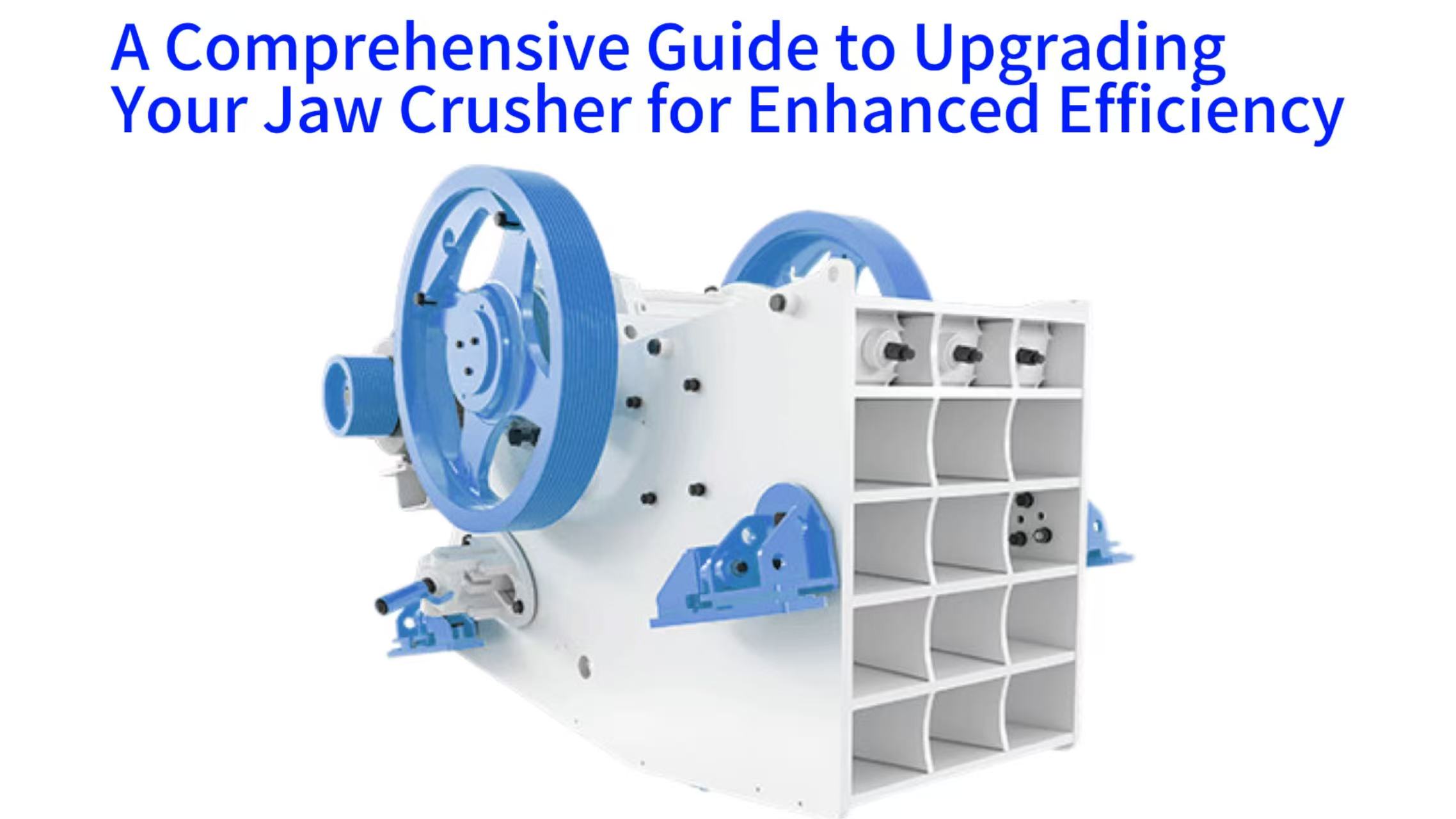
The decision to replace an aging jaw crusher represents a significant strategic investment for any aggregate or mining operation. This guide provides a systematic framework for evaluating existing equipment performance and selecting a modern replacement. It examines critical factors including operational diagnostics, technological evolution, core selection parameters, and the holistic assessment of total cost of ownership. The objective is to facilitate an informed capital allocation that maximizes long-term productivity, energy efficiency, and operational reliability, thereby ensuring a substantial return on investment.
Core Workflow for Jaw Crusher Upgrade
(Performance Audit)
(Technical Specs)
(Generation Comparison)
(Spec Interpretation)
(Lifecycle Cost)
(Commissioning)
Conducting a Comprehensive Diagnostic Assessment of Existing Equipment
Key Diagnostic Dimensions for Aging Jaw Crushers
A thorough evaluation of the incumbent jaw crusher's performance forms the essential foundation for any replacement justification. This diagnostic phase moves beyond subjective impressions to quantify deficiencies in measurable terms. Systematic analysis identifies the root causes of underperformance, which in turn provides precise technical specifications for the new machinery. Operational data collected during this phase directly informs the economic model for the upgrade.
Analyzing Throughput Decline and Capacity Bottlenecks
A primary indicator of equipment degradation is a measurable reduction in processing capacity. Operators should compare current hourly tonnage against the machine's original design capacity and its own historical benchmarks. This decline often stems from reduced mechanical efficiency in the crushing motion, loss of effective volume within the worn crushing chamber, or increased power transmission losses within the drive system. Documenting this shortfall provides a clear baseline for improvement targets for the new unit.
Evaluating Rising Operational and Maintenance Costs
The financial burden of sustaining old equipment frequently escalates. It is necessary to audit recent expenditures on wear parts, such as jaw plates and cheek plates, alongside major components like eccentric shaft bearings. Furthermore, recording the frequency and cumulative duration of unplanned downtime caused by mechanical failures offers a clear view of lost production opportunity. These escalating costs directly impact the calculation for a new machine's payback period.
Addressing Unstable Product Gradation and Quality
Consistent product sizing is paramount for downstream processes. An aging crusher often struggles to maintain a stable discharge size, leading to an increase in oversized fragments or excessive fines. This problem typically originates from mismatched wear profiles on the jaw plates, malfunctioning discharge setting adjustment mechanisms, or even foundational shifts in the crusher's base structure. Restoring control over product gradation is a key driver for replacement.
Assessing Safety Risks and Environmental Compliance
Older jaw crusher designs may lack modern safety features, such as comprehensive guarding or advanced overload protection systems. Additionally, emissions of dust and noise from antiquated machines may exceed contemporary regulatory standards. Upgrading equipment mitigates these operational risks and ensures compliance with stringent health, safety, and environmental regulations, thereby avoiding potential fines and workplace hazards.
Defining Operational Requirements for a New Jaw Crusher
Critical Operational Requirements for New Jaw Crushers
Production Targets & Material Properties
Hourly throughput (customized to site needs)
Material compressive strength/hardness index
Abrasiveness & moisture content
Maximum feed dimensions (≥15-20% larger than feed size)
Product Specs & Circuit Synergy
Defined final product size distribution
Optimized discharge setting for downstream equipment
Particle shape control (minimize slabby products)
Compatibility with secondary cone/impact crushers
Energy Efficiency & Sustainability
Reduced power usage per ton of processed material
High-efficiency motor integration
Optimized kinematic design (minimize idle cycles)
Load-based energy-saving operational modes
Automation & Process Control
Centralized automatic lubrication systems
Hydraulic discharge setting adjustment
Real-time monitoring (bearing temp/vibration)
Integration with plant central control system
Following a detailed diagnostic, vague notions of replacement must be transformed into concrete, measurable technical and operational objectives. This crucial step establishes the fundamental criteria against which all potential new jaw crusher models will be evaluated. A clearly defined set of requirements ensures the selected equipment aligns perfectly with long-term production goals and site-specific conditions, moving the selection process from a simple specification match to a strategic alignment.
Re-evaluating Production Targets and Material Characteristics
The selection process must begin with a re-assessment of both the desired output and the input material. Beyond setting a target hourly throughput, a fresh analysis of the raw feed material's properties is essential. This includes its compressive strength or hardness index, abrasiveness, moisture content, and maximum feed dimensions. A new crusher's capabilities must be meticulously matched to these material characteristics to ensure efficient and sustainable operation, a principle central to effective aggregate processing.
Specifying Final Product Specifications and Circuit Synergy
The required size distribution of the final product must be explicitly defined. For a primary jaw crusher, its discharge setting must be optimized to feed the subsequent stage of crushing efficiently, whether that is a secondary cone crusher or an impact crusher. The particle shape produced by the new jaw crusher can also influence the performance and wear rates in downstream equipment, making a holistic view of the entire crushing circuit necessary.
Establishing Energy Efficiency and Sustainability Goals
Modern equipment offers significant advancements in energy consumption. Setting a specific target for reduced power usage per ton of processed material is a prudent financial and environmental goal. This involves evaluating crushers equipped with high-efficiency motors, optimized kinematic designs that reduce idle cycles, and potentially energy-saving operational modes that adjust power draw based on the feed load.
Determining the Level of Automation and Process Control
The desired degree of automation is a critical decision point. Modern crushers can be equipped with centralized automatic lubrication systems, hydraulic systems for quick and precise discharge setting adjustment, and continuous monitoring of critical parameters like bearing temperature and vibration levels. Defining the need for integration with a plant's central control system for data exchange and remote oversight is a key part of the specification process.
Contrasting Key Technologies Between Generations of Crushers
Technology Comparison: Legacy vs. Modern Jaw Crushers
Understanding the technological evolution in jaw crusher design is critical for recognizing features that deliver tangible operational benefits. Contemporary machines incorporate advancements that address the core limitations of older models. These innovations span geometry, materials, and control systems, collectively contributing to higher availability, lower operating costs, and improved product quality. Discerning these differences allows for a value-based rather than just a cost-based comparison.
Optimization of Crushing Chamber Design and Dynamics
The geometry of the crushing chamber has undergone significant refinement. Modern designs often feature a deeper or non-symmetric chamber profile compared to older, straighter designs. These advanced profiles optimize the nip angle and the stroke characteristics at different points in the chamber. The result is a more efficient single-toggle jaw crusher crushing action that can increase capacity, promote better particle shape with fewer slabby products, and distribute wear more evenly across the jaw plates, extending their service life.
Advancements in Structural Materials and Manufacturing Techniques
The integrity and durability of the crusher frame have been enhanced through superior metallurgy and manufacturing. Modern frames are often constructed from high-strength steel and designed using finite element analysis to create robust, stress-optimized structures. Similarly, jaw plates now utilize advanced manganese steel alloys or composite materials that work-harden more effectively under impact, leading to wear life that can be multiple times longer than that of conventional plates.
Evolution of Adjustment and Overload Protection Systems
The cumbersome process of manually adding or removing shims for setting adjustment has been largely superseded by hydraulic systems. Modern crushers often employ a hydraulic wedge mechanism that allows the closed-side setting to be adjusted quickly and precisely at the push of a button, even while the machine is stopped. Overload protection has also evolved from simple mechanical shear pins to sophisticated hydraulic cylinders that can release tramp iron and automatically reset, enhancing both safety and operational uptime.
Enhancements in Bearing and Drive System Reliability
The bearing technology supporting the eccentric shaft represents a critical area of improvement. Many older designs used sliding bearings, whereas contemporary jaw crushers almost universally employ large-diameter spherical roller bearings. These bearings offer higher load capacity, more reliable lubrication, and reduced friction. Furthermore, improvements in the dynamic balancing of the eccentric shaft and flywheel assemblies contribute to lower vibration levels, reduced structural stress, and smoother operation.
Interpreting Core Selection Parameters from Technical Specifications
Key Selection Parameters for Jaw Crushers
(Example Dimension)
(Typical Range)
(Opening vs. Max Feed)
• Feed opening must be 15-20% wider than maximum feed piece to prevent bridging
• Throughput ranges are dependent on material density, hardness, moisture and discharge setting
• Shaft speed + stroke magnitude define crushing action (balance affects capacity/wear)
• Motor power: Focus on operating power draw (not just connected power) for energy efficiency
Manufacturer specification sheets provide essential data, but a deep understanding of each parameter's practical implication is necessary for informed selection. Superficial comparisons based solely on headline numbers can lead to a mismatched crusher. Interpreting these specifications within the context of a specific operation's needs transforms raw data into actionable intelligence, ensuring the chosen model will perform as expected under real-world conditions and feed material characteristics.
Feed Opening Dimensions and Maximum Feed Size Capacity
The dimensions of the feed opening, for instance 1500mm by 1200mm, dictate the crusher's ability to accept large blocks of rock. This opening must be sufficiently larger than the maximum feed size from the quarry face or the preceding haulage equipment. A common rule is for the opening to be at least 15-20% wider than the largest anticipated feed piece to ensure smooth entry and prevent bridging, which is a critical consideration for maintaining consistent feed size to the primary breaker.
Throughput Capacity Ranges and Associated Test Conditions
The stated processing capacity, often presented as a range like 500 to 800 metric tons per hour, is highly dependent on specific test conditions. These conditions include the density, hardness, and moisture of the test material, as well as the crusher's discharge setting. A prudent buyer will request a site-specific capacity estimate from the supplier based on their own material analysis, rather than relying solely on the catalog figure, to ensure accurate production planning.
Relationship Between Shaft Speed, Stroke, and Crusher Dynamics
The rotational speed of the eccentric shaft, combined with the magnitude of the jaw stroke, defines the cyclical crushing action. A higher speed generally increases the number of compression cycles per minute, potentially boosting capacity for certain materials. The stroke profile affects the compression ratio and the attrition within the chamber. An optimal balance between speed and stroke is engineered for different applications, influencing both output and wear patterns on the crushing surfaces.
Motor Power Configuration and Drive Train Design
The installed motor power provides the necessary energy to generate the crushing force. It is important to distinguish between the connected power and the actual operating power draw, which varies with load. The drive configuration, whether a direct coupling or a V-belt transmission, also has implications. V-belt drives can offer a degree of shock absorption and slippage protection during momentary overloads, whereas direct drives may offer marginally higher mechanical efficiency.
Discharge Setting Adjustment Range and Product Shape Control
The minimum and maximum limits of the closed-side setting adjustment define the operational flexibility of the crusher. A wider range allows the same machine to produce different product gradations for various end uses. Furthermore, understanding the correlation between the set gap and the actual top-size of the product, often influenced by the chamber geometry and jaw plate profile, is vital for achieving the desired final discharge size specification from the primary crushing stage.
Evaluating the Holistic Solution Beyond the Crusher Unit
Total Cost of Ownership (TCO) Components
Wear Part Lifespan Comparison
Selecting a new jaw crusher extends beyond comparing mechanical specifications; it involves choosing a long-term operational partner and a comprehensive support ecosystem. The total cost of ownership over the machine's lifespan is profoundly influenced by factors external to the iron itself. A diligent evaluation of these surrounding elements safeguards the investment and ensures sustained productivity, minimizing hidden costs and operational disruptions that can erode the projected benefits of the new equipment.
Calculating Lifecycle Costs and Wear Parts Supply Chain
The initial purchase price is only a fraction of the total expenditure. A thorough analysis must include the expected consumption rate, cost, and availability of key wear parts like jaw plates and cheek plates. Reliable and competitively priced access to these components is crucial for maintaining operational continuity. Companies with extensive field expertise, such as MSW Technology, which leverages fifteen years of industry experience, understand that sustainable productivity hinges on predictable wear part lifecycle management and support.
Assessing Installation Requirements and Plant Layout Integration
The physical integration of a new crusher into an existing plant requires careful planning. The foundation must be reviewed for compatibility with the new unit's weight, dimensions, and dynamic loads, often necessitating reinforcement or complete replacement. The spatial layout must accommodate not only the crusher itself but also ensure adequate clearance for safe operation, routine maintenance access, and efficient material flow from the feed to the discharge conveyors.
Verifying Manufacturer Support and Service Network Capabilities
The quality and responsiveness of after-sales support are critical determinants of long-term equipment availability. Prospective buyers should investigate the supplier's capacity to provide detailed installation supervision, comprehensive operator and maintenance training, and the proximity of skilled service engineers. The existence of a well-stocked regional parts depot significantly reduces downtime waiting for critical components, a service model emphasized by providers focused on customer uptime.
Exploring Potential for Upgrade Kits or Modernization Packages
For operations with budget constraints or where a full replacement is not immediately viable, exploring partial modernization can be a strategic interim step. This may involve retrofitting newer, more efficient jaw plates with improved profiles, upgrading the adjustment system to a hydraulic mechanism, or enhancing lubrication and monitoring systems. These targeted upgrades, often supported by experienced engineering firms, can deliver a measurable performance improvement and extend the serviceable life of the existing crusher frame and drive.
Implementing the Decision from Selection to Successful Commissioning
Implementation Timeline for Jaw Crusher Upgrade
Vendor Tender & Evaluation
Formal RFQ development, technical/commercial comparison, supplier selection
Material Testing & Reference Visits
Live crush tests with site material, reference installation visits
Changeover Planning & Execution
Decommission old unit, foundation modification, new crusher installation (planned shutdown)
Commissioning & Monitoring
Baseline performance setup, continuous monitoring (throughput/energy/wear), maintenance scheduling
Key Performance Baseline Metrics to Monitor
The final phase involves translating the careful selection into a successful field installation and operational ramp-up. A structured, methodical approach to procurement and implementation minimizes risk and ensures a smooth transition. This process requires detailed planning, clear communication with the supplier, and meticulous on-site execution to realize the full performance potential of the new investment, thereby validating the extensive preparatory work conducted during the evaluation and selection stages.
Developing a Detailed Vendor Tender and Evaluation Protocol
A formal request for quotation should be compiled, encompassing not only the technical specifications but also commercial terms, delivery schedules, performance guarantees, and after-sales service agreements. This document facilitates an objective, apples-to-apples comparison between potential suppliers. The evaluation should weigh both quantitative factors like price and efficiency, and qualitative factors like reputation and support infrastructure, to arrive at a balanced decision.
Conducting Material Testing and Reference Site Visitations
Whenever possible, conducting a live crush test with representative site material at the manufacturer's facility or a research center provides invaluable empirical data. This test verifies claimed capacity, power draw, and product gradation under controlled conditions. Complementing this with visits to existing installations processing similar material offers insights into real-world reliability, operational nuances, and end-user satisfaction, providing a practical perspective beyond laboratory results.
Planning the Equipment Changeover and Production Transition
A critical path schedule must be developed for the physical replacement. This plan should detail the sequential steps of decommissioning and removing the old crusher, preparing or modifying the foundation, rigging and placing the new machine, and executing all mechanical, electrical, and control system tie-ins. The goal is to execute this transition during a planned maintenance shutdown with minimal disruption to overall plant output, a complex logistical exercise that benefits from experienced project management.
Establishing Performance Baselines and a Continuous Monitoring Regime
Upon commissioning, immediate effort should be directed at establishing baseline performance metrics for the new crusher. These include throughput rate, specific energy consumption, product size distribution, and critical mechanical health indicators like vibration spectra. This baseline serves as a reference for future condition monitoring and performance audits. Implementing a structured maintenance and inspection schedule from the outset, informed by the manufacturer's guidelines and operational data, is essential for preserving the crusher's performance and longevity over its service life. For further technical insights into optimizing crusher operations, resources such as crushing capacity analysis can be consulted.