Why Impact Crusher is Universally Adopted for Limestone Crushing in Cement Plants
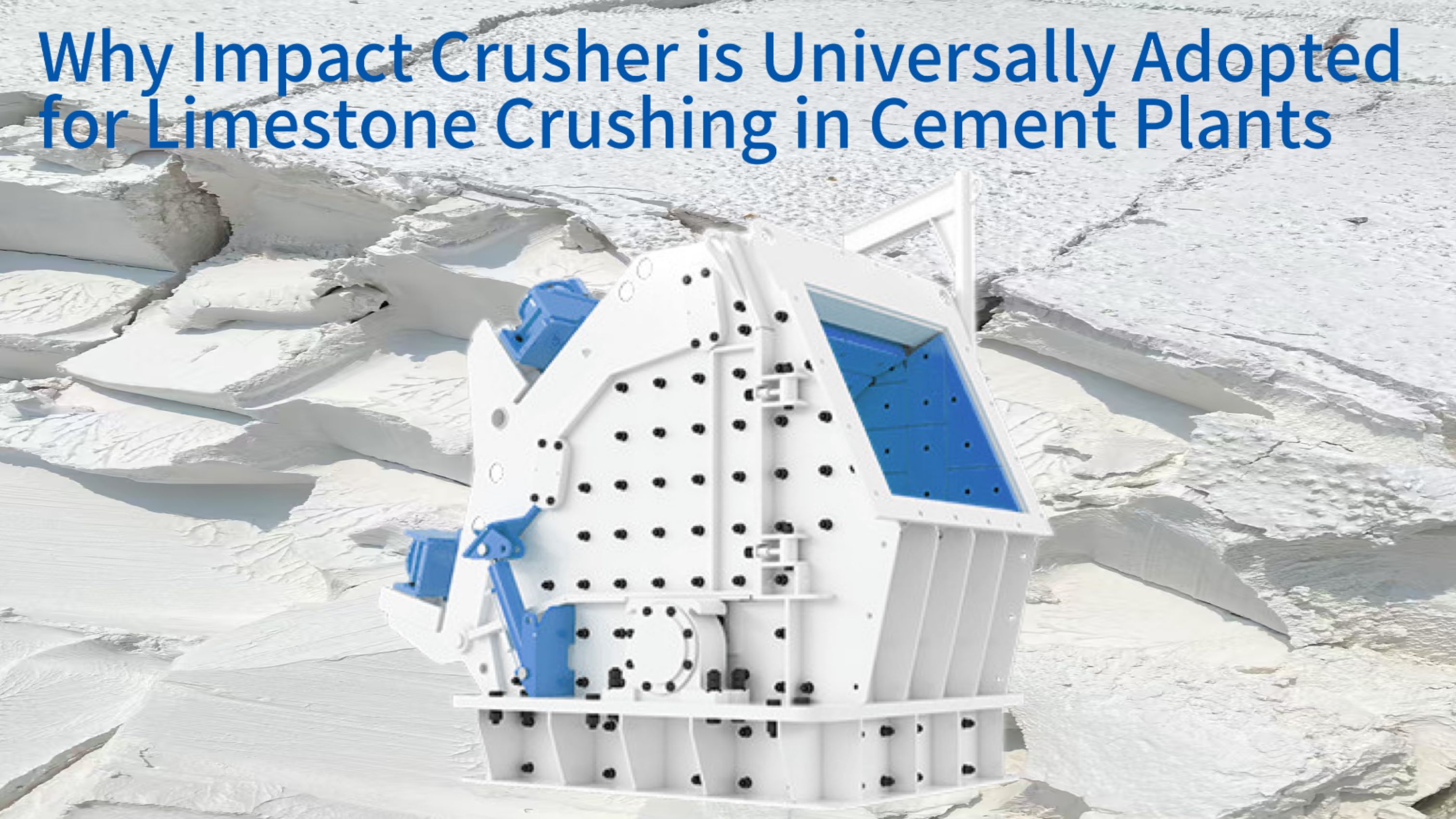
In cement manufacturing, limestone serves as the primary raw material, and the efficiency of its crushing directly influences the stability of clinker calcination, the quality of the final cement product, and the overall energy consumption of the production line. The unique physical characteristics of limestone—a sedimentary rock with medium hardness, notable brittleness, and relatively low abrasiveness—create a natural foundation for selecting an appropriate crushing method. Among the various crushing machines available, the impact crusher has become the dominant choice for limestone size reduction in cement plants. This widespread adoption stems from the machine's working principle, which aligns perfectly with limestone properties, and its ability to deliver superior crushing efficiency, excellent product shape, simplified process flow, and significant economic benefits. This article provides a comprehensive technical analysis of why impact crushers are universally preferred for limestone preparation in the cement industry, exploring the underlying mechanics, functional advantages, application scenarios, economic returns, and future technological trends.
The Decisive Role of Material Properties: The Natural Alignment Between Limestone's Physical Characteristics and Impact Crushing Principles
Limestone Physical Properties Comparison
Impact Crushing Process for Limestone
Limestone Feed
Size up to 1m diameter
High-Speed Rotor Impact
Blow bars strike limestone
Secondary Impact (Plates)
Fracture along cleavage planes
Crushed Product
≤25mm, cubical shape
The selection of crushing equipment is fundamentally dictated by the physical nature of the material to be processed. Limestone, with its well-defined mechanical properties, presents an ideal match for the operational design of impact crushers. A thorough examination of limestone's hardness, abrasiveness, brittleness, and cleavage structures reveals why it responds so effectively to impact forces, and why alternative crushing methods fall short in this specific application.
Analysis of Limestone Hardness and Abrasiveness Index
Limestone typically exhibits a Mohs hardness rating ranging from 3 to 4, and its uniaxial compressive strength generally falls between 80 and 120 megapascals. This places it within the medium to low hardness category among geological materials. More critically, the primary mineral constituent of limestone is calcite, which gives the rock an abrasiveness index substantially lower than that of harder stones like granite or basalt. The low abrasiveness means that during the crushing process, the wear and tear on the machine's wear parts, such as blow bars and impact plates, is relatively mild and gradual. This favorable condition permits the use of high-speed impact forces without causing rapid, catastrophic damage to the equipment, thereby establishing a solid foundation for the application of impact crushers.
The moderate hardness and low abrasiveness of limestone also allow for the utilization of metallurgies in wear parts that prioritize impact resistance and hardness without the need for excessive toughness to combat gouging abrasion. This balance enables the design of blow bars that can effectively fracture the rock while maintaining a reasonable service life. Furthermore, these properties mean that the energy required to break the rock is lower compared to harder materials, contributing to the overall energy efficiency of the crushing operation. The predictable nature of limestone's mechanical response allows engineers to optimize crusher parameters, such as rotor speed and gap settings, with a high degree of confidence, ensuring consistent performance over extended periods.
The Brittle Nature of Limestone and the Development of Cleavage Planes
Beyond its moderate hardness, limestone possesses a pronounced brittle characteristic. When subjected to external forces, it tends to fracture along the natural cleavage planes of its constituent calcite crystals. This brittleness renders the material highly sensitive to impact loads, meaning it can rapidly disintegrate when struck with sufficient energy. The sudden application of force exploits these inherent weaknesses in the rock's structure, causing it to shatter along predetermined lines rather than deforming plastically. This behavior is crucial because it allows for efficient size reduction with minimal energy wasted on non-productive deformation.
The well-developed cleavage planes in limestone also contribute to the production of desirable particle shapes upon fracture. When broken along these planes, the resulting fragments tend to be more cubical and less elongated. This characteristic aligns perfectly with the goals of the cement manufacturing process, where a cubical particle shape in the crushed product facilitates better packing and flow in subsequent raw meal grinding. The combination of brittleness and cleavage means that the rock is effectively pre-conditioned to break in a manner that is both energy-efficient and beneficial for downstream processes, making it an ideal candidate for crushing methods that rely on high-velocity impacts.
Mechanical Alignment Between Impact Crushing Principles and Limestone Fracture
The core operating principle of an impact crusher is the delivery of high kinetic energy to the material through rapid impaction. Material entering the crushing chamber is immediately struck by blow bars attached to a high-speed rotor. This initial impact transfers a significant portion of the rotor's kinetic energy to the rock particle, propelling it at high velocity toward stationary impact plates mounted on the crusher's upper housing. Upon collision with these plates, the particle undergoes a second, equally violent fracture event. This sequence of rapid, high-energy impacts is precisely the type of loading to which brittle limestone is most susceptible.
The mechanical alignment between impact crushing and limestone is therefore exceptional. The rock's brittleness ensures that the energy from the blow bar is efficiently converted into fracture work rather than elastic deformation. Each impact event creates stress waves that propagate through the particle, reflecting off boundaries and cleavage planes, leading to rapid fragmentation. This process is fundamentally different from the gradual build-up of pressure used in compression crushing. The instantaneous nature of impact crushing exploits the material's inability to absorb energy elastically, resulting in a clean, efficient break with a minimum of fines, which is highly desirable for raw material preparation in cement production.
Comparative Analysis: Why Compression Crushing Is Not the Optimal Solution for Limestone
In contrast to impact crushing, compression-based machines such as jaw crushers and cone crushers apply gradual, increasing pressure to fracture the material. While this method is highly effective for tough, abrasive, and hard rocks like granite, it represents a suboptimal approach for processing limestone. The slow application of compressive force allows brittle materials to undergo some degree of deformation before failure, which consumes energy without contributing to efficient breakage. Furthermore, compression crushing often produces a higher proportion of elongated or flaky particles, as the stress fields generated tend to create fractures that are not aligned with natural cleavage planes.
The inefficiency of compression for limestone becomes evident when examining energy consumption and product quality. The gradual pressure build-up can lead to inter-particle comminution, where energy is wasted crushing fines. Moreover, the product from a compression crusher often requires additional shaping stages to achieve the cubical form preferred for cement raw milling. The impact crusher, by delivering instantaneous, high-energy blows, directly addresses the material's natural fracture mechanics, resulting in lower specific energy consumption, a more desirable particle shape, and the ability to achieve a high reduction ratio in a single machine. This inherent mismatch between compression principles and limestone properties is a primary reason why impact crushers have become the standard in cement plants.
Core Technical Principles of Impact Crusher: The Source of Efficient Crushing
Impact Crusher Core Components & Energy Transfer
Electric Motor
Drives rotor (several hundred RPM)
High-Inertia Rotor
Stores kinetic energy
Blow Bars
Transfer energy to limestone
Impact Plates
Secondary crushing & shaping
Crushing Chamber
Optimized material flow
Wear Part Materials for Limestone Crushing
| Material Type | Hardness (HRC) | Toughness (J/cm²) | Service Life (Hours) |
|---|---|---|---|
| High-Chromium Cast Iron | 58-62 | 15-20 | 500-800 |
| Ceramic-Reinforced MMC | 65-70 | 12-18 | 1000-1600 |
The exceptional performance of impact crushers in limestone applications is not accidental; it is the direct result of a meticulously engineered combination of components and design philosophies. From the high-inertia rotor system to the specially contoured impact plates and the optimized crushing chamber, each element is purpose-built to maximize the transfer of energy to the material and ensure efficient, continuous size reduction. Understanding these core technical principles provides insight into the machine's unmatched capabilities.
Rotor System and the Energy Transfer Mechanism of Blow Bars
The rotor is the pulsating heart of the impact crusher. Driven by a powerful electric motor through V-belts, it achieves rotational speeds of several hundred revolutions per minute. Mounted securely onto this rotor are the blow bars, which are the primary tools of impact. As the rotor spins, these blow bars attain a tremendous linear velocity at their tip. When a limestone rock enters the rotor's sweep, the blow bar strikes it with immense force, transferring a substantial portion of the rotor's stored kinetic energy to the rock in a fraction of a second. This instantaneous energy transfer is what initiates the fracture process.
The design of the rotor itself is critical to this energy transfer. High-quality impact crushers utilize a solid, machined rotor body that can withstand the extreme forces involved without flexing or failing. The blow bars are typically held in place by wedge mechanisms or other secure fittings that prevent them from shifting during operation. The number of blow bars, their shape, and the metallurgy from which they are cast are all carefully selected based on the specific application. For limestone crushing, blow bars are often designed with a high cross-section to maintain their profile over a long service life, ensuring consistent impact energy delivery throughout their operational cycle.
Impact Plate Design and the Principle of Secondary Crushing
After the initial impact from the blow bar, the rock fragment, now traveling at high speed, is hurled against the stationary impact plates mounted within the upper part of the crusher frame. This collision constitutes the secondary crushing event and is a defining feature of the impact crushing process. The impact plates, often arranged in a stepped or multi-angled configuration, are designed to present a hard, wear-resistant surface that forces the rock to break upon impact. The angle of the plates can be adjusted to alter the trajectory of the material and the intensity of the blow.
This secondary impact serves multiple purposes. It not only further reduces the particle size but also helps to achieve a more cubical shape by breaking the rock along multiple planes. The design of the impact plate assembly frequently incorporates a mechanism for adjusting its position relative to the rotor. By moving the plates closer or further away, the operator can control the maximum particle size exiting the crusher. This adjustability is a key advantage, allowing the same machine to produce different product specifications without mechanical modification. The repeated cycle of rotor impact and plate impact ensures that the material is subjected to multiple fracture events until it is reduced below the gap set between the blow bars and the plates.
Material Selection and Wear Technology for Blow Bars and Impact Plates
Given the high-energy environment of an impact crusher, the materials used for wear components must exhibit exceptional resistance to both impact and abrasion. For limestone applications, where abrasiveness is low but impact forces are high, materials like high-chromium cast iron are commonly employed. High-chromium iron offers an excellent balance of hardness to resist gouging and sufficient toughness to withstand repeated heavy blows without cracking. The metallurgical structure of these alloys is carefully controlled through heat treatment to optimize these properties.
Advanced wear technology has further extended the life of these components. Some modern impact crushers feature blow bars with ceramic inserts or composite structures that embed extremely hard particles within a tough metal matrix. These composite materials provide a hard, wear-resistant surface that protects the underlying metal, dramatically increasing the operational lifespan. For blow bars and impact plates used in continuous limestone crushing, such technological enhancements can translate into thousands of hours of operation between changes, reducing downtime and maintenance costs. The choice of material is a calculated decision based on the specific abrasiveness and feed characteristics of the limestone being processed.
Streamlined Design of the Crushing Chamber and Optimization of Material Throughput
The crushing chamber of an impact crusher is not merely an empty space; it is a carefully engineered volume whose geometry governs the flow and breakage of material. A well-designed chamber features a streamlined, curved profile that guides incoming rock into the rotor's impact zone and then directs the fragmented particles along a path that maximizes their contact with the impact plates. This design prevents material from short-circuiting through the machine without being adequately broken and ensures a consistent, cascading flow of rock through the crushing zone.
This optimized geometry also plays a crucial role in preventing blockages. The chamber's shape is designed to avoid dead zones where material could accumulate and choke the crusher. By maintaining a smooth, unobstructed flow path, the machine can handle large volumes of feed material continuously. This high throughput capacity is essential for cement plants, which typically process thousands of tons of limestone per day. The combination of a high-inertia rotor, strategically positioned impact plates, and a well-proportioned crushing chamber results in a machine that can efficiently convert a continuous stream of large quarry-run rocks into a consistent, fine product suitable for raw milling.
Core Functional Advantages of Impact Crusher in Limestone Crushing
Crushing Ratio & Energy Consumption Comparison
Impact Crusher Functional Advantages (vs Compression Crushers)
In the specific context of a cement plant's limestone preparation section, the impact crusher delivers a suite of functional benefits that go beyond simple size reduction. These advantages directly impact the efficiency, reliability, and profitability of the entire manufacturing process. They stem from the machine's unique crushing mechanism and its ability to handle the specific challenges posed by limestone as a feed material.
Extremely High Crushing Ratio and the Ability to Simplify Process Flow
One of the most celebrated features of the impact crusher is its exceptionally high crushing ratio, which can range from 20 to 50 or even higher in some configurations. This means the machine can take limestone blocks as large as one meter in diameter and reduce them, in a single pass, to a product size of 25 millimeters or less. This remarkable capability has a profound effect on the overall plant layout. Traditional crushing circuits might require two or even three separate stages—a primary jaw crusher followed by a secondary cone crusher and perhaps a tertiary crusher—to achieve the same final size.
The high reduction ratio of the impact crusher enables the implementation of a single-stage crushing circuit. By eliminating the need for multiple crushers and the associated conveyors, screens, and intermediate stockpiles, the plant's footprint is significantly reduced. This simplification leads to lower capital expenditure, reduced maintenance requirements across fewer machines, and a more straightforward operational workflow. For many cement plants, especially smaller to medium-sized operations, the ability to achieve the desired product size with one machine is a decisive economic and practical advantage, making the entire raw material preparation process more robust and less complex.
Superior Control of Finished Product Particle Shape
The quality of the crushed limestone, particularly its particle shape, has a direct influence on the subsequent raw meal grinding process. Impact crushers are renowned for producing a superior, cubical product. The mechanism of high-velocity impact causes the rock to fracture along its natural cleavage planes, resulting in particles that are roughly equidimensional—cubes rather than slivers or flakes. This cubical shape is highly advantageous because it promotes better flowability in material handling systems and allows for more efficient packing in the raw mill feed.
In contrast, particles with a high aspect ratio, such as needles or flakes, can lead to segregation in stockpiles and cause difficulties in the grinding process. They may also result in higher energy consumption during grinding as the mill works to further reduce their size. The vsi crusher is also known for its shaping capabilities, but the impact crusher achieves this desirable shape as an inherent part of its primary function. For the cement manufacturer, this means the limestone entering the raw mill is already in an optimal form, contributing to stable mill operation, consistent raw meal quality, and reduced specific power consumption in the grinding stage.
Flexible Adjustment of Discharge Particle Size
Cement production requirements can vary, and the ability to adjust the fineness of the crushed limestone without major mechanical changes is a valuable asset. Impact crushers offer this flexibility through a relatively simple adjustment mechanism. By altering the gap between the blow bars on the rotor and the impact plates, the operator can effectively control the maximum size of the particles that exit the crusher. Moving the impact plates closer to the rotor results in a finer product, while increasing the gap yields a coarser output.
This discharge size adjustment can often be performed hydraulically or with mechanical assistance, minimizing downtime. It allows the cement plant to fine-tune its raw material preparation in response to changes in kiln feed requirements, raw mill performance, or even the characteristics of the limestone being mined from different parts of the quarry. This adaptability ensures that the crusher remains a versatile and integral part of the production process, capable of meeting varying operational demands without requiring the purchase of additional or different equipment.
Adaptability to Feed Materials Containing Clay and Other Impurities
Run-of-quarry limestone is rarely pure; it often contains varying amounts of clay, silt, or other sticky impurities. These materials can pose significant challenges for some types of crushing equipment, leading to clogging, packing, and reduced throughput. Impact crushers, however, demonstrate a notable robustness in handling such moist or sticky feeds. The high-speed, impact-dominated environment within the crusher prevents material from adhering to surfaces. The constant bombardment of rock against rock and rock against metal helps to keep the crushing chamber clear.
The relatively open design of the impact crusher's chamber, compared to the close-confined spaces of a cone crusher, further contributes to its ability to handle sticky material. Particles are less likely to become lodged and form a blockage. This characteristic ensures a more reliable and continuous operation, even when the quarry feed is not perfectly clean. For the cement plant, this translates to fewer unscheduled stoppages for clearing blockages, higher overall equipment availability, and less need for pre-processing or washing of the raw material, thereby reducing operational complexity and cost.
Application Scenarios of Impact Crusher in Different Process Configurations
Impact Crusher Application Configurations
1. Single-Stage Configuration (Medium-Capacity Plants)
2. Closed-Circuit Configuration (Tight Size Specs)
3. Mobile Crushing Station (Large Quarries)
Application Scenario Characteristics
| Configuration Type | Plant Capacity (tons/year) | Capital Cost | Operational Flexibility | Product Consistency |
|---|---|---|---|---|
| Single-Stage | Medium (1-3M) | Low | Medium | Good |
| Closed-Circuit | High (3M+) | Medium | Medium | Excellent |
| Mobile | Very High (5M+) | High | Excellent | Good |
The versatility of the impact crusher allows it to be integrated into various process configurations, each tailored to the specific needs of the cement plant. These configurations range from simple, single-machine setups to complex, closed-loop systems, and even extend to mobile solutions that bring the crushing process closer to the mining face. The choice of configuration depends on factors such as plant capacity, limestone characteristics, and logistical considerations.
Typical Application of Single-Stage Impact Crusher in Cement Plants
For many cement plants, particularly those with annual production capacities in the medium range, the single-stage impact crusher configuration represents the most practical and economical solution. In this setup, a single large impact crusher receives run-of-quarry limestone and reduces it to the final product size in one step. This configuration eliminates the need for a separate primary crusher, such as a jaw crusher, and the associated intermediate stockpiling and conveying equipment. The result is a compact, efficient, and easily managed crushing line.
The success of a single-stage circuit hinges on selecting an impact crusher with sufficient capacity and reduction ratio to handle the plant's entire throughput. Modern large-capacity impact crushers are specifically designed for this role, with robust rotors, large feed openings, and powerful drives. This application is most suitable where the limestone is relatively consistent and free from excessively hard or large boulders. For many cement operations, the simplicity, lower capital cost, and reduced maintenance of a single-stage impact crusher make it an ideal choice, providing a reliable foundation for the entire raw material preparation process.
Closed-Circuit System with Impact Crusher and Screening Equipment
In cement plants where the final product size specification is extremely tight, or when processing a particularly variable feed, a closed-circuit configuration is often employed. This system pairs the impact crusher with a vibrating screen. The entire output from the crusher is conveyed to the screen, which separates the material into two streams: an undersized product stream that meets specification and an oversized stream that is returned to the crusher for further size reduction. This feedback loop ensures that every particle fed to the raw mill is below the designated maximum size.
Closed-circuit operation provides an unparalleled level of control over the final product. While it requires additional equipment—the screen and return conveyors—it guarantees product consistency, which is critical for stable raw mill operation and clinker quality. The recirculating load can be adjusted by changing the screen aperture, allowing the plant to optimize the balance between crusher throughput and product fineness. This configuration is particularly valuable when the limestone has a wide variability in hardness or contains occasional hard lenses that might otherwise result in oversize particles in a single pass.
Application of Mobile Impact Crushing Stations Advancing in the Cement Quarry
The trend towards mobile crushing solutions has reached the cement industry, with large-scale operations increasingly deploying mobile impact crusher stations directly in the quarry. These self-contained units, mounted on tracked or wheeled platforms, can be moved as the quarry face advances. The haul trucks dump blasted limestone directly into the mobile crusher's hopper, and the crushed product is then discharged onto a conveyor system for transport to the cement plant. This "in-pit crushing" concept dramatically reduces the need for long, expensive truck hauls.
The benefits of this approach are substantial. It significantly lowers haulage costs, reduces the number of trucks required, and decreases associated emissions and road maintenance within the quarry. It also enhances safety by minimizing the interaction between heavy trucks and other quarry traffic. The mobile impact crusher must be robust enough to handle the direct feed from large dump trucks and mobile enough to keep pace with the mining operation. For large cement groups with extensive quarries, the investment in mobile crushing stations can yield substantial long-term operational savings and improve overall mine efficiency.
Process Integration Between Limestone Pre-Homogenization Stockpile and Impact Crusher
Modern dry-process cement production lines almost universally incorporate a limestone pre-homogenization stockpile. This facility is designed to blend the crushed limestone to reduce short-term fluctuations in its chemical composition, ensuring a consistent feed to the raw mill. The impact crusher's role is critical in this scheme. By producing a uniformly sized crushed product, the crusher enables the subsequent stacking and reclaiming equipment to function optimally. A consistent particle size distribution is essential for effective blending in the stockpile.
If the crusher output were to vary widely in size, it could lead to segregation within the stockpile, where larger particles roll to the edges and finer ones stay in the center, defeating the purpose of homogenization. The impact crusher's ability to produce a relatively narrow band of particle sizes, combined with its high throughput, ensures that the pre-homogenization stockpile receives a consistent and well-graded material. This reliable output from the crusher is the first step in a chain of processes that ultimately delivers a stable, uniform raw mix to the kiln, a cornerstone of efficient clinker production in cement manufacturing.
Economic Benefits and Investment Return Analysis of Impact Crusher
Economic Benefits of Impact Crusher (vs Multi-Stage Compression)
Operating Cost Breakdown (Per Ton of Limestone)
Ultimately, the decision to adopt any major equipment in a cement plant is driven by economic considerations. The widespread preference for impact crushers for limestone crushing is firmly rooted in their ability to deliver a compelling return on investment through lower operating costs, reduced capital expenditure, and higher equipment availability. A comprehensive analysis of these economic factors reveals why this technology is so financially attractive.
Significant Advantage in Unit Product Power Consumption
Electricity consumption is one of the largest operating costs in a cement plant, and the crushing stage contributes a notable portion to this total. The impact crusher's efficient energy transfer mechanism gives it a significant advantage in this area. By delivering kinetic energy directly and instantaneously to the rock, it minimizes energy losses. Field data and operational studies consistently show that when processing limestone to a comparable final size, an impact crusher consumes 15 to 25 percent less energy per ton of product than compression-type crushers like jaws or cones.
For a large cement plant crushing several million tons of limestone annually, this differential in power consumption translates into very substantial cost savings. A reduction of even 0.2 to 0.3 kilowatt-hours per ton, when multiplied by millions of tons, can result in annual electricity cost reductions of hundreds of thousands of dollars. This direct, recurring saving on operational expenditure is a powerful economic driver that enhances the plant's profitability year after year, making the impact crusher a highly energy-efficient choice for raw material preparation.
Economic Analysis of Wear Parts Consumption Costs
The cost of replacing wear parts is another major component of the operating expenses for any crusher. In the case of limestone crushing, the favorable low-abrasiveness of the rock, combined with modern wear-resistant metallurgies, keeps these costs at a very manageable level. A set of high-quality, high-chromium blow bars can often operate for several hundred hours before requiring replacement. When the purchase price of a set of blow bars and impact plates is amortized over the thousands of tons of limestone processed during their lifespan, the cost per ton is typically only a fraction of a cent.
Furthermore, when comparing the wear part costs of a single impact crusher to the combined wear part costs of a multi-stage crushing circuit (e.g., jaw crusher dies plus cone crusher liners), the impact crusher often proves to be more economical overall. The simplification of the process reduces the number of different wear parts that need to be stocked and managed. While the absolute price of an individual blow bar may seem high, its long life and the machine's high throughput result in a very competitive and economically sustainable cost per finished ton.
Investment Savings from Process Flow Simplification
The high reduction ratio of the impact crusher directly enables a simpler plant layout, which translates into significant capital cost savings during the plant's construction or expansion. By replacing a potential two- or three-stage crushing circuit with a single machine, the cement plant avoids the purchase of multiple crushers, additional feeders, extra conveyors, and intermediate surge bins. The civil works for foundations are reduced, and the installation time is shortened. The savings in electrical equipment, control systems, and steel structures for supporting these machines are also considerable.
Industry estimates suggest that adopting a single-stage impact crusher solution can reduce the total equipment investment for the limestone crushing section by 30 percent or more compared to a conventional multi-stage configuration using jaws and cones. These upfront savings free up capital that can be deployed elsewhere in the plant, such as in advanced pollution control equipment or more efficient grinding systems. For a project with a tight budget, these initial investment savings are a compelling reason to choose the impact crusher-based approach for limestone crushing.
Economic Contribution of Maintenance Convenience and High Equipment Availability
The financial impact of a machine extends beyond its purchase price and energy consumption to include its reliability and the cost of maintaining it. Impact crushers are known for their relatively simple construction, which facilitates easy and quick maintenance. Replacing blow bars, for example, is a routine procedure that can often be accomplished by a single operator using a special turning device, minimizing the time the crusher is out of service. This ease of maintenance directly contributes to high equipment availability, a critical factor in a 24/7 continuous process like cement manufacturing.
Every hour of unplanned downtime represents lost production and potential revenue. A machine that is easy to maintain and quick to repair ensures that the plant can run at its planned capacity. High availability means more tons of limestone crushed, more raw meal produced, and ultimately, more clinker and cement output over the course of a year. This reliability, combined with lower maintenance labor costs, adds another dimension to the positive economic contribution of the impact crusher, making it a dependable and financially sound investment for the long term.
Technological Development Trends of Impact Crusher in the Cement Industry
Impact Crusher Technological Development Trends
1. Hydraulic Technology
Remote gap adjustment
Hydraulic housing opening
Overload protection system
2. Intelligent Control
Real-time condition monitoring
Automatic feed rate adjustment
Predictive maintenance algorithms
3. Advanced Wear Materials
Ceramic-reinforced MMC
Optimized heat treatment
Composite surface coatings
4. Eco-Design
Integrated dust collection
Noise reduction design
Water spray dust suppression
Technology-Driven Performance Improvements
| Technology Feature | Traditional Design | Advanced Design | Improvement |
|---|---|---|---|
| Blow Bar Service Life (hours) | 500 | 1000 | +100% |
| Energy Consumption (kWh/ton) | 1.5 | 1.275 | -15% |
| Maintenance Downtime (hours/year) | 200 | 140 | -30% |
| Dust Emissions (mg/m³) | 100 | 60 | -40% |
The impact crusher, like all industrial equipment, is subject to continuous technological evolution. Driven by the cement industry's demands for higher efficiency, lower costs, and greater sustainability, modern impact crushers are incorporating advanced features that enhance their performance, safety, and environmental compatibility. Understanding these trends helps cement producers make informed decisions about future equipment investments.
Application of Hydraulic Technology and Enhanced Operational Convenience
Hydraulic systems have become increasingly prevalent in the design of contemporary impact crushers, replacing manual or mechanical mechanisms for key adjustments and maintenance tasks. Hydraulically assisted opening of the crusher housing allows maintenance personnel to gain safe and easy access to the interior for inspection, blow bar rotation, or replacement. This feature dramatically reduces the time and physical effort required for maintenance, improving safety and minimizing downtime.
Furthermore, hydraulic systems are now commonly used to adjust the gap between the impact plates and the rotor. This allows for rapid, precise, and remote adjustment of the discharge product size without the need to stop the crusher or for workers to manually adjust tie-rods. Some advanced models incorporate accumulators that provide overload protection; if an uncrushable object enters the chamber, the impact plates can hydraulically retract, allowing the object to pass and then automatically return to their preset position, preventing costly damage to the rotor and other components.
Intelligent Control Systems and Optimization of the Crushing Process
The integration of intelligent control and monitoring systems is a major trend transforming modern crushing equipment. Impact crushers are now frequently equipped with a network of sensors that monitor critical parameters such as rotor speed, bearing temperature, vibration levels, and motor power draw. This data is fed into a programmable logic controller (PLC) that continuously assesses the machine's operating condition. The control system can automatically adjust the feed rate to prevent overloading, optimizing throughput and protecting the crusher from damage.
More sophisticated systems can analyze the power consumption pattern to detect changes in feed material hardness or the condition of the wear parts. This information can be used to schedule maintenance proactively, avoiding unexpected breakdowns. In the future, machine learning algorithms may be able to optimize crusher settings in real-time based on the measured properties of the incoming material and the desired product quality. This move towards digitalization and autonomous operation promises to further enhance the efficiency, reliability, and predictive maintenance capabilities of impact crushers in cement plants.
Advancements in Wear Material Technology and Extended Service Life
Material science continues to push the boundaries of wear part performance. While high-chromium iron remains a staple, new generations of materials are emerging. Research into optimized alloy compositions and advanced heat treatment processes is yielding even harder and tougher materials. The application of ceramic particle reinforcement in the working surfaces of blow bars is a notable advancement. By embedding small, extremely hard ceramic particles into a metallic matrix, the wear resistance of the bar can be increased dramatically, sometimes by a factor of two or more compared to conventional alloys.
These advanced composite materials, often referred to as metal matrix composites (MMCs), offer a step-change in longevity for wear parts. In low-abrasion applications like limestone crushing, they can extend the operating life of blow bars and impact plates to unprecedented lengths. This reduces the frequency of change-outs, cuts downtime, and lowers the overall consumption of wear parts. As the cost of these advanced materials decreases with wider adoption, they are likely to become the standard, further improving the economic and operational efficiency of impact crushers.
Alignment of Eco-Design Concepts with the Requirements of Green Mine Development
Environmental regulations are becoming increasingly stringent worldwide, and the cement industry is under constant pressure to reduce its environmental footprint. Modern impact crushers are being designed with this reality in mind. Their inherently enclosed structure facilitates the connection of efficient dust collection systems, capturing particulate emissions at their source. The machines themselves are engineered for reduced noise generation through careful design of moving parts and the application of sound-dampening materials. Some are equipped with integrated water spray systems for dust suppression, particularly at the feed and discharge points.
These environmental features align perfectly with the industry's move towards "green mining" and sustainable operations. By effectively controlling dust and noise, the impact crusher helps cement plants comply with local and international environmental standards, avoid fines, and maintain their social license to operate. The ability to process material with minimal environmental impact is no longer an optional extra but a fundamental requirement. The modern impact crusher, through its design and ancillary systems, is evolving to meet these demands, ensuring that limestone can be processed efficiently and responsibly.