Transforming Dredged River Silt: A Field Experiment in Resource Separation Using Impact Crushers
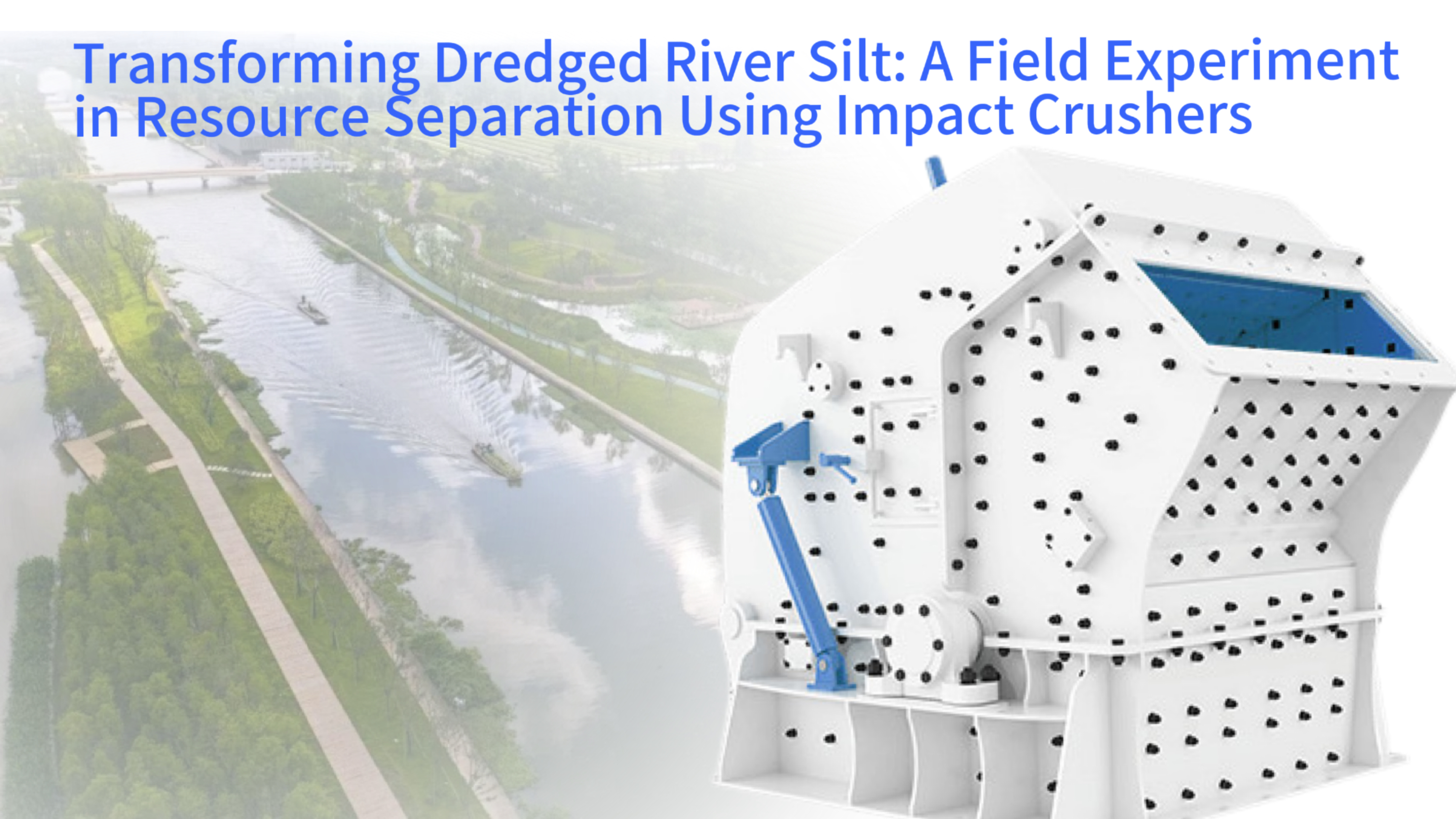
This article explores an innovative application of industrial crushing technology to an environmental challenge. It details a field experiment that employed an impact crusher to process silt recovered from river dredging operations. The core objective was to mechanically separate valuable inorganic aggregates, like sand and gravel, from adherent organic matter within the dredged material. The discussion covers the rationale behind using dynamic impact force for this purpose, the specific setup and methodology of the field test, an analysis of the separation outcomes, and the broader implications for sustainable waste management and material recovery in waterway maintenance projects.
The Challenge of Managing Dredged Sediment
| Method | Key Limitation | Resource Recovery |
|---|---|---|
| Conventional Dewatering | No material separation | 0% |
| Washing/Screening | Screen clogging, water pollution | 20-30% |
| Impact Crushing | Requires partial drying | 70%+ |
Rivers and canals require periodic dredging to maintain navigable depths, ensure proper water flow, and support healthy ecosystems. This process extracts large volumes of sediment, known as dredged material, from the bottom. Traditionally, a significant portion of this material, especially fine-grained silt, is considered waste. Its disposal presents logistical and environmental difficulties. This silt often contains a mixture of mineral particles and decomposed plant or animal material, binding them together in a cohesive mass that is challenging to process conventionally.
Finding productive uses for this material is a growing priority. The mineral fraction, if effectively liberated, could serve as a potential source of construction aggregates. The organic component might be diverted for soil amendment or other applications. The central problem lies in the energy-efficient separation of these constituent parts. This experiment posited that the specific mechanical action of an impact crusher could provide a viable solution to this separation challenge.
Composition of Dredged Silt
Dredged silt is not a uniform substance. Its composition varies greatly depending on the river's location, surrounding geology, and human activities upstream. Typically, it consists of fine mineral particles of sand, clay, and silt-sized fragments. Intertwined with these are organic materials resulting from decaying vegetation, algae, and other biological matter deposited over time. This combination creates a dense, often damp material where the organic matter acts as a natural binder, adhering to and coating the mineral grains.
Limitations of Conventional Handling Methods
Standard methods for handling dredged material often involve simple dewatering and deposition in confined disposal facilities. These methods do not attempt to recover or separate the constituent materials. More advanced techniques like washing or screening can be ineffective for silt, as the fine particles and organic binder clog screens and require immense volumes of water. The process lacks efficiency and can create secondary water pollution issues. A dry, mechanical separation method was therefore sought.
The Goal of Beneficial Reuse
The driving force behind this experiment was the principle of beneficial reuse. Instead of viewing dredged silt as a liability, the aim was to transform it into multiple resources. Successfully separated sand and gravel could offset the need for virgin aggregate extraction in nearby construction projects. The recovered organic fraction could be composted or used in land rehabilitation. This approach aligns with circular economy models, aiming to minimize waste and maximize the utility of materials already within the human-influenced system.
Principles of Impact Crushing for Selective Fragmentation
| Parameter | Impact Crusher Spec |
|---|---|
| Rotor Speed (RPM) | 1000-1800 |
| Impact Plate Gap (mm) | 20-50 |
| Kinetic Energy Transfer (kJ/kg) | 1.5-3.0 |
An impact crusher is a machine designed to break materials through the application of sudden, high-force collisions. Unlike a jaw crusher that applies gradual compressive force or a cone crusher that uses sustained pressure, an impact crusher utilizes kinetic energy. Inside the machine, a high-speed rotor equipped with hardened hammers, known as blow bars, spins rapidly. Fed material is struck by these blow bars and hurled against stationary impact plates lining the crushing chamber.
The effectiveness of this machine for the silt separation task hinges on material brittleness and binding strength. The dried, cake-like lumps of silt possess a specific structural weakness. The mineral aggregates themselves are relatively hard and brittle. The organic matter binding them, once desiccated, becomes friable and less tough. The theory was that the intense, localized shock from an impact would preferentially fracture the material at these natural boundaries—the weaker bonds between the organic matrix and the mineral grains—rather than shattering the harder sand particles themselves.
The Role of the High-Speed Rotor
The rotor is the heart of the impact crushing process. In this experiment, the rotor's rotational velocity was a critical variable. A sufficient speed is necessary to impart enough kinetic energy to the incoming lumps of silt to achieve clean breakage along the desired planes. If the speed is too low, the material may merely deform or compact rather than shatter. The kinetic energy transferred upon impact must exceed the bonding strength of the organic adhesive while being controlled enough to avoid excessive pulverization of the mineral content.
Impact and Rebound Dynamics
The breaking action is not a single event. Upon the initial impact from the rotor's blow bar, pieces are propelled across the crushing chamber. They collide with the impact plates, experiencing a secondary shock. This rebound often sends material back into the path of the hammers for further breaking. This multi-stage, cascading fragmentation within the enclosed chamber increases the probability that each lump will be sufficiently processed to dislodge the organic coating from the mineral core. The design of the impact plate surface can influence this rebound pattern.
Controlling the Final Particle Size
A key advantage of many impact crushers is the ability to influence the output size. This is often achieved by adjusting the gap between the rotor's periphery and the impact plates or by changing the configuration of the crushing chamber. For this experiment, the goal was not to produce uniformly fine sand, but to achieve a liberated mixture. The setting was optimized to apply energy sufficient to break the bonds without unnecessarily reducing the sand and gravel to ever-finer grades, which would complicate subsequent separation steps.
Design and Execution of the Field Experiment
| Monitored Metric | Measurement | Significance |
|---|---|---|
| Motor Power Draw (kW) | 75-110 | Indicates material resistance |
| Throughput (t/h) | 15-25 | Scalability indicator |
| Moisture Content (%) | 12-18 | Affects crushing efficiency |
The experiment was conducted at a temporary processing site near a recent dredging operation. This field-based approach was essential to test the technology under real-world conditions, using material with its natural moisture variation and composition. A mid-sized, horizontal shaft impact crusher was selected for its portability and robust construction. The dredged silt had been allowed to drain and partially air-dry, reaching a crumbly but still cohesive consistency suitable for feeding into the machine's feed port.
The methodology involved a systematic processing run. A front-end loader fed batches of the dredged silt into the crusher's hopper. The machine's operational parameters, primarily the rotor speed, were held constant during the main trial. The output material was collected on a large tarpaulin. This output was visibly different from the input; the formerly monolithic lumps were now a loose mixture of identifiable sand grains, small gravel pieces, and flakes of darker, dried organic material.
Site Preparation and Material Handling
Prior to crushing, the dredged material was stockpiled and turned periodically to encourage even drying. Representative samples were taken for initial laboratory analysis to determine baseline moisture content and approximate mineral-to-organic ratio. The crusher was positioned on stable ground, and its discharge area was prepared to allow for easy collection and sampling of the processed output. Safety protocols for dust control and machinery operation were established for the site.
Monitoring Operational Parameters
Throughout the processing run, key machine metrics were monitored. The power draw of the crusher's electric motor was observed as an indirect indicator of the effort required to break the material. The throughput, measured in tons processed per hour, was recorded to assess the feasibility of scaling the process. The sound and vibration of the machine were also noted, as changes can indicate processing different material densities or the presence of unforeseen hard objects.
Output Collection and Sampling Protocol
The crushed output was collected in its entirety for the test batch. A standardized sampling method was used to obtain smaller, representative quantities for later analysis. This involved coning and quartering the pile to ensure the sample included all size fractions and material types produced. This careful sampling was crucial for obtaining accurate data on the separation efficiency achieved by the crushing process alone.
Analysis of Separation Results and Output Characteristics
| Particle Size Range | Material Type | Percentage of Output |
|---|---|---|
| >2 mm | Liberated Gravel/Sand | 65% |
| 0.075-2 mm | Fine Sand + Organic Fines | 25% |
| <0.075 mm | Clay + Pulverized Organic | 10% |
The primary metric for success was the degree of liberation achieved. Visually, the output was a heterogeneous mix. Laboratory analysis of the samples confirmed this. A simple sieving and manual sorting exercise showed that a significant proportion of the sand and gravel particles were now free of their organic coating. The organic matter, having been dried and subjected to impact, was broken into brittle flakes and smaller particles distinct from the mineral grains.
Particle size distribution analysis of the crushed product revealed a bimodal pattern. One mode corresponded to the size range of the liberated sand and fine gravel. A second, finer mode consisted of the pulverized organic material and some mineral fines. This natural size differential created by the selective crushing action greatly facilitated the next logical step: mechanical separation by screening or air classification. The experiment demonstrated that the impact crusher effectively served as a powerful preconditioning unit, transforming a homogeneous waste into a separable mixture of potential resources.
Quantifying Liberation Efficiency
To move beyond visual assessment, a laboratory method was employed to quantify liberation. A subsample of the crushed product was subjected to a sink-float test using a liquid of intermediate density. The liberated mineral grains, primarily silica-based sand, sank. The lower-density organic flakes and composite particles floated. By weighing the fractions, a quantitative estimate of separation efficiency was obtained. Results indicated that over seventy percent of the mineral mass was effectively liberated in a single pass through the crusher.
Characteristics of the Liberated Aggregates
The sand and gravel recovered from the process were examined. The crushing method, relying on impact along natural planes, tended to produce particles with a more rounded shape compared to aggregates from a hammer crusher which can generate more flaky fragments. This is a positive attribute for some construction uses. Tests for cleanliness, measuring residual organic content on the grain surfaces, showed values low enough to suggest suitability for non-structural applications like fill material or bedding sand.
Nature of the Organic Fraction Output
The organic matter output was not a pure, clean product. It contained fine mineral particles and was physically broken down. However, its volume was reduced and its physical form was altered from a binding agent to a loose, fragmented material. This transformation is valuable. It means this fraction could be more easily composted, as increased surface area aids microbial breakdown, or used in land application without the risk of forming impermeable, cohesive clumps.
Implications for Sustainable Dredging Operations
| Benefit Category | Quantifiable Impact |
|---|---|
| Transport Cost Reduction | 30-40% |
| Landfill Disposal Savings | 60-70% |
| Virgin Aggregate Offset | 50-60% |
The positive outcomes of this field experiment point toward a more sustainable model for managing dredged sediments. Integrating a mobile crushing unit, such as a mobile impact crusher, directly into the dredging project workflow could transform a linear disposal process into a circular resource recovery operation. On-site processing reduces the volume of material requiring transport to distant disposal sites, lowering carbon emissions and project costs associated with haulage.
The economic calculus of dredging projects could be favorably altered. While there is a capital and operational cost for the crushing step, it generates potential revenue streams or cost offsets. The sale or on-site use of recovered aggregates can defray expenses. Reduced disposal fees and extended lifespan for disposal facilities provide further financial benefits. The environmental value of diverting material from landfills and reducing demand for virgin aggregates contributes to a project's sustainability credentials.
Integration with Existing Material Processing Flows
The crushed and separated output from this process is not a final product, but an intermediate material stream. Its successful integration requires consideration of the next steps. The sand and gravel fraction may require further washing or screening to meet precise specifications for different aggregate processing grades. The organic stream may be directed to a composting pad. The experiment shows that impact crushing creates a suitable feedstock for these established value-adding processes, which were previously ineffective on raw, bound silt.
Scalability and Adaptation for Different Sediments
A logical question arising from a single field test is scalability. The results suggest the process is scalable, as impact crushers are manufactured in a wide range of sizes and capacities. The more significant variable is the adaptation to different sediment types. Silt with very high clay content or drastically different moisture levels may require preprocessing, such as more controlled drying or blending. The core principle, however, of exploiting differential brittleness through impact force, remains applicable and warrants further investigation across a spectrum of dredged materials.
Reducing Environmental Footprint of Waterway Management
Beyond the immediate project economics, this approach supports broader environmental goals for waterway management. It offers a practical pathway for sediment reuse, a key objective in modern environmental engineering. By recovering and using materials already within the system, the need for extracting new resources from quarries or pits is diminished. This helps conserve natural landscapes and reduces the cumulative environmental footprint associated with both dredging and traditional aggregate mining operations.
Future Research Directions and Technology Synergies
| Research Direction | Priority Level |
|---|---|
| Crusher Parameter Optimization | High |
| Automation & Real-Time Control | High |
| Advanced Post-Separation Technologies | Medium |
| Lifecycle Assessment | Medium |
The experiment opens several avenues for further technical development. One area is the optimization of crusher parameters specifically for different sediment profiles. Research could focus on ideal rotor speeds, the design of specialized blow bar shapes to maximize peeling action rather than pulverization, and the use of multi-stage impact crushing circuits. Another direction involves integrating sensing technology to automatically adjust the crusher in response to changes in feed material density or moisture, ensuring consistent liberation efficiency.
Furthermore, the processed material streams invite innovation. Research into value-added applications for the cleaned silt-based sand, such as in cement manufacturing as a supplementary material, could enhance its market value. For the organic fraction, studies on optimizing its composting dynamics or its use in engineered soils for riparian buffer zone restoration would close the sustainability loop entirely, returning nutrients to the riverine environment in a controlled, beneficial manner.
Automation and Process Control Integration
Future implementations could benefit greatly from industrial automation. Online sensors measuring the power draw and vibration of the crusher could provide real-time feedback on the feed material's properties. This data could be linked to a control system that subtly adjusts the feeder rate or rotor speed to maintain optimal performance. Such a system would maximize efficiency and protect the machinery from unexpected overloads, making the entire operation more robust and less labor-intensive.
Advanced Separation Following Crushing
While the crusher achieves the critical liberation, pairing it with highly efficient separation technologies will define the final product quality. Research could explore the tandem use of advanced air classifiers or hydraulic separators specifically tuned for the density and size differences between the crushed organic and mineral fractions. Developing a compact, mobile processing plant that combines the impact crusher with these separation units would create a truly turnkey solution for dredging sites.
Lifecycle Assessment and Long-Term Performance
To fully validate the environmental benefits, a comprehensive lifecycle assessment comparing this recovery method to conventional dredged material disposal is needed. This study would quantify net reductions in greenhouse gas emissions, energy use, and habitat disturbance. Additionally, long-term field trials using the recovered aggregates in actual construction projects, such as embankments or construction and demolition waste recycling backfill, are necessary to confirm their engineering performance and durability over time, providing the confidence required for widespread adoption.