Comprehensive Guide to Customizing Hammer Crusher Capacity for Diverse Production Requirements
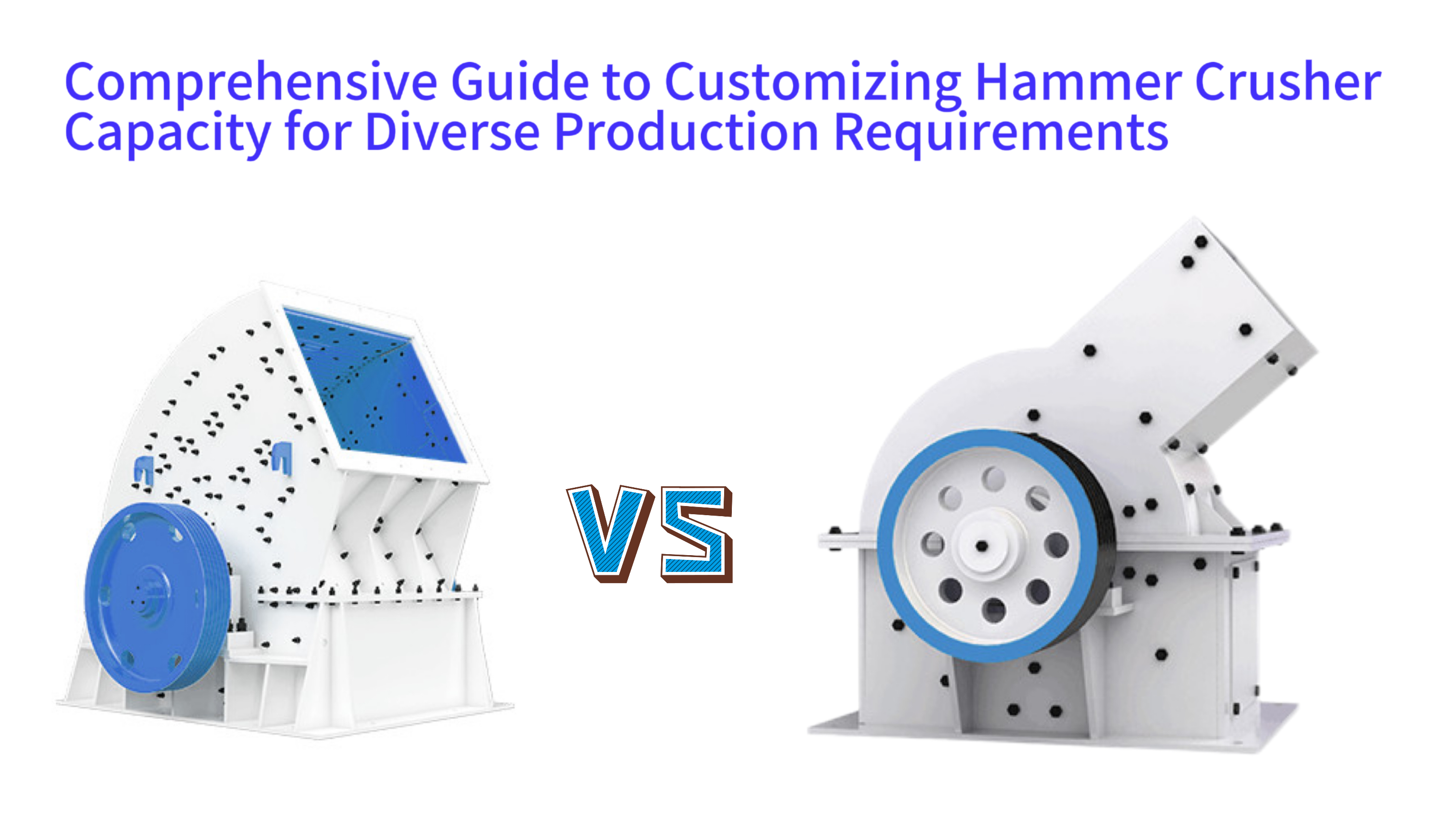
This definitive guide provides a systematic framework for optimizing hammer crusher capacity to align with specific industrial production objectives. It elucidates the fundamental mechanical and operational principles governing output, offering a detailed methodology for equipment selection and configuration based on raw material characteristics and desired product specifications. The following discourse explores tailored strategies for processing a spectrum of materials, from sedimentary rocks to recycled construction aggregates, while presenting critical calculation methodologies, operational optimization techniques, and long-term maintenance protocols to inform strategic capital investment and operational planning.
Core Steps for Hammer Crusher Capacity Customization
Annual tonnage & hourly output requirements
Hardness, size distribution, moisture content
Feed size ÷ desired discharge size
Model selection + correction factors application
15-25% capacity buffer for reliability
Fundamental Determinants of Hammer Crusher Capacity
Key Determinants of Hammer Crusher Capacity
The operational capacity of a hammer crusher constitutes a variable output contingent upon the intricate interplay between inherent machine design and external processing conditions. A comprehensive understanding of these core determinants serves as the essential prerequisite for any meaningful capacity customization or performance optimization initiative, forming the foundational knowledge base for subsequent technical decisions.
Core Design Parameters: Rotor Dimensions and Hammer Configuration
The physical dimensions of the rotor, specifically its diameter and working width, establish the volumetric capacity of the crushing chamber and directly govern the material throughput potential. Concurrently, the quantity, mass distribution, and spatial arrangement of the individual hammer heads critically influence the aggregate impact energy delivered per revolution and the frequency of strikes upon the feed material, parameters which are paramount for efficient comminution.
Power Source: Electric Motor Capacity and Torque Characteristics
The installed power of the prime mover, whether an electric motor or a diesel engine, provides the fundamental kinetic energy required to accelerate the rotor assembly and sustain its rotational inertia against the resistive forces of fragmentation. Insufficient power manifests as a primary bottleneck, leading to frequent choking events and suboptimal throughput, whereas excessive power represents a significant and avoidable operational expenditure without commensurate benefit.
Feed Material Characteristics: Size Distribution, Hardness, and Moisture Content
The initial particle size spectrum of the infeed material, quantified by a sieve analysis, along with its compressive strength as denoted on the Mohs scale and its inherent moisture percentage, exert a profound influence on the practical crushing efficiency and flow rate. Feedstock characterized by large top-size fragments, high abrasive hardness, or elevated adhesive moisture content will invariably result in a substantial reduction of the machine's theoretical maximum capacity, necessitating careful preliminary assessment.
Discharge Control: Grate Clearance and Discharge Opening Adjustment
The adjustable grate assembly or the setting of the impact apron distance serves as the principal mechanism for controlling the final product's top particle size. This setting simultaneously dictates the residence time of material within the active crushing zone, thereby establishing a direct and controllable relationship between product fineness and the volumetric throughput rate of the machine.
Capacity Customization Strategies for Different Material Types
Capacity Customization by Material Type
Processing feedstocks with divergent physical and chemical properties demands the implementation of differentiated equipment configurations and operational paradigms to achieve true capacity maximization. A uniform approach across disparate materials leads to inefficiency, making material-specific strategies a cornerstone of professional plant design and operation, ensuring each machine is optimally tuned for its primary task.
Soft to Medium-Hard Materials: Limestone, Gypsum, Coal
For these less resistant materials, the optimization strategy can prioritize high throughput by increasing the operational rotor speed to elevate the frequency of impact events. Employing a configuration with multiple rows of closely spaced, relatively lighter hammers is often advantageous for limestone crushing, focusing on achieving a high volume of fine fragmentation per unit of time rather than maximizing single-blow impact energy.
High Hardness and Abrasive Materials: Granite, Basalt, Quartzite
In this demanding application, the primary operational focus must shift towards ensuring sufficient impact energy per individual hammer strike to effect fracture. This typically involves utilizing fewer, heavier hammers manufactured from advanced wear-resistant alloys and often operating at a reduced rotational speed to mitigate excessive wear rates. The integration of a pre-screening stage to bypass fines is frequently a necessary supplement for granite processing to enhance overall system efficiency.
Recycled and Secondary Raw Materials: Concrete Rubble, Construction Waste, Bricks
Customizing capacity for construction and demolition waste recycling introduces unique challenges centered on material heterogeneity and contaminant removal. The paramount requirement is the integration of robust tramp iron protection and perhaps an over-band magnet to safeguard the crusher's internals. Capacity planning must conservatively account for the highly variable composition and the potential presence of non-crushable impurities that can impede material flow.
Specialized Materials: Moist-Adhesive or Fibrous Substances
Materials prone to causing blockages, such as certain clays or organic substances, necessitate specialized crusher designs. A viable solution often involves selecting a hammer crusher variant that operates without a discharge grate, thereby eliminating a primary clogging point. Alternative designs may incorporate enlarged crushing chambers or special internal geometries to promote flow, accepting a broader product size distribution in exchange for reliable, uninterrupted operation.
Capacity Calculation and Model Selection Aligned with Production Targets
Capacity Calculation & Model Selection Framework
Calculation Workflow
The translation of specific production requirements, such as annual tonnage and final product specifications, into precise technical parameters for equipment selection represents the most critical phase of the customization process. This phase requires a methodical, data-driven approach to bridge the gap between commercial objectives and engineering realities, ensuring the selected machinery can reliably meet business goals under real-world operating conditions.
Determining Target Hourly Output and Annual Operational Schedule
The foundational step involves calculating the required average hourly production capacity. This is derived from the total annual aggregate or mineral processing demand, divided by the plant's planned operational hours per year. For instance, a facility targeting 200,000 tons annually with a 4,000-hour operating schedule requires a sustained average capacity of 50 tons per hour, a figure that serves as the baseline for all subsequent sizing calculations.
Analyzing the Feed Material's Particle Size Distribution Profile
A scientific sieve analysis of the raw feed material is indispensable. This analysis quantifies the percentage of material within various size fractions and, most importantly, identifies the maximum feed size. This maximum dimension is a non-negotiable parameter that dictates the minimum required inlet dimensions of the crusher and influences the selection of the appropriate model series, such as a robust PCZ-type heavy hammer crusher for larger feed.
Calculating the Required Crushing Ratio and Target Product Size
The total crushing ratio is calculated by dividing the representative top size of the feed material by the desired maximum discharge size. A single hammer crusher typically achieves ratios between 10:1 and 25:1. If the required ratio exceeds this range, a multi-stage crushing circuit must be considered, often employing a primary jaw crusher for initial size reduction before the hammer crusher stage.
Consulting Manufacturer Capacity Charts and Applying Correction Factors
Equipment manufacturers publish capacity charts for their crushers, typically based on processing a standard material like mid-hardness limestone. The calculated capacity requirement must be adjusted using empirical correction factors that account for the actual material's hardness, bulk density, and moisture content relative to the standard. These factors, often less than 1.0 for harder materials, derate the machine's nominal capacity to reflect realistic performance expectations.
Incorporating a Reasonable Capacity Safety Margin
To mitigate risks associated with continuous operation at 100% of theoretical capacity, which accelerates component wear and offers no buffer for feed variability, it is standard engineering practice to incorporate a capacity safety margin. Selecting a crusher with a designed capacity 15% to 25% above the calculated average requirement provides operational flexibility, accommodates short-term peak demands, and promotes longer equipment service life by preventing perpetual overloading.