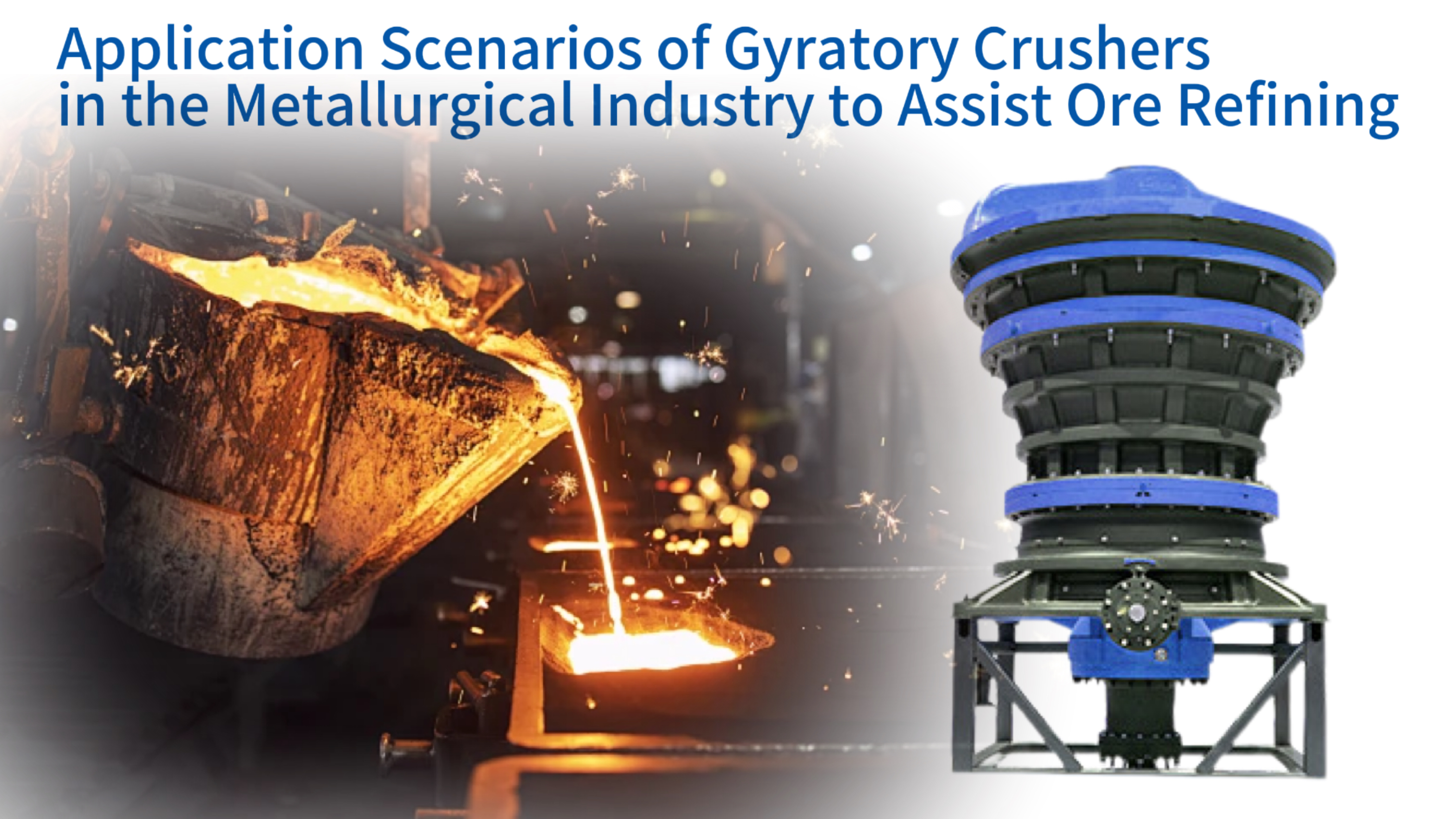
Application Scenarios of Gyratory Crushers in the Metallurgical Industry to Assist Ore Refining
Gyratory Crusher in Metallurgical Ore Processing Flow
From Mine
Gyratory Crusher
Uniform Size
Cone/Impact Crushers
Metal Extraction
The journey of metal from a raw ore body to a usable material begins with a critical step in mineral processing. Large chunks of ore, as they emerge from the mine, are far too big for any subsequent refining or smelting equipment. The metallurgical industry relies on powerful machinery to reduce these massive rocks to a manageable size. The gyratory crusher stands as the workhorse for this initial phase, known as primary crushing. These machines are engineered to handle the extreme hardness and abrasive nature of metalliferous ores, processing thousands of tons of material per hour to kickstart the refining workflow.
The Defining Action of Gyratory Crushers in Ore Processing
Gyratory Crusher Operational Mechanism
Continuous Compression Working Principle
(Top of Chamber)
(Eccentric Motion)
(Pressure Fracturing)
(Continuous Flow)
(Uniform Size)
Key Advantages vs Traditional Crushers
The operational mechanism of a gyratory crusher sets it apart from other crushing equipment used in metallurgical applications. Its design revolves around the concept of continuous compression, which provides distinct advantages for processing hard rock ores. This section examines the fundamental principles that govern its operation and how these principles contribute to efficient material handling in large-scale mining operations.
Continuous Compression as the Core Operating Principle
A gyratory crusher operates on a principle of continuous compression, a method distinctly different from the impact-based crushing seen in other equipment. This mechanism involves a steel mantle that gyrates within a stationary concave bowl. The spinning motion creates an ever-narrowing gap, catching the ore at the top and crushing it against the surrounding surfaces as it descends through the chamber. This action ensures that the rock is subjected to immense pressure, fracturing it along natural weaknesses. The continuous nature of this process allows for a steady, uninterrupted flow of material, which is essential for maintaining efficiency in large-scale metallurgical operations.
Throughput Influence on Downstream Processes
By preparing a consistent feed for later stages, it directly influences the throughput of the entire processing plant. The rate at which this machine reduces material determines how much ore moves forward to secondary crushers and grinding mills. If the primary stage operates at peak efficiency, the downstream equipment can run at full capacity without waiting for feed. This synchronization across the plant minimizes bottlenecks and maximizes the overall output of refined material. Operators monitor the crusher's performance closely to ensure that the flow of crushed ore never stops.
Gravity-Fed Design for Operational Simplicity
The physical layout of a gyratory crusher is tailored specifically for its primary role in the circuit. Unlike smaller crushers that might sit above ground, these massive machines are often installed with the crushing chamber positioned deep within the ground. This configuration aligns the top of the crusher with the grade level, allowing haul trucks to dump huge loads of ore directly into the feed opening without the need for additional ramps or transfer points. This gravity-fed design minimizes the handling of raw material before crushing, saving both energy and time. The resulting crushed ore, now reduced to a size that can be transported on conveyor belts, moves seamlessly to the next stage of the refining process.
Adaptation to Large-Scale Mining Environments
The installation depth and surrounding infrastructure support the massive weight and vibration generated during operation. Heavy-duty foundations absorb the dynamic forces produced by the gyrating motion, protecting adjacent equipment from structural stress. This underground placement also helps contain noise and dust within the immediate crushing area, improving working conditions for personnel above ground. The design reflects a deep understanding of mining logistics, where moving material efficiently from the mine face to the crusher is just as important as the crushing action itself.
Technical Engineering for Metallurgical Efficiency
Gyratory Crusher Technical Specifications
Core Technical Parameters
Hydraulic Safety System Workflow
Enters Chamber
Spikes
(Gap Widens)
Passes Through
Shaft Resets
Resumes
The ability of a gyratory crusher to withstand extreme operating conditions depends on the engineering of its internal components and support systems. Metallurgical applications demand machinery that can operate continuously under high stress while maintaining precise control over product size. This section explores the key engineering features that enable these machines to perform reliably in the most demanding environments.
Robust Internal Components for Extreme Conditions
The internal components of a gyratory crusher are engineered to withstand the immense forces required to break down hard ores like hematite, chalcopyrite, or bauxite. The main shaft, a massive piece of forged steel, supports the mantle and transmits the crushing forces generated by the eccentric motion. Surrounding this is the concave, a ring-like structure lined with wear-resistant manganese steel. As the mantle gyrates, it approaches and recedes from the concave at various points around the circumference, creating the crushing and discharging cycle.
Precise Control through Eccentric Assembly
The eccentric assembly, driven by a powerful motor and gear system, controls the precise gyrating speed and stroke, directly influencing the crushing ratio achieved in this primary stage. This ratio, often ranging from 4:1 to 7:1, determines how much the ore is reduced in a single pass. Engineers calculate these parameters based on the specific gravity and hardness of the target ore, ensuring that the machine applies just enough energy to fracture the material without wasting power. The stroke length and rotational speed are adjustable within certain limits, allowing the same crusher model to handle different ore types across various mining projects.
Hydraulic Systems for Safety and Adjustability
To guarantee continuous operation in a demanding environment, these crushers incorporate robust support systems. A hydraulic jacking system is a standard feature, allowing operators to adjust the main shaft position. This capability is vital for two reasons: it enables the discharge size setting to be modified to meet the specifications of the downstream processes, and it provides a safety mechanism. If an uncrushable object, such as a piece of excavator tooth, enters the chamber, the hydraulic pressure spikes. The system allows the main shaft to lower, widening the gap and letting the foreign material pass through, preventing catastrophic damage to the crusher shell and gears.
Automatic Recovery After Tramp Events
After the object is discharged, the system automatically returns the shaft to its original position, restoring the preset crushing parameters without significant downtime. This automatic recovery feature reduces the need for manual intervention, keeping the production line moving even after unexpected events. The hydraulic fluid and accumulators are sized to handle multiple such events before requiring maintenance, ensuring that the crusher remains operational throughout the shift. This reliability is essential for metallurgical plants that operate around the clock, where any unplanned stop can cost thousands in lost production.
Role in the Multi-Stage Metallurgical Refining Flow
Gyratory Crusher in Multi-Stage Refining Flow
Ore Size Reduction by Processing Stage
Impact of Primary Crusher Performance
Metallurgical processing plants operate as integrated systems where each stage depends on the performance of the previous one. The gyratory crusher occupies the critical position at the beginning of this chain, and its operation influences everything that follows. This section describes how this machine fits into the broader context of mineral processing and why its role is indispensable for efficient metal production.
First Step in a Sequential Size Reduction Chain
Within the broader context of a metallurgical plant, the gyratory crusher is the first in a series of size reduction steps. Its primary goal is to reduce run-of-mine ore, which can be up to 1.5 meters in diameter, to a uniform size of around 150 to 300 millimeters. This output is coarse but consistent, which is the specific requirement for feeding secondary crushers. The material is transported via conveyor to cone crushers or impact crushers, which will further reduce the ore for the grinding mills.
Setting the Cadence for Entire Plant Operations
The efficiency of this primary stage sets the cadence for the entire operation; if the gyratory crusher fails or operates inefficiently, the entire downstream process starves, halting production. Plant managers prioritize the reliability of this machine above all others, scheduling regular maintenance during planned outages to avoid unexpected failures. The crusher's performance directly affects the utilization of secondary and tertiary equipment, as well as the grinding mills that consume the most power in the plant. Optimizing this first step yields benefits throughout the entire metallurgical workflow.
Comparison with Other Primary Crusher Types
The selection of a gyratory over other primary crusher types, like a jaw crusher, is driven by the scale and demands of metallurgical projects. For operations processing over ten thousand tons of ore daily, the gyratory crusher provides a distinct advantage due to its ability to handle high tonnages continuously. Its design allows it to be choke-fed, meaning the crushing chamber can remain full of material, leading to more efficient power utilization and more consistent wear on the liners. This efficiency translates directly to the bottom line of a mining operation, reducing the cost per ton of ore processed.
Bridging Mining and Extraction Processes
The machine effectively bridges the vast gap between the physical mining of the rock and the chemical or physical extraction processes that will eventually yield pure metal. By reducing massive boulders to conveyor-friendly fragments, it enables the continuous flow of material through the processing plant. This transformation from raw ore to prepared feed is the fundamental contribution of the gyratory crusher, making all subsequent refining steps possible. Without this initial size reduction, the advanced separation technologies used in modern metallurgy could not function efficiently.
Integration with Modern Mineral Processing Systems
Modern Integration of Gyratory Crushers
(Temperature/Pressure)
(Crusher Metrics)
(AI/Automation)
(Component Health)
(Max Uptime)
Maintenance Efficiency Comparison
Modern metallurgical facilities have evolved into highly automated operations where data drives decision-making and efficiency. Gyratory crushers have kept pace with this evolution, incorporating advanced monitoring and control features that integrate seamlessly with plant-wide systems. This section examines how these machines have adapted to the demands of contemporary mineral processing.
Sensors and Data Acquisition for Real-Time Monitoring
Contemporary metallurgical facilities demand high levels of automation and data integration, and the modern gyratory crusher is equipped to meet these demands. Sensors monitor critical parameters such as bearing temperature, crusher main shaft position, and power draw. This data is fed into a central control system that can automatically adjust feed rates or alert operators to potential issues before they cause unplanned shutdowns. This level of control ensures that the crusher operates within its optimal parameters, maximizing liner life and energy efficiency.
Contribution to Predictable Mining Operations
This integration is a key component of a modern mining and quarrying solution, where predictability and uptime are paramount. Operators can view the crusher's status from a central control room, making adjustments without needing to visit the machine physically. Historical data collected over months and years helps maintenance teams predict when components will need replacement, allowing them to schedule work during planned downtime. This proactive approach prevents unexpected breakdowns and keeps the operation running smoothly around the clock.
Maintenance-Friendly Component Design
Furthermore, the physical design of components has evolved to support these efficient operations. The components of a modern gyratory crusher are designed for safer and faster maintenance. Features like hydraulic removal of the spider arms, and hydraulic nuts for mantle retention, drastically cut the time required for liner changes. Some models incorporate features that allow for the main shaft to be lowered hydraulically to clear a jammed chamber, enabling a restart under load.
Impact of Quick Maintenance on Productivity
This design philosophy acknowledges that while the machine is built to last, wear parts need regular replacement, and making these procedures quicker and safer has a direct impact on the overall productivity of the metallurgical plant. The reliability of this primary crusher is fundamental to the success of the aggregate processing and metal production cycles. Maintenance teams can complete liner changes in hours rather than days, returning the crusher to operation with minimal loss of production time. This efficiency in maintenance translates directly to increased annual throughput for the entire facility.
Operational Parameters and Material Handling
Operational Parameters & Material Handling
Key Control Parameter: Closed Side Setting (CSS)
CSS (the narrowest gap between mantle and concave) directly controls discharge size:
• CSS = 150mm → Discharge size: 150-200mm (for hard ore)
• CSS = 200mm → Discharge size: 200-300mm (for soft ore)
• Adjustable range: 100mm - 300mm via hydraulic system
The relationship between the crusher and the material it processes is complex and dynamic. Ore characteristics vary widely between different deposits and even within the same mine, requiring operators to adjust their approach continuously. This section discusses the key parameters that influence crusher performance and how operators manage these variables to maintain optimal output.
Influence of Ore Characteristics on Equipment Selection
The feed material itself dictates many of the operational decisions for a gyratory crusher. The physical characteristics of the ore, including its compressive strength, moisture content, and abrasiveness, influence the selection of the crushing chamber profile and the mantle and concave alloys. For instance, crushing a hard, brittle ore like taconite will place different stresses on the equipment compared to a softer, more ductile ore. The crusher must apply sufficient energy to overcome the material's internal forces and initiate fracture.
Suitability of Compression for Hard and Abrasive Materials
The continuous, high-pressure compression action of the gyratory is particularly suited for breaking these hard and abrasive materials, where impact-based crushing might lead to excessive wear or require too much power. The wear liners are manufactured from manganese steel that work-hardens under impact, becoming tougher as they crush abrasive ore. This property extends the life of the liners, reducing the frequency of replacements and lowering operating costs. The compression action also produces fewer fines compared to impact crushing, which is beneficial for downstream processing.
Closed Side Setting as Output Control Mechanism
Controlling the size of the final output from the primary crusher is essential for the efficiency of the downstream grinding mills. The closed side setting, the narrowest gap between the mantle and concave in the crushing chamber, is the primary control mechanism. By adjusting this setting, usually through the hydraulic system, plant operators can ensure that the material fed to the secondary and tertiary crushers, and eventually the mills, is of a consistent and optimal size. This consistency prevents the grinding mills from being overloaded with particles that are too large, which would reduce their efficiency.
Industry Expertise in Circuit Optimization
Companies like MSW Technology, with their 15 years of relevant work experience in the industry, understand these critical relationships and focus on providing robust solutions that ensure material flows smoothly from the crusher to the mill. This attention to feed feed size and product consistency is what makes a crushing circuit efficient. Their engineers work with plant operators to fine-tune settings based on the specific ore being processed, achieving the optimal balance between throughput and product size. This collaborative approach maximizes the return on investment for the crushing equipment over its long service life.
Influence on Downstream Refining and Smelting
Impact on Downstream Refining & Smelting
The ultimate goal of any metallurgical operation is to extract valuable metals from ore as efficiently as possible. The crushing stage, while seemingly simple compared to chemical processing, has a profound effect on the success of these later steps. This section explains how the performance of the gyratory crusher influences recovery rates and the overall economics of metal production.
Surface Area Requirements for Chemical Extraction
The efficiency of the crushing stage has a direct impact on the chemical processes used for refining. Smelters and leaching operations require a specific surface area to volume ratio to achieve optimal recovery rates. If the ore particles delivered to these processes are too large, the chemical reactions may not penetrate the material fully, leaving valuable metals trapped inside the waste rock. The gyratory crusher plays a pivotal role in achieving the liberation of valuable minerals from the gangue.
Liberation of Valuable Minerals from Gangue
By fracturing the ore, it exposes the mineral grains, making them accessible to the separation process. A well-crushed ore allows for a more complete and efficient extraction of the target metal, increasing the yield from the mine. This liberation occurs along grain boundaries where different minerals meet, separating valuable components from the waste material. The crushing action must be controlled to avoid over-grinding, which would create fine particles that are difficult to process in downstream separation equipment such as flotation cells or magnetic separators.
Stability Benefits for Grinding and Separation Circuits
Beyond just size reduction, the consistent output from a gyratory crusher contributes to the stability of the refining process. Grinding mills, which further pulverize the ore after secondary crushing, operate most efficiently when fed a consistent material size. Fluctuations in feed size can lead to variations in mill throughput and power consumption, disrupting the delicate balance of the processing plant. By providing a stable and predictable coarse product, the gyratory crusher helps to smooth out the entire production chain.
Economic Impact on Metal Production Costs
This stability reduces operational costs and increases the predictability of metal production, ensuring that downstream furnaces and electrolytic cells receive a steady supply of prepared material. The initial crushing step, therefore, is not just about breaking rocks; it is about enabling the precise and efficient cement manufacturing and metallurgical transformations that follow. Every percentage point improvement in recovery rate translates to significant revenue increases over the life of a mine, making the performance of the primary crusher economically critical to the entire mining enterprise.