Complete Guide to Correct Maintenance and Oil Specification for Fine Crusher Lubrication Systems
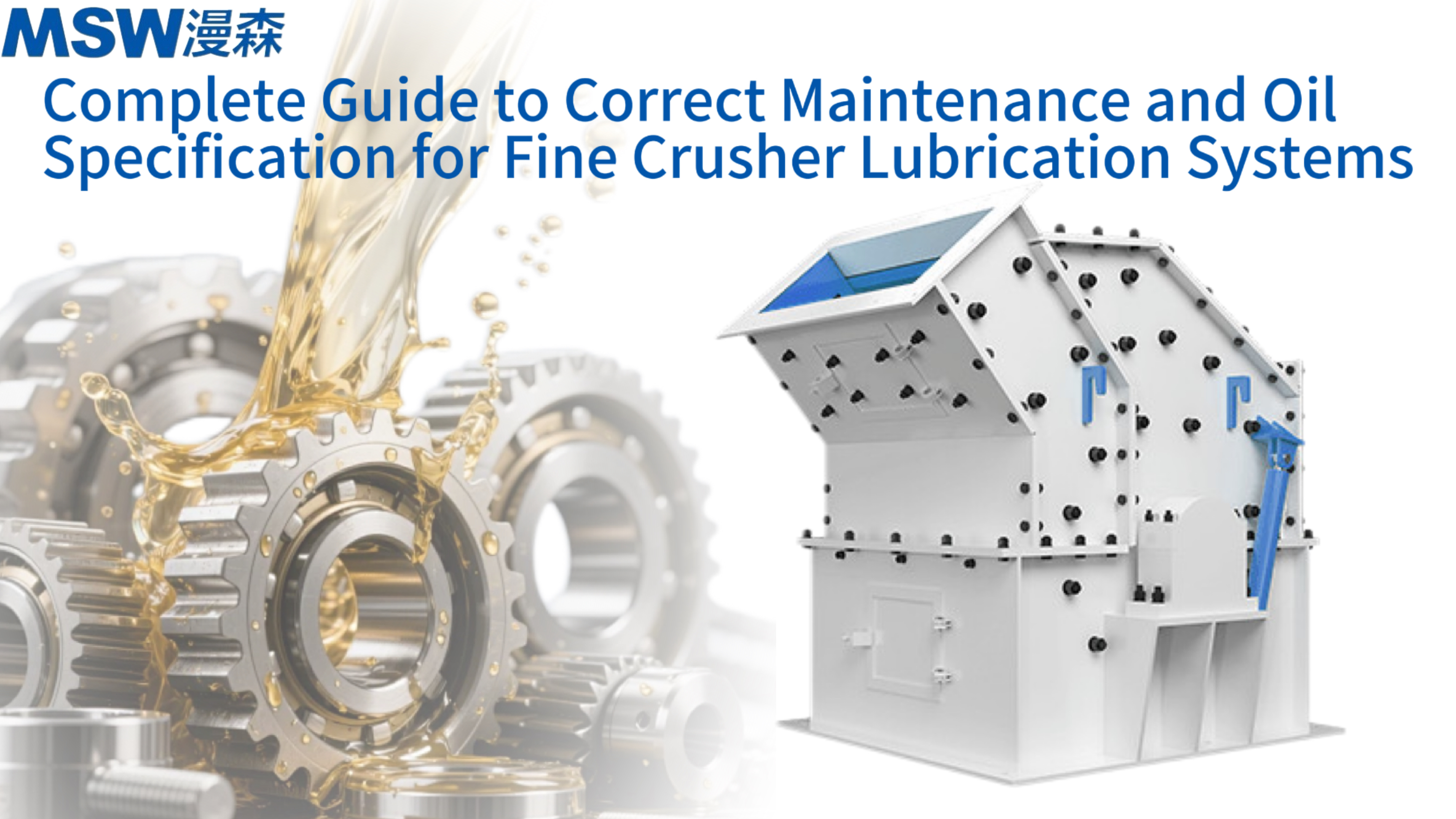
The lubrication system of a fine crusher is the lifeline of the entire machine. It ensures that all moving parts, particularly bearings and gears, operate with minimal friction and heat generation. Proper lubrication directly influences equipment reliability, energy consumption, and the frequency of unplanned downtime. This guide provides a thorough explanation of the functions of the lubrication system, the correct oil specifications for different operating conditions, step-by-step maintenance procedures, and strategies to extend the service life of your fine crusher. By following these guidelines, operators can achieve consistent crushing performance, reduce wear on critical components, and lower overall operating costs. The recommendations are based on extensive field experience and industry best practices, including insights from MSW Technology, a company with 15 years of expertise in crushing equipment and maintenance solutions.
1. The Function and Importance of the Fine Crusher Lubrication System
Lubrication System Performance Comparison
| Performance Metric | Poor Lubrication | Optimal Lubrication |
|---|---|---|
| Bearing Service Life | 1-2 years | 3-5+ years (40% extension) |
| Energy Consumption | 10% higher | Optimal efficiency |
| Unplanned Downtime | Frequent (monthly) | Minimal (quarterly/yearly) |
| Gear Wear Rate | High (pitting/scuffing) | Low (normal wear only) |
The lubrication system in a fine crusher is engineered to deliver a continuous film of oil or grease to every friction point inside the machine. Bearings, shafts, gears, and other rotating elements generate substantial heat and mechanical stress during operation. Without adequate lubrication, metal-to-metal contact occurs rapidly, leading to scoring, galling, and eventual seizure of components. The system typically includes an oil pump, filter, cooler, piping, and distribution points that work together to maintain a clean and consistent supply of lubricant.
Beyond reducing friction, the lubrication system also plays a critical role in flushing away wear particles and contaminants. As crusher components wear, microscopic debris is generated. The circulating oil captures these particles and carries them to the filter, where they are removed. This cleaning action prevents abrasive damage to precision surfaces. Additionally, the oil helps to dissipate heat away from high-temperature zones, maintaining stable operating temperatures and preventing thermal degradation of both the lubricant and the machine parts.
The Role of Lubrication in Reducing Bearing and Rotating Component Wear
Bearings are the most critical and vulnerable components in a fine crusher. They support the main shaft and rotor, enduring high radial and axial loads. A hydrodynamic oil film separates the rolling elements from the raceways, preventing direct contact. The thickness of this film depends on oil viscosity, speed, and load. If the film is too thin due to incorrect oil grade or insufficient supply, metal-to-metal contact occurs, causing micropitting and eventual spalling. Proper lubrication also protects seals and prolongs their life, keeping contaminants out of the bearing cavity.
Regular oil analysis can detect early signs of wear, such as elevated levels of iron, copper, or other metals. By monitoring these indicators, maintenance teams can schedule interventions before a catastrophic failure occurs. MSW Technology's 15 years of field data show that implementing a strict lubrication regimen can extend bearing life by up to 40% compared to machines with inconsistent lubrication practices. This translates directly into lower replacement costs and higher machine availability.
Impact of Proper Lubrication on Reducing Fine Crusher Energy Consumption
Friction is a direct consumer of energy in any mechanical system. When bearings and gears are well-lubricated, the resistance to motion is minimized, allowing the electric motor to deliver more of its power to crushing the material rather than overcoming internal friction. Studies have shown that a poorly lubricated crusher can consume up to 10% more energy than one with an optimized lubrication program. This increase in energy use not only raises operating costs but also contributes to unnecessary carbon emissions.
In addition to reducing friction, proper lubrication ensures that moving parts maintain their correct clearances. Excessive wear caused by inadequate lubrication can lead to misalignment, which further increases power draw and accelerates wear. By maintaining the correct oil film, operators can keep the crusher running at its designed efficiency, reducing electricity consumption and improving the overall sustainability of the operation.
Common Equipment Failures and Hazards Caused by Poor Lubrication
Failure Types Caused by Poor Lubrication
Distribution
Inadequate or incorrect lubrication is one of the leading causes of premature crusher failure. Symptoms include bearing overheating, abnormal vibration, increased noise, and finally seizure. When a main bearing fails, the repair often requires complete disassembly of the crusher, replacement of the shaft and housing, and extensive downtime. In some cases, a seized bearing can generate enough heat to cause localized welding, damaging the shaft beyond repair.
Another common failure is gear tooth breakage. Gears in the drive train rely on a thin oil film to prevent metal-to-metal contact. If the oil viscosity is too low or the oil level drops, the gears can experience pitting, scuffing, and eventually tooth fracture. Such failures are catastrophic and often result in the destruction of the gearbox. Furthermore, poor lubrication can lead to oil leaks, creating safety hazards and environmental contamination. Regular lubrication maintenance is therefore essential not only for machine reliability but also for workplace safety.
Significance of Standardized Lubrication in Extending Overall Machine Life
A well-lubricated fine crusher can operate for decades with only routine wear part replacement. The initial investment in a crusher is substantial, and extending its service life maximizes return on investment. Standardized lubrication practices ensure that every component receives the correct amount and type of lubricant at the right intervals. This prevents the gradual deterioration that leads to major overhauls.
Documentation of lubrication activities creates a historical record that helps in predicting future maintenance needs. By tracking oil changes, filter replacements, and oil analysis results, maintenance managers can identify trends and adjust schedules proactively. MSW Technology, with 15 years of industry experience, recommends that every site develop a lubrication manual tailored to their specific crusher model and operating conditions. Such a manual becomes the foundation for a long and productive machine life.
2. Oil Specification and Selection Criteria for Fine Crusher Lubrication Systems
Lubricant Selection Guide by Operating Conditions
| Operating Condition | Recommended Oil Type | ISO Viscosity Grade | Key Properties |
|---|---|---|---|
| Moderate Temperature (10-30°C) Normal Load | Mineral AW Oil | ISO VG 68 | Good anti-wear, cost-effective |
| High Temperature (>30°C) Heavy Load | Synthetic EP Oil | ISO VG 150/220 | High thermal stability, EP additives |
| Low Temperature (<10°C) Start-up Conditions | Synthetic PAO Oil | ISO VG 32/46 | Good low-temperature fluidity |
| 24/7 Continuous Operation | Premium Synthetic Blend | ISO VG 100 | Extended drain intervals, oxidation resistance |
Selecting the correct lubricant is as important as the act of lubricating itself. The oil must possess the right viscosity, thermal stability, anti-wear properties, and resistance to oxidation. Different fine crusher models and operating environments demand different oil specifications. Using the wrong oil can be as damaging as using no oil at all. This section explains the types of lubricants available, how to choose the right viscosity grade based on temperature, and the industry standards that define quality.
The lubrication system of a fine crusher typically uses either mineral-based or synthetic oils. Mineral oils are suitable for most standard applications and offer good performance at a lower cost. Synthetic oils provide superior thermal stability, longer service life, and better low-temperature fluidity, making them ideal for extreme conditions. The choice between them depends on factors such as ambient temperature range, operating hours, and manufacturer recommendations.
Base Types of Lubricating Oils for Bearings and Their Application Scenarios
Mineral oils are derived from crude oil and are refined to meet specific viscosity and purity requirements. They contain additives to enhance oxidation resistance, anti-wear properties, and foam control. For most fine crushers operating in moderate climates and under normal loads, a high-quality mineral oil with anti-wear additives (AW) is sufficient. These oils are widely available and cost-effective.
Synthetic oils, such as polyalphaolefins (PAO) or esters, are manufactured through chemical synthesis. They offer a higher viscosity index, meaning their viscosity changes less with temperature. This makes them particularly suitable for machines operating in very cold or very hot environments. Synthetics also resist oxidation and thermal breakdown better, allowing longer drain intervals. However, they are more expensive and must be compatible with seals and gaskets. When operating in extreme conditions, many operators choose synthetic lubricants to ensure reliability.
Selection of Lubricant Viscosity Grade for Different Seasons and Temperatures
Viscosity vs Temperature Relationship
Viscosity is the most important property of a lubricant. It determines the thickness of the oil film under operating conditions. If the oil is too thick (high viscosity), it may not flow easily to all parts, causing starvation. If it is too thin (low viscosity), the film may rupture under load, leading to metal contact. The viscosity grade is typically specified by the International Standards Organization (ISO) Viscosity Grade (VG) or the Society of Automotive Engineers (SAE) grade.
The ambient temperature has a direct effect on oil viscosity. In cold climates, a lower viscosity grade is needed to ensure pumpability and immediate lubrication at startup. In hot climates, a higher viscosity grade is required to maintain adequate film thickness when the oil thins due to heat. For example, an ISO VG 68 oil might be suitable for moderate temperatures, while ISO VG 100 or 150 could be specified for high-temperature operations. It is essential to consult the crusher manufacturer's manual and adjust for local conditions.
Viscosity Requirements for High-Temperature Summer Conditions
During summer, ambient temperatures can exceed 40°C, and the oil in the lubrication system may reach 60-70°C. Under such conditions, a higher viscosity oil is necessary to maintain film strength. Many fine crushers operating in hot climates use ISO VG 150 or even VG 220 oils. These oils resist thinning and provide adequate protection. Additionally, synthetic oils with high viscosity indexes are often recommended because they maintain thickness better than mineral oils at elevated temperatures.
Operators should monitor oil temperature regularly and consider installing oil coolers if temperatures consistently exceed the recommended range. High oil temperature accelerates oxidation and shortens oil life, so it may be necessary to shorten drain intervals during summer months. Keeping the oil clean and cool is a key part of summer maintenance.
Oil Quality Grades and Reference to Industrial Standards
Lubricant quality is defined by various industry standards, such as those from the American Petroleum Institute (API), the International Organization for Standardization (ISO), and the German Institute for Standardization (DIN). For industrial gear oils, the most common specification is AGMA (American Gear Manufacturers Association) 9005 or ISO 12925-1. These standards classify oils by viscosity and performance level, such as rust and oxidation inhibited (R&O) or extreme pressure (EP).
Anti-wear hydraulic oils are often specified for circulation systems in crushers. They must meet standards like ISO 11158 (HM type) or DIN 51524. It is important to use oils that match the requirements of the system components, especially the pump and bearings. Using a lower quality oil can lead to premature wear and system failures. Always verify that the oil supplier provides certification of compliance with the relevant standards.
Differentiation of Lubricants for Gears, Rotors, and Other Components
In a fine crusher, different components may require different lubricants. The main bearings and the gear drive often share a common circulating oil system. In such cases, the oil must satisfy both bearing and gear requirements. Gear oils typically need extreme pressure (EP) additives to withstand the high sliding forces between gear teeth. These additives, such as sulfur-phosphorus compounds, can be corrosive to certain bearing metals if not properly formulated. Therefore, it is critical to use a lubricant specifically recommended by the crusher manufacturer for the combined system.
Some crushers have separate lubrication points, such as for the rotor bearings or the eccentric mechanism. These may be greased rather than oil-lubricated. Grease selection is based on consistency (NLGI grade), base oil viscosity, and additives. High-temperature greases with molybdenum disulfide or other solid lubricants are often used for heavy-duty applications. Using the correct lubricant for each point prevents cross-contamination and ensures optimal performance.
3. Proper Filling and Replacement Procedures for Fine Crusher Lubrication Systems
Standard Oil Change Procedure
Shut Down & Lock Out
Inspect for Contamination
Check Magnetic Drain Plug
Prime System
Verify Pressure & Level
Important Notes: Record all details in maintenance log. Dispose of used oil according to environmental regulations.
Even the best oil cannot protect the crusher if it is not introduced correctly. Proper filling and replacement procedures ensure that the lubrication system operates at peak efficiency. This section covers identification of lubrication points, correct oil quantities, step-by-step oil change procedures, and safety precautions. Following these procedures minimizes the risk of contamination and ensures that all components receive adequate lubrication.
Before any lubrication work, the crusher should be shut down and locked out according to safety protocols. The area around the lubrication points must be cleaned to prevent dirt from entering the system. Using clean tools and containers is essential. MSW Technology's 15 years of experience have shown that most lubrication-related failures are caused by contamination during maintenance, not by the oil itself.
Identification of Lubrication Points and Standard Filling Locations
Fine crushers have multiple lubrication points. The primary ones include the main bearing oil sump, the gearbox, the rotor bearings, and any auxiliary bearings on the drive shaft. Each point is typically marked on the machine with a lubrication tag or diagram. The main circulating system has a fill port on the oil tank, often equipped with a breather and a dipstick or sight glass for level indication. Grease fittings are located on bearing housings and should be clearly identified.
It is crucial to refer to the machine's lubrication chart before starting. This chart specifies the type of lubricant, the quantity, and the frequency for each point. For circulating oil systems, the oil level must be checked with the machine off and cold, or as specified by the manufacturer. Overfilling can cause foaming and leaks, while underfilling can lead to pump cavitation and bearing starvation.
Control of Oil Filling Quantity and Hazards of Overfilling
The correct oil quantity is determined by the design of the system. Too much oil can be as harmful as too little. In a circulating system, excessive oil increases the workload on the pump, may cause overheating due to churning, and can lead to foaming. Foam reduces the oil's ability to form a film and can cause cavitation, damaging the pump. Overfilling also increases the risk of leaks through seals and breathers.
To avoid overfilling, always add oil gradually and check the level frequently. Use a calibrated container or a flow meter if available. After adding oil, run the pump for a few minutes to circulate the oil, then re-check the level and top up if necessary. For grease-lubricated bearings, over-greasing can cause excessive pressure that blows out seals and leads to bearing failure. A common rule is to add grease until a small amount purges from the seal, then stop.
Standardized Oil Change Steps and Operating Procedures
An oil change involves draining the old oil, cleaning the sump, replacing filters, and filling with fresh oil. The frequency of oil changes depends on operating hours, oil analysis, and manufacturer recommendations. To perform a change, first warm up the oil to operating temperature to suspend contaminants, then shut down and drain completely. Remove the drain plug and allow all oil to flow out. Inspect the drained oil for metal particles or other debris, which could indicate internal wear.
After draining, replace the oil filter(s) and clean the magnetic drain plug if present. Refill with the correct type and quantity of new oil. Start the crusher and run it at idle to circulate the oil, checking for leaks and proper pressure. After a few minutes, stop and re-check the oil level, adding more if needed. Record the date, hours, and oil type in the maintenance log.
Cleaning Requirements Before Old Oil Disposal and New Oil Filling
Contamination is the enemy of lubrication. Before opening any fill or drain port, clean the surrounding area with a lint-free cloth. Use only clean funnels and containers. Never store oil in open containers where dust or water can enter. When changing oil, inspect the interior of the tank for sludge or varnish. If significant deposits are present, a system flush may be necessary before adding new oil. Flushing should be done with a compatible flushing oil, followed by a full oil change.
Proper disposal of used oil is both an environmental responsibility and a legal requirement. Collect used oil in approved containers and arrange for recycling or disposal through a licensed contractor. Never pour oil down drains or onto the ground. By maintaining cleanliness throughout the process, operators ensure that the new oil remains pure and effective.
Recommended Replacement Intervals Based on Different Work Intensities
Recommended Oil Change Intervals
| Operating Condition | Mineral Oil | Synthetic Oil | Oil Analysis Frequency |
|---|---|---|---|
| Light Duty (Intermittent Use) | 2000 hours / 12 months | 4000 hours / 24 months | Quarterly |
| Normal Duty (8-12 hrs/day) | 1500 hours / 9 months | 3000 hours / 18 months | Bi-monthly |
| Heavy Duty (24/7 Operation) | 1000 hours / 6 months | 2000 hours / 12 months | Monthly |
| Extreme Conditions (High Temp/Dust) | 500 hours / 3 months | 1000 hours / 6 months | Bi-weekly |
The frequency of oil changes is not a fixed number. It varies with the severity of the application. A fine crusher operating 24/7 in a hard rock quarry will require more frequent oil changes than one used intermittently in a soft stone operation. Oil analysis is the best tool for determining optimal change intervals. By sampling the oil periodically and testing for viscosity, acid number, water content, and wear metals, maintenance teams can extend oil life safely or identify problems early.
As a general guideline, many manufacturers recommend an oil change every 2000 operating hours or annually, whichever comes first. For severe conditions, this may be reduced to 1000 hours. Synthetic oils often allow longer intervals, up to 4000 hours or more. However, these are just starting points; actual intervals should be adjusted based on oil analysis results and the machine's condition. MSW Technology advises clients to implement a regular oil sampling program to maximize both oil and equipment life.
4. Daily Inspection and Maintenance Points for Fine Crusher Lubrication Systems
Daily Lubrication System Inspection Checklist
Visual Checks
Oil level (sight glass/dipstick)
Oil color and clarity
Leaks at fittings/hoses/seals
Damage to lubrication lines
Cleanliness of breather vents
Operational Checks
Lubrication pump pressure
Bearing temperatures
Pump noise/vibration
Oil cooler operation
Filter differential pressure
Weekly Checks
Grease all designated points
Inspect filter condition
Check for water contamination
Verify oil sampling schedule
Tighten loose connections
Immediate Action Required If
Oil level drops suddenly
Bearing temp > 80°C
Pressure < 20% of normal
Water contamination detected
Metal particles in oil
Daily inspections are the first line of defense against lubrication failures. Simple visual and auditory checks can reveal developing issues before they become emergencies. Operators should be trained to recognize normal and abnormal conditions. This section outlines the key daily and weekly checks, including oil level, oil condition, leaks, pump pressure, and bearing temperatures. Consistent monitoring allows for timely corrective actions.
A well-designed checklist ensures that no critical item is overlooked. The checklist should be posted near the crusher and filled out each shift. Any abnormalities should be reported immediately to the maintenance supervisor. Over time, the collected data provides insights into the machine's health and helps refine maintenance schedules.
Daily Inspection Methods for Oil Level, Quality, and Color
The oil level should be checked at the same time each day, preferably when the machine is cold and not running. The sight glass or dipstick provides a quick reference. A sudden drop in level may indicate a leak or excessive consumption. Conversely, a rising level could mean coolant or water is entering the system, which requires immediate investigation.
Oil quality can be assessed by observing its color and clarity. Fresh oil is typically clear amber. As it ages, it darkens. A milky or cloudy appearance indicates water contamination. Dark, sludge-like oil suggests oxidation or severe contamination. Operators can also perform a simple blotter test: place a drop of oil on absorbent paper; if a dark ring forms around the drop, it indicates the presence of insolubles. Any significant change in appearance warrants further analysis.
Key Points for Inspecting Lubrication Line Leaks, Blockages, and Looseness
All lubrication lines, hoses, and fittings should be visually inspected for leaks. Oil stains on the ground or on machine surfaces are obvious signs. Small leaks can often be repaired by tightening fittings, but if a hose is cracked or abraded, it should be replaced. Blockages can occur due to sludge or debris; a pressure gauge reading that is lower than normal may indicate a clogged filter or line.
Loose connections can cause oil to spray or drip, leading to insufficient lubrication and potential fire hazards. During inspections, gently wiggle fittings to check for looseness. Vibration from the crusher can gradually loosen connections, so periodic tightening is necessary. It is also important to check that all protective covers are in place to prevent damage to lines from falling rocks or debris.
Methods for Monitoring Lubrication Pump Working Status and Pressure
The lubrication pump is the heart of the system. Most systems have a pressure gauge mounted on the control panel. Normal operating pressure is specified in the manual. A drop in pressure could indicate a worn pump, a leak, a clogged filter, or low oil level. Some systems also have a flow switch that shuts down the crusher if flow is insufficient. Operators should note the pressure reading at startup and during operation; significant fluctuations should be investigated.
Many modern crushers are equipped with pressure transmitters that send signals to a central control room. This allows remote monitoring and immediate alerts if pressure deviates. For older machines, daily manual readings are essential. If the pump makes unusual noises, such as rattling or whining, it may be cavitating due to low oil level or a restricted suction line. Prompt attention can prevent pump failure.
Criteria for Judging Bearing Temperature Abnormalities Related to Lubrication
Bearing temperature is a direct indicator of lubrication effectiveness. Infrared thermometers or thermal imaging cameras can be used to measure bearing housing temperatures. A sudden rise in temperature often signals lubrication failure, such as oil starvation, contamination, or incorrect viscosity. Normal operating temperatures vary by bearing type and load, but a rule of thumb is that a 10°C increase above normal can halve the life of the lubricant and accelerate wear.
If a bearing runs hot, first check that oil is reaching it. Verify that the supply lines are not blocked and that the oil level is adequate. If lubrication is confirmed, the problem may be mechanical, such as misalignment or overloading. In any case, the crusher should be stopped and the cause identified before continuing operation. Ignoring hot bearings can lead to catastrophic failure.
Protective Measures for Lubrication Systems Against Dust and Water Ingress
Fine crushers often operate in dusty environments, especially in applications like mining and quarrying. Dust can enter the lubrication system through breather vents, damaged seals, or during oil changes. Once inside, it acts as an abrasive, accelerating wear. To prevent this, breathers should be checked regularly and replaced if clogged. Some systems use desiccant breathers that remove moisture as well. All fill and drain caps must be tight.
Water ingress is another serious threat. Water can enter through leaking seals, condensation, or wash-down procedures. Water causes oil to emulsify, reduces film strength, and promotes rust. If water is detected, the source must be found and repaired. Oil may need to be changed, and the system flushed. Installing water-absorbing filters or using oils with good demulsibility can help mitigate the effects, but prevention is always better.
5. Common Fine Crusher Lubrication System Faults and Solutions
Lubrication System Troubleshooting Guide
| Fault Symptom | Likely Cause | Immediate Action | Preventive Measure |
|---|---|---|---|
| Low Oil Pressure | Clogged filter, worn pump, low oil level | Check level, replace filter, inspect pump | Regular filter changes, oil analysis |
| High Oil Temperature | Cooler failure, wrong viscosity, overloading | Clean cooler, check oil grade, reduce load | Install temperature monitoring, use synthetic oil |
| Water Contamination | Leaking seals, condensation, wash-down | Change oil, repair leak, flush system | Use desiccant breathers, regular water checks |
| Bearing Overheating | Oil starvation, contamination, misalignment | Stop machine, check lubrication supply | Install temperature sensors, regular alignment checks |
| Clogged Oil Lines | Sludge buildup, incorrect oil, contamination | Flush lines, replace oil, clean system | Use high-quality oil, install inline filters |
Despite the best maintenance efforts, lubrication systems can still develop problems. This section addresses the most frequent issues: low oil pressure, high oil temperature, oil contamination, bearing overheating, and blocked lines. For each problem, we explain the likely causes and provide step-by-step solutions. Understanding these faults enables rapid diagnosis and repair, minimizing downtime.
Many problems share common root causes, such as contamination, wear, or incorrect settings. A systematic approach to troubleshooting begins with checking the simplest things first: oil level, filter condition, and pressure settings. Only after these are confirmed should more complex causes be explored. Keeping a log of past issues and solutions helps build a valuable knowledge base for the maintenance team.
Causes and Handling of Insufficient Oil Pressure or Oil Supply Failure
Low oil pressure is a common alarm. The first step is to check the oil level; if low, add oil and re-check pressure. If the level is correct, the next suspect is the oil filter. A clogged filter restricts flow and reduces pressure. Replace the filter and see if pressure normalizes. If pressure is still low, inspect the pressure relief valve. It may be stuck open or set too low. Adjust or clean the valve as needed.
If these steps fail, the pump itself may be worn. Internal clearances in gear or vane pumps increase with wear, reducing volumetric efficiency. A worn pump will need rebuilding or replacement. Also check for suction line leaks. If the pump sucks air, it will lose prime and fail to build pressure. Inspect all suction-side connections for tightness. In severe cases, cavitation damage may have occurred, requiring pump overhaul.
Causes of High Oil Temperature in the Lubrication System and Cooling Measures
High oil temperature can result from excessive friction, overloading, inadequate cooling, or using the wrong oil viscosity. First, verify that the oil cooler (if equipped) is functioning. Clean the cooler fins of dust and debris. Check that the cooling fan or water flow is operating. If the cooler is air-cooled, ensure ambient air is not recirculating. For water-cooled systems, verify water flow and temperature.
If the cooler is working, the problem may be internal. Check the oil level; too high can cause churning, too low reduces heat transfer. Inspect bearings for signs of distress that generate extra heat. If the oil is too thick (high viscosity), it may not flow well and can overheat. Conversely, too thin oil can cause metal contact and friction heat. Oil analysis can confirm if viscosity is out of spec. Sometimes, simply changing to a recommended viscosity grade resolves the issue.
Solutions for Oil Contamination, Emulsification, and Excessive Impurities
Contaminated oil must be addressed immediately. Water contamination causes emulsification and rust. If water is present, identify the source: leaking seals, condensation, or wash-down water. Repair the leak, then change the oil and filter. In some cases, a portable oil purifier can be used to remove water and solids without a full change. However, if the oil has degraded chemically, replacement is necessary.
Solid contaminants (dust, wear particles) can be managed by filtration. If the oil appears dirty, check the filter bypass valve; it may be stuck open, allowing unfiltered oil to circulate. Replace filters and consider a system flush if sludge is present. Installing a higher efficiency filter or a bypass filtration system can improve cleanliness. Regular oil analysis will show contamination trends and help schedule filter changes.
Rapid Treatment for Bearing Overheating Due to Poor Lubrication
When a bearing overheats, immediate action is required. Stop the crusher and allow the bearing to cool. Check the lubrication supply to that bearing. Is oil reaching it? If it's a grease-lubricated bearing, has the grease hardened or been washed out? For oil-lubricated bearings, check the feed line for blockage. If the line is clear but flow is insufficient, the metering device may be clogged. Clean or replace it.
After confirming lubrication is restored, restart the crusher and monitor the temperature closely. If the temperature remains high, the bearing may already be damaged. Listen for unusual noises; if present, plan for bearing replacement. In some cases, temporary cooling (such as with a fan) can allow continued operation until a scheduled shutdown, but this is a stopgap measure. Always investigate the root cause to prevent recurrence.
Methods for Clearing Dried Grease and Clogged Oil Lines
Grease can harden over time, especially if it has been subjected to high temperatures or if incompatible greases were mixed. Hardened grease blocks lubrication passages, leading to bearing failure. To clear a grease line, disconnect it at the bearing and attempt to purge with fresh grease using a manual grease gun. If the line is completely blocked, it may need to be removed and soaked in solvent or replaced.
For oil lines, blockages are often caused by sludge or debris. The line can be disconnected and flushed with a suitable solvent using compressed air. Care must be taken not to blow debris into the bearing. After flushing, reconnect and prime the line. Installing inline filters can prevent future blockages. Regular greasing at proper intervals prevents hardening; using a consistent grease type throughout the machine is also important.
6. Long-Term Maintenance Strategies to Extend the Life of Fine Crusher Lubrication Systems
Long-Term Lubrication Maintenance Strategy
Maintain detailed lubrication logs, track oil analysis results, document all maintenance activities, implement CMMS system
Store oil in clean, dry, temperature-controlled area; use dedicated dispensing equipment; rotate stock to prevent aging
Implement condition monitoring (vibration, temperature, oil analysis); set up automatic alerts for abnormal conditions
Train operators on proper lubrication practices; certify maintenance technicians; conduct regular refresher courses
Regularly review lubrication program; upgrade components as needed; adjust to changing operating conditions
Proactive maintenance strategies go beyond daily checks and periodic oil changes. They involve systematic planning, record keeping, and continuous improvement. This section presents a framework for establishing a lubrication management program that maximizes equipment reliability. Key elements include creating maintenance logs, proper oil storage, scheduling component inspections, and adapting lubrication practices to operating conditions.
MSW Technology, with 15 years of industry experience, has developed a set of best practices that have been proven to extend crusher life and reduce unplanned downtime. These practices are based on real-world data and are applicable to a wide range of fine crusher models. By adopting these strategies, operators can transform lubrication from a reactive task into a strategic asset.
Establishing Equipment Lubrication Records and Regular Maintenance Logs
A lubrication log is a simple but powerful tool. It records the date, operating hours, oil changes, filter changes, and any abnormalities observed. Over time, this log reveals patterns. For example, if oil consumption increases, it may indicate a developing leak. If wear metals in oil analysis rise, it signals component wear. The log also ensures that maintenance tasks are performed on schedule and not forgotten.
Digital maintenance management systems (CMMS) can automate this process, sending reminders and storing data for analysis. Even a simple spreadsheet or paper log is effective if consistently maintained. The key is to make entries after every lubrication task and to review the log periodically. This historical data is invaluable when troubleshooting and when planning major overhauls.
Management Standards for Oil Storage, Moisture Prevention, and Contamination Control
Oil storage areas should be clean, dry, and temperature-controlled if possible. Drums should be stored on their sides with the bungs at the 3 and 9 o'clock positions to prevent water ingress through the seals. If stored upright, they should be covered and tilted to allow water to run off. Never store oil outdoors where rain and dust can contaminate it.
When dispensing oil, use dedicated pumps and hoses that are kept clean. Avoid transferring oil from one container to another in dusty areas. Consider using bulk oil tanks with desiccant breathers to keep the oil dry. For large operations, oil analysis kits and portable filtration units can help maintain oil cleanliness. By controlling contamination at the storage stage, the risk of introducing problems during maintenance is greatly reduced.
Inspection and Replacement Cycles for Wear-Prone Lubrication Components
Components like hoses, seals, and filters have finite lives. Hoses should be inspected for cracks, bulges, or abrasion and replaced at the first sign of deterioration. Seals around shafts and bearing covers wear over time; a small leak can become a major one if ignored. Filters should be changed according to the manufacturer's recommendation or based on pressure drop. Some systems use differential pressure gauges to indicate when a filter is clogged.
Other components, such as the oil pump and cooler, may require periodic overhaul. The pump's flow and pressure can be tested annually. If performance drops below a threshold, rebuild it. The cooler should be cleaned internally and externally to maintain heat transfer efficiency. By proactively replacing these parts, unexpected failures are avoided.
Enhanced Lubrication Plans for High-Intensity Continuous Operations
Mines and quarries that run crushers 24/7 subject them to extreme demands. In such environments, standard lubrication intervals may be insufficient. Enhanced plans include more frequent oil analysis (monthly instead of quarterly), shorter drain intervals, and the use of high-performance synthetic oils. Automatic lubrication systems can ensure that grease points receive fresh grease at precise intervals without human intervention.
Continuous operation also means less opportunity for cool-down periods. Oil temperatures remain elevated, accelerating oxidation. Installing larger coolers or using oils with higher thermal stability can mitigate this. Additionally, condition monitoring (vibration, temperature) should be continuous, with alerts sent to operators. By tailoring the lubrication program to the intensity of use, the crusher can maintain high availability.
Suggestions for Optimizing Lubrication System Configuration Based on Equipment Conditions
As a crusher ages, its lubrication needs may change. Clearances increase, and components may require different oil properties. A review of oil analysis data can indicate if a change in viscosity grade is warranted. If wear metals are high, switching to an oil with better anti-wear additives might help. In some cases, upgrading to a finer filtration system or adding a kidney loop filtration unit can dramatically extend oil life and reduce wear.
Newer crushers may come with advanced lubrication controls, such as variable-speed pumps or automatic greasers. Retrofitting older machines with such technology can improve reliability. MSW Technology's 15 years of experience have shown that investing in lubrication system upgrades pays for itself quickly through reduced downtime and longer component life. A thorough assessment by a lubrication specialist can identify cost-effective improvements.
7. Efficiency Gains from Correct Lubrication System Maintenance in Fine Crushers
The ultimate goal of all lubrication efforts is to keep the fine crusher running efficiently and reliably. This section summarizes the tangible benefits that operators can expect from a well-maintained lubrication system. These include reduced downtime, lower repair costs, improved product quality, and extended equipment life. Quantifying these benefits helps justify the investment in time and resources for proper lubrication.
Real-world data from operations that have implemented rigorous lubrication programs demonstrate significant improvements. For example, a quarry that adopted systematic oil analysis and scheduled changes reduced its bearing failures by 60% over three years. Another operation cut its annual maintenance budget by 15% simply by switching to the correct oil viscosity and extending drain intervals based on analysis. These results are achievable for any operation willing to commit to best practices.
Reduction in Downtime and Repair Costs Through Standardized Lubrication
Unplanned downtime is expensive. It stops production, wastes labor, and often requires overtime for repairs. A well-lubricated machine is less likely to suffer sudden failures. Bearings and gears last longer, reducing the frequency of replacement. When repairs are needed, they can be planned during scheduled shutdowns, minimizing production loss. Standardized lubrication also simplifies the maintenance process; technicians know exactly what to do and when, reducing errors.
The cost of lubrication itself is small compared to the cost of a major repair. A gallon of high-quality oil might cost tens of dollars, while a main bearing replacement can run into thousands, plus labor and lost production. By spending a little on lubrication, operators avoid large expenses later. This is the essence of preventive maintenance: small, regular investments prevent large, irregular losses.
Role of Good Lubrication in Improving Fine Crusher Output Stability
A crusher that runs smoothly produces a more consistent product. If bearings are worn or the rotor is out of balance due to uneven wear, the crushing action becomes erratic. This can lead to fluctuations in product size and increased fines. Good lubrication maintains tight clearances and stable operation, ensuring that the crusher consistently produces material within the desired specifications. This stability is critical for downstream processes like screening and washing.
In addition, a well-lubricated crusher requires less power to operate. As discussed earlier, friction losses are minimized, so the motor can deliver more energy to crushing. This not only saves electricity but also allows the crusher to handle peak loads without stalling. The result is higher throughput and better overall plant performance.
Comparison of Wear Part Consumption and Long-Term Operating Costs
Wear parts such as liners, blow bars, and screens are a major operating expense. When the crusher is properly lubricated, the entire machine experiences less vibration and stress, which indirectly reduces wear on these parts. For example, a rotor that runs true because its bearings are in good condition will impart more uniform impact forces, extending liner life. Conversely, a wobbly rotor can cause uneven wear and premature failure.
Over the long term, the cumulative savings from reduced wear part consumption can be substantial. A study of several crushing operations found that those with comprehensive lubrication programs spent 20-30% less on wear parts per ton of product than those with minimal lubrication. These savings, combined with lower energy and maintenance costs, directly improve the profitability of the operation.
Impact of Standardized Lubrication Maintenance on Equipment Resale Value
When it comes time to replace a crusher, its condition greatly affects resale value. A machine with complete maintenance records, including detailed lubrication logs, commands a higher price than one with unknown history. Buyers are willing to pay more for equipment that has been well cared for because they expect lower future maintenance costs. Standardized lubrication is a key indicator of overall care.
Even if the crusher is kept until the end of its life, good lubrication ensures that it remains productive longer. Delaying the need for a new capital purchase by several years provides significant financial benefits. The return on investment from a disciplined lubrication program extends well beyond the immediate operating period, contributing to the long-term financial health of the business.