Maximizing Efficiency in Construction Waste Recycling: A Focus on Spring Cone Crusher Operation and Material Preparation
Construction Waste Recycling Process Flow
Material Preprocessing
Screening & Metal Removal
Crushing
Spring Cone Crusher Operation
Post-Processing
Aggregate Classification
Quality Control
Recycled Aggregate Testing
The recycling of construction and demolition debris presents a significant opportunity for resource conservation and sustainable development within the construction industry. Success in this endeavor hinges on the effective processing of complex material mixtures containing concrete, bricks, wood, and metals. Central to this process is the selection and operation of appropriate crushing machinery. This discussion focuses on the application of spring cone crushers for this task, examining the critical preparatory steps of material screening and metal removal. A detailed analysis is provided covering the operational principles that make this crusher type suitable, the necessary preprocessing stages, strategies for handling reinforcing steel, the optimization of crusher parameters, a structured maintenance approach, and finally an evaluation of the operational economics. The goal is to outline a systematic methodology for improving plant throughput, protecting capital equipment, and producing high-quality recycled aggregates that meet market specifications.
The Functional Adaptation of Spring Cone Crushers for Heterogeneous Feed Material
Spring Cone Crusher vs Other Crusher Types for C&D Waste
| Feature | Spring Cone Crusher | Jaw Crusher | Impact Crusher |
|---|---|---|---|
| Overload Protection | Spring release system | Manual adjustment required | Prone to rotor damage |
| Product Shape | Cubical (high quality) | Irregular | Cubical but high wear |
| Metal Contaminant Handling | Self-ejection capability | Risk of jaw jamming | Severe rotor damage risk |
| Maintenance Complexity | Low (mechanical design) | Low | High (rotor & blow bars) |
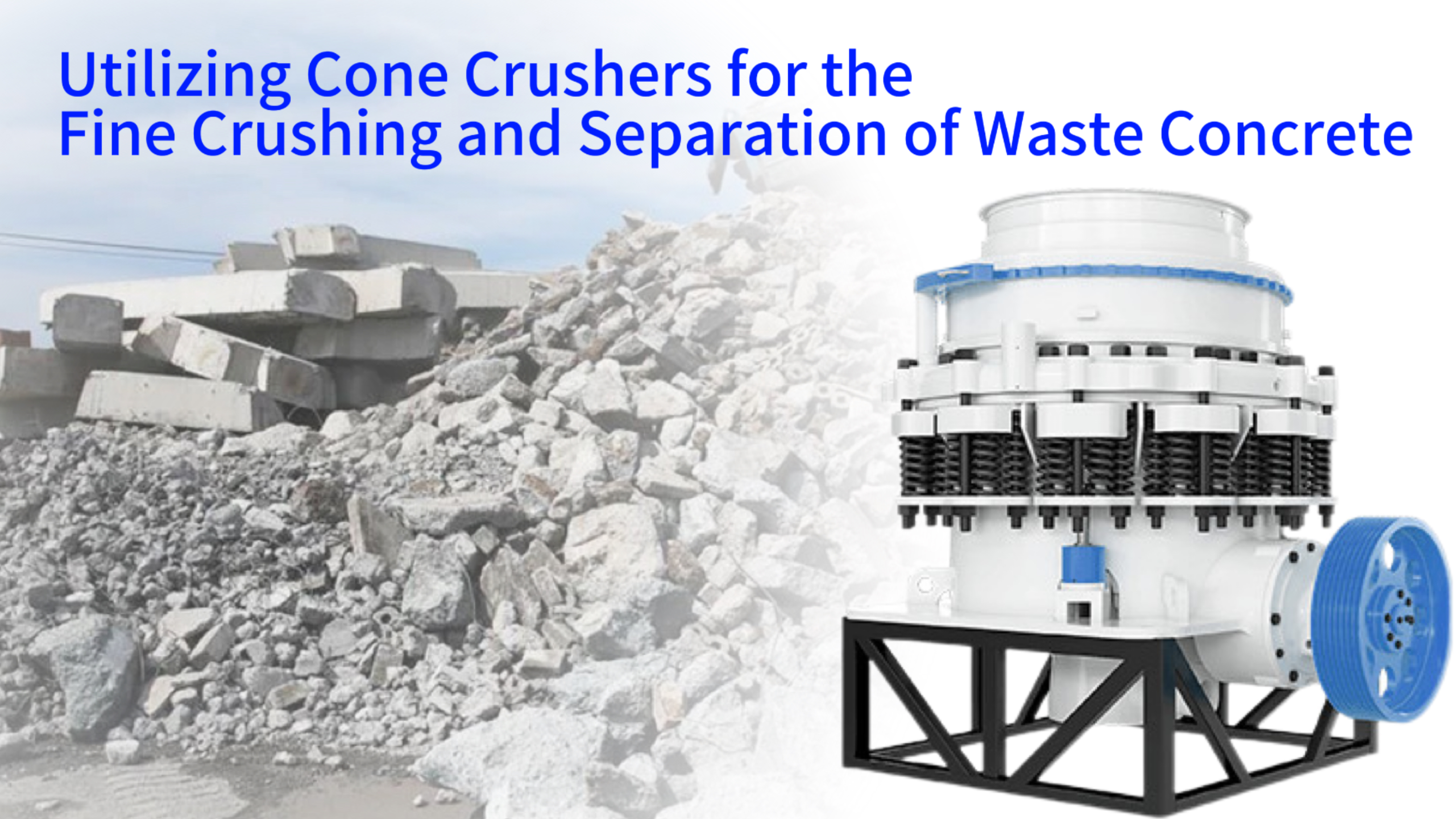
Spring cone crushers possess distinct mechanical characteristics that align well with the challenges presented by construction waste. Their design incorporates a robust assembly of a rotating mantle and a fixed concave, which facilitates a compressive crushing action. This method is particularly effective for fracturing concrete and masonry. The defining feature of this crusher type is its overload protection system, which utilizes high-tension springs. When an unbreakable object enters the crushing chamber, the pressure exceeds the spring force, allowing the mantle to retreat and the foreign body to be discharged, thereby preventing catastrophic damage to the main shaft and other core components. This inherent safety mechanism is invaluable when processing feed material that may contain concealed or missed metallic contaminants.
The structural integrity of these machines is derived from a heavy-duty main frame and large-diameter bearings, which are engineered to withstand the intermittent shock loads from irregularly shaped demolition debris. The crushing action itself, often described as laminated or inter-particle compression, occurs within the progressively narrower space between the moveable cone and the concave. This results not only in size reduction but also in a tendency to liberate aggregates from cementitious mortar and to separate embedded rebar through bending and shearing forces, often yielding a more cubicle product compared to other crushing methods.
Mechanism of Overload Protection and Contaminant Ejection
The spring release system functions as an automatic mechanical safety device. The springs maintain a calibrated pressure holding the crushing members in their operational position. The system is designed with a specific pressure threshold; encountering an uncrushable object creates a force that momentarily overcomes this spring pressure. This action causes the assembly supporting the mantle to lower or sink, instantly widening the discharge size opening. The obstruction is then able to pass through the chamber without transferring destructive energy into the gear or shaft, after which the springs return the mantle to its original setting. This entire cycle can occur in a fraction of a second, minimizing disruption to the continuous feed of processable material.
Structural Resilience Against Impact and Abrasive Wear
The task of breaking down reinforced concrete mandates a machine built for endurance. Key to this is the crusher's main frame, typically constructed from thick steel plates with reinforced ribs to resist deformation under cyclical loading. Furthermore, the alloy composition and heat treatment of the mantle and concave liners are selected for high abrasion resistance, a necessary quality given the abrasive nature of crushed concrete. The bearing arrangements, both for the eccentric mechanism and the main shaft, are oversized relative to the machine's power rating. This design philosophy ensures sufficient load capacity and service life despite the inconsistent feed density and potential for momentary overloads common in C&D waste recycling operations.
Principles of Material Reduction and Aggregate Liberation
The crushing process within a spring cone crusher is not a single event but a progressive reduction. Material entering the top of the crusher is repeatedly compressed as it travels downward through the chamber. Each compression cycle fractures the material along its natural cleavage lines. For composite materials like concrete, this repeated squeezing and bending action works to separate the hardened cement paste from the stronger natural aggregates within it. Simultaneously, any embedded steel reinforcement is subjected to similar bending stresses. These stresses can straighten, deform, or fragment the steel, often breaking the bond with the concrete and allowing it to be separated at a later stage, such as on a downstream magnetic separator.
Comparative Maintenance Philosophy for Challenging Environments
The mechanical simplicity of the spring cone crusher, when contrasted with more complex hydraulic systems, offers practical advantages in recycling plant environments. Maintenance routines center on mechanical inspection and part replacement rather than diagnosing sophisticated hydraulic circuits or electronic controls. The primary wear components, the mantle and concave liners, are accessible for measurement and change-out. Lubrication systems, while critical, are typically straightforward grease or oil circulation systems. This relative simplicity can translate to lower technical training requirements for maintenance staff and reduced inventory of specialized hydraulic components, factors that contribute directly to managing operational costs in an industry where machinery uptime is directly linked to profitability.
Implementing a Comprehensive Pre-Processing and Screening Protocol
Pre-Processing Steps & Efficiency Metrics
Step 1: Primary Screening
Removes 10-30% fines (<50mm)
Reduces crusher wear by 25%
Increases throughput by 15-20%
Step 2: Magnetic Separation
Removes 85-95% ferrous metals
Magnetic strength: 12,000-15,000 Gauss
Prevents 90% of crusher metal damage
Step 3: Manual Sorting
Removes 90% non-ferrous metals/plastics
Optimal belt speed: 0.3-0.5 m/s
Improves aggregate purity to >98%
Effective operation of any crusher, particularly in recycling applications, begins long before material reaches the feed hopper. A deliberate pre-processing strategy is essential to protect equipment and enhance efficiency. The initial stage almost invariably involves a form of primary screening or scalping. This step utilizes a vibrating grizzly or a robust trommel screen to remove fine soil, sand, and small debris fragments from the incoming demolition waste stream. Removing these fines, which can constitute 10 to 30 percent of the total volume, prevents them from packing within the crusher cavity, reduces unnecessary wear, and can provide a sellable sand product immediately, thereby improving the overall crushing capacity for the remaining coarse material.
Following initial size-based separation, the focused removal of ferrous metals becomes paramount. The most efficient tool for this task is an electromagnetic separator, installed at a strategic point in the material flow. The optimal location is typically after primary screening but before the final crusher, where material is presented as a monolayer on a conveyor belt. This configuration allows for maximum magnetic attraction to exposed rebar, wire mesh, and other steel fragments. For non-ferrous metals and large, non-metallic contaminants like wood and plastics, manual picking stations remain a necessary supplement to automated processes, requiring adequate space, lighting, and safety protocols for personnel.
Primary Objective of Initial Screening and Fines Management
The removal of sub-50 millimeter material prior to crushing serves multiple critical functions. It eliminates abrasive fines that consume energy and contribute to liner wear without contributing significantly to the final product yield. It also prevents the damp, clay-like material often found in demolition waste from adhering to crusher surfaces and feed chutes, a phenomenon known as packing or bogging. This buildup restricts material flow, alters the crusher's power draw, and can lead to uneven liner wear. By diverting this fraction, the crusher processes a more consistent, coarse feed, which allows for stable operation closer to its designed power and performance envelope, directly influencing the quality of the output aggregate.
Strategic Deployment and Selection of Magnetic Separation Equipment
The choice and placement of magnetic separators are guided by the nature of the feed material and the plant layout. Self-cleaning cross-belt magnets are common for removing tramp metal from a deep burden on a primary feed conveyor. For more precise extraction of liberated rebar after primary crushing, an in-line or overhead suspended magnet placed over a downstream conveyor is highly effective. The magnetic field strength, measured in Gauss, must be sufficient to lift steel from the center of the material bed. The installation height and the speed of the conveyor belt are calibrated to ensure contaminants have sufficient residence time in the magnetic field to be captured and subsequently discharged into a dedicated collection bin, thus preventing their recirculation.
Integrating Manual Sorting as a Critical Quality Control Step
Despite advances in automated sorting technology, human intervention remains a cost-effective method for removing certain contaminants. Manual sorting stations are positioned at points where material is spread thinly on a slow-moving conveyor, allowing operators to visually identify and remove items that automated systems might miss. These include non-ferrous metals like aluminum and copper, waterproofing membranes, large plastic items, and untreated timber. The effectiveness of this stage depends on ergonomic station design, proper training of personnel to recognize contaminants, and adequate material exposure time, which is a function of belt speed and the number of pickers assigned to the line.
Handling Oversized Material and Lightweight Contaminants
Pre-screening will typically identify oversized concrete chunks or masonry blocks that exceed the maximum feed size for the secondary cone crusher. This oversize fraction must be reduced, often by a primary jaw crusher, before re-entering the main processing stream. For lightweight contaminants such as plastics, foam, and paper, air classification or wind sifting presents an effective solution. In this process, a controlled air stream is directed through a falling curtain of crushed material. The lighter fractions are carried away by the airflow and collected separately, while the heavier aggregates continue their fall onto a conveyor. This technique significantly improves the purity of the final recycled aggregate product.
Managing Metallic Reinforcement Within the Crushing Circuit
Steel Reinforcement Behavior & Mitigation Strategies
Strategy: Choke feeding + even distribution + scheduled cavity inspection
Strategy: Spring overload protection + downstream magnetic separation
Strategy: Pre-crushing oversize metal + spring tension calibration
Despite rigorous pre-screening and magnetic removal, a residual amount of reinforcing steel will inevitably enter the crushing chamber. Understanding its behavior is key to managing its impact. When a piece of rebar enters the space between the mantle and concave, it is subjected to immense compressive and bending forces. Depending on its size, orientation, and the crusher setting, it may be deformed, sheared into shorter lengths, or become entangled around the moving cone. Longer, flexible pieces pose the greatest risk, as they can wrap around the mantle, potentially causing an imbalance, increased vibration, and a complete stoppage if they jam the mechanism and prevent the mantle from gyrating.
Proactive management focuses on minimizing the quantity and size of metal entering the crusher and configuring the machine to expel it efficiently. The spring system's protective function is the primary defense against damage from smaller, isolated pieces. Consistent and centralized feeding is another critical control; an even distribution of material across the entire circumference of the crushing chamber prevents the mantle from being exposed in one sector, which is a precondition for rebar to initiate wrapping. Operational protocols must also include scheduled inspections during planned downtime to locate and remove any metallic fragments that did not fully eject, thereby preventing them from causing secondary damage during the next startup.
Predictable Behavioral Patterns of Steel in a Compression Chamber
Within the dynamic environment of the crushing chamber, metallic reinforcement does not behave like brittle stone. Steel is ductile and will deform under load. A short, thick piece may be flattened or bent into a "U" shape before being forced through the discharge gap. A longer, slender piece may buckle and, if its length is greater than the chamber's circumference, its ends can contact the rotating mantle at different points, leading to a winding motion. This process can progressively coil the steel around the cone. The presence of such wrapped metal disrupts the even gap between the mantle and concave, leading to inconsistent product grading and localized, accelerated wear on the manganese liners opposite the point of contact.
Operational Response to the Spring Protection System Activation
The activation of the crusher's overload protection is often audibly and visibly perceptible to an attentive operator. A distinct metallic clang or crunch may be heard as the uncrushable object is engaged, followed momentarily by the sound of it being released through the bottom. The crusher's power monitor may show a brief spike followed by a rapid return to normal operating amperage. It is important for operators to recognize these signs as normal function of the safety system rather than an alarm condition. However, frequent activations indicate either an insufficient pre-cleaning process or that the spring tension may be set too low for the majority of the crushable feed material, requiring a review of upstream processes or machine calibration.
Optimizing Feed Characteristics to Mitigate Entanglement Risk
The method of introducing material into the crusher is a major controllable factor in preventing rebar entanglement. The objective is "choke feeding," where the crushing chamber is kept consistently full of rock-on-rock material. This mass of material acts as a cushion and barrier, preventing any single piece of metal from directly engaging the mantle surface for an extended period. A centrally mounted feed distributor, or "spider," helps achieve this by spreading the incoming stream evenly around the entire circumference of the crushing chamber. This practice ensures the mantle is continuously working against a bed of aggregate, which not only protects against wrapping but also promotes inter-particle crushing, improves energy efficiency, and yields a more consistent product shape.
Systematic Inspection and Removal of Residual Metallic Debris
Planned maintenance intervals should incorporate a dedicated procedure for clearing metallic remnants. After the crusher is electrically isolated and safely locked out, visual and manual inspections are conducted. Key areas include the discharge opening, the lower frame area around the adjusting ring, and the cavity itself once access is gained. Using tools like boroscopes or flashlights, personnel look for bent rebar fragments lodged in the liner profiles or caught in the support structure. Any discovered metal must be safely removed, as leaving it in place creates a focal point for accelerated wear and poses a risk of dislodging during future operation, potentially causing downstream conveyor belt damage or contaminating the clean aggregate stockpile.