Multi-Cylinder Cone Crusher Selection Points Adaptation Method for High-Yield Crushing Scenarios
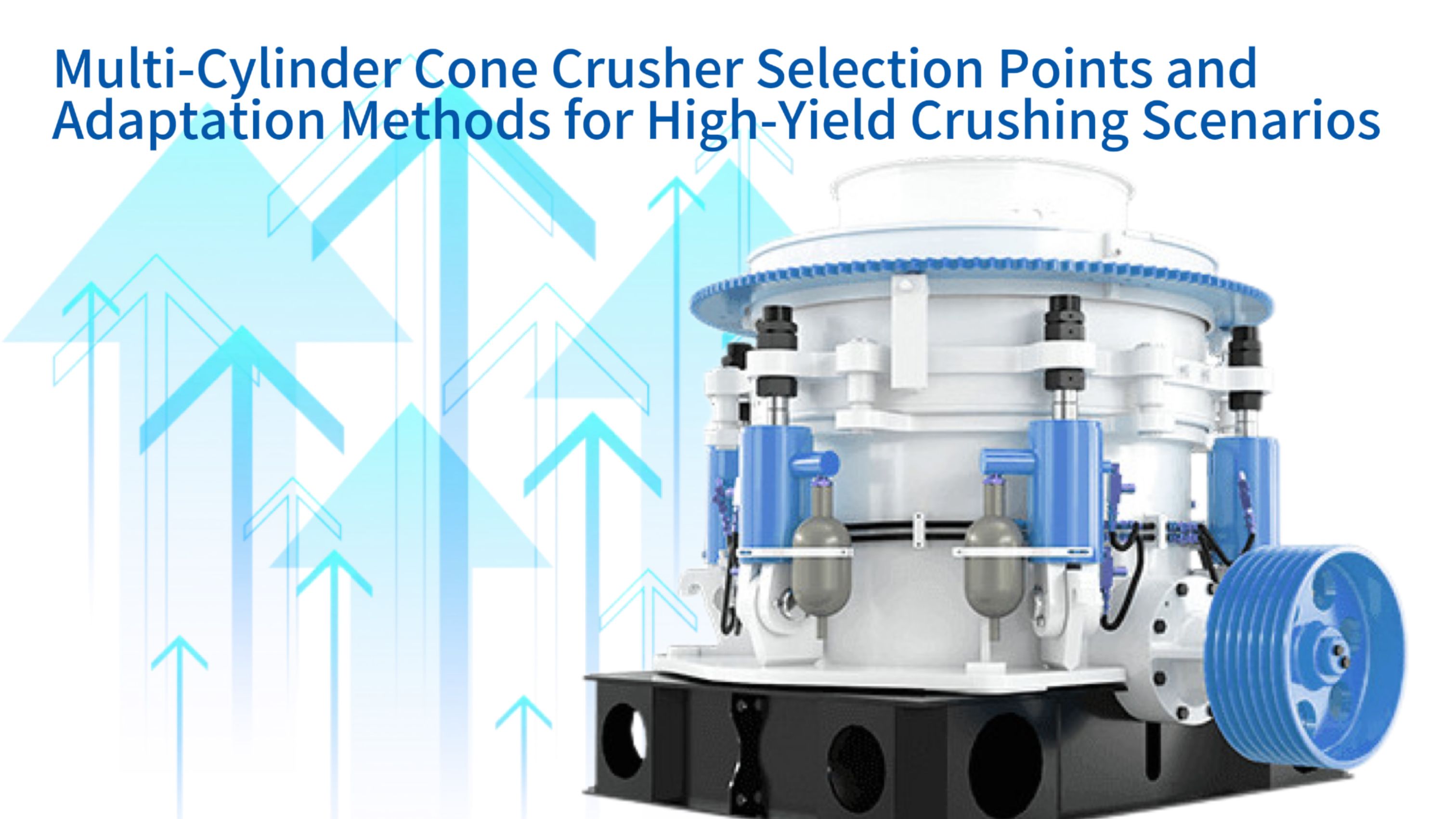
The demand for crushed stone and processed ore continues to grow with global infrastructure development and industrial activity. Mining operations and large-scale aggregate quarries face constant pressure to increase their output. Achieving high yield in a crushing circuit requires equipment that can operate reliably under continuous, high-load conditions. Traditional crushing machines sometimes struggle to maintain performance when pushed to their limits. They may experience mechanical fatigue, reduced efficiency, or produce inconsistent product quality. The multi-cylinder hydraulic cone crusher represents a significant advancement in crushing technology. It is engineered specifically to meet the demands of high-yield applications. This type of crusher combines immense crushing force with intelligent control systems. It allows operators to process larger volumes of hard rock while maintaining excellent product shape and gradation. Understanding how to select and adapt these machines for specific high-yield scenarios is essential for any operation seeking to maximize productivity and profitability. In the context of mining and quarrying, this selection process is a critical factor in overall project success.
The Fundamental Definition and Core Technological Advantages of Multi-Cylinder Cone Crushers in High-Yield Scenarios
A multi-cylinder hydraulic cone crusher is a specialized machine designed for secondary, tertiary, and quaternary crushing stages. It is particularly well-suited for processing hard and abrasive materials. The machine integrates a robust, high-strength steel frame with multiple hydraulic cylinders for clamping and adjustment. It utilizes advanced automation and the laminated crushing principle to achieve efficient size reduction. In a high-yield production environment, its primary advantage is its ability to deliver a consistently high crushing force. This force ensures that even when processing large quantities of hard rock, the crusher maintains a high crushing ratio and high throughput. The quality of the final product, characterized by excellent particle shape, is also maintained under these demanding conditions. This combination of power, control, and efficiency makes the multi-cylinder cone crusher a key piece of equipment for large-scale mining and aggregate operations aiming to break production records.
The Multi-Cylinder Locking Mechanism for Ultra-High Crushing Force
The defining feature of this crusher type is the arrangement of multiple hydraulic cylinders around the machine's main frame. These cylinders serve a dual purpose. They provide the clamping force that securely holds the adjustment ring against the main frame during operation. This clamping force is essential for resisting the immense reactive forces generated during crushing. The cylinders also generate significant pre-load force, which is far greater than what mechanical springs or a single cylinder can provide. This pre-load allows the machine to withstand much higher crushing loads without mechanical deflection or failure. During operation, the main shaft and the movable cone are supported by this powerful hydraulic system. The system enables the generation of crushing forces measured in hundreds or even thousands of tons. This immense power allows the crusher to easily break down the hardest materials, including granite and basalt, while maintaining a full chamber and maximizing production rates. The design of the main frame is critical to supporting these forces.
The Intelligent Hydraulic Control System for Real-Time Adjustment
Modern multi-cylinder cone crushers are equipped with sophisticated hydraulic control systems. These systems use a network of sensors to continuously monitor key operating parameters. The monitored data includes the crushing load, hydraulic pressure in each cylinder, lubrication oil temperature, and the current closed side setting. This information is processed by a central control unit. When the system detects a change in conditions, such as an increase in load from harder material, it can respond instantly. It directs the hydraulic power unit to adjust the pressure in the cylinders. This action can modify the crusher setting or provide tramp iron relief. The response time is measured in milliseconds. This rapid, intelligent reaction protects the machine from damage during overload events. It also ensures that the crusher continues to operate at peak efficiency despite variations in the feed material, which is critical for maintaining high yield in a continuous operation.
The Laminated Crushing Principle and Optimized Chamber Design
High-yield crushing is not only about processing large volumes of material. The quality of the final product is equally important. The multi-cylinder cone crusher achieves both through the laminated crushing principle. The optimized geometry of the crushing chamber forces the material to form a dense bed as it moves downward. The gyrating motion of the mantle applies pressure to this entire bed of rock. The individual particles are crushed against each other, not just against the metal liners. This inter-particle compression is highly energy-efficient. It produces a product with excellent cubical shape and a very low percentage of flat or elongated particles. For high-yield applications, the crushing chamber is designed in various profiles. Extra coarse chambers handle large feed sizes in secondary roles, while fine chambers with long parallel zones produce the final, shaped product in tertiary roles. The geometry of the crushing chamber is the primary factor determining product quality.
The High-Reliability Power Transmission System
A high-yield crushing scenario demands that equipment operate continuously, often for 24 hours a day. The power transmission system of a multi-cylinder cone crusher is engineered for this level of reliability. A large electric motor provides the primary power. This power is transmitted through a horizontal shaft via a high-precision gear set or a heavy-duty belt drive system. The horizontal shaft then drives a bevel gear set that rotates the eccentric assembly. The entire drivetrain is supported by heavy-duty bearings designed to withstand the extreme shock loads generated by crushing hard rock. A forced lubrication system continuously supplies clean, cool oil to all gears and bearings. This oil film prevents metal-to-metal contact, reduces friction, and carries away heat. This robust design ensures that power is transmitted smoothly and efficiently, providing the consistent, reliable performance needed for high-yield production over long periods. The transmission shaft is a key component in this power path.
The Core Selection Points for Multi-Cylinder Cone Crushers in High-Yield Scenarios
| Selection Criterion | Key Considerations | Optimization Target |
|---|---|---|
| Throughput & Feed Size | Feed opening ≥ 90% of upstream material size | Maximize throughput without blockages |
| Crushing Force & Material Hardness | Sufficient motor/hydraulic force for hardest rock | Prevent stalling/damage |
| Discharge Setting & Product Size | Balance between opening size and product specs | Meet gradation requirements |
| Chamber Profile & Crushing Stage | Coarse (secondary) / Fine (tertiary) | Optimal capacity & product shape |
| Installed Power & Energy Efficiency | 10-15% power margin on theoretical requirement | Minimize energy waste |
Selecting a crusher for a high-yield application is more complex than simply matching a machine to a desired tonnage. It requires a detailed analysis of the material to be processed, the required product specifications, and the existing or planned process flow. An incorrect selection can lead to bottlenecks, excessive wear, high operating costs, and failure to meet production targets. The selection process must consider multiple interacting factors. Each factor influences the final decision and the long-term performance of the crushing circuit. A systematic approach to evaluation is essential to ensure the chosen machine is perfectly suited to its task and delivers the expected return on investment.
Matching Throughput Capacity with Feed Size Characteristics
The first and most obvious selection criterion is the required production rate, measured in tons per hour. However, this must be evaluated together with the size of the incoming material. The feed opening of the cone crusher determines the maximum rock size it can accept. If the feed contains particles larger than this opening, they will bridge across the top and not enter the chamber. This severely reduces throughput and can cause blockages. The selected crusher must have a feed opening large enough to accept at least 90 percent of the material coming from the upstream crusher. The machine's capacity curve must also show that it can achieve the target throughput at the required reduction ratio. The relationship between feed size and capacity is a fundamental consideration in this matching process.
Matching Crushing Force with Material Hardness
Different rock types have vastly different compressive strengths and abrasiveness. Crushing hard granite or iron ore requires significantly more force than crushing limestone. The multi-cylinder cone crusher offers the advantage of adjustable crushing force. During selection, the worst-case material hardness must be considered. The machine must be capable of generating enough force to effectively break the hardest rock it will encounter. Selecting a model with sufficient motor power and hydraulic clamping force is essential. An under-powered machine will stall or slow down when faced with hard material, leading to reduced throughput and potential damage. For highly abrasive materials, additional wear protection features may also be necessary. The specific demands of granite crushing operations, for example, require machines with substantial power and robust construction.
Matching Discharge Setting with Product Size Specifications
The target product size is the primary factor determining the crusher's closed side setting. In a high-yield scenario, there is often a desire to open the setting to increase throughput. This must be balanced against the upper size limit allowed for the final product. Crusher manufacturers provide product gradation curves for each model and chamber configuration. These curves show the expected particle size distribution at different closed side settings. The selection process should use these curves to verify that the machine can produce the required product gradation while achieving the desired throughput. If the target product is very fine and the required throughput is very high, multiple crushers or a closed-circuit configuration with a screen may be necessary. The ability to control discharge size precisely is a key feature of modern cone crushers.
Matching Crushing Chamber Profile with Material and Stage
A single multi-cylinder cone crusher model can be equipped with different crushing chambers. These chambers, designated as coarse, medium, fine, or extra fine, are created by changing the profile of the mantle and concave liners. The selection of the correct chamber profile is critical for high-yield performance. In a secondary crushing application, the goal is to handle large feed and maximize throughput. An extra coarse or coarse chamber with a wide feed opening and a steep profile is appropriate. In a tertiary or quaternary application, the goal is to control product shape and fineness. A fine or extra fine chamber with a long parallel zone is required. Installing the wrong chamber type will result in suboptimal performance, either through reduced capacity or poor product quality. The chamber must be precisely matched to its position in the overall crushing circuit.
Matching Installed Power with Energy Efficiency Goals
While maximizing throughput is the primary goal, energy consumption is a significant operating cost. The selection process must balance power with efficiency. Selecting an excessively large motor for the application can lead to inefficiency. The motor may operate at a low percentage of its rated power most of the time, which wastes energy. The correct approach is to calculate the theoretical power required based on the target throughput and the material's work index. A margin of 10 to 15 percent is then added to account for variations in feed and material hardness. This results in a power rating that is sufficient for all conditions without being oversized. This balance achieves the goal of high yield while maintaining energy efficiency and controlling operating costs.
Adaptation Methods for Integrating Multi-Cylinder Cone Crushers into High-Yield Process Flows
Selecting the right crusher is only the first step. Integrating it successfully into an existing or new crushing plant requires careful adaptation of the surrounding process. The crusher does not operate in isolation. Its performance is heavily influenced by the upstream feed system and the downstream material handling and screening equipment. Optimizing these interfaces is essential for achieving the full potential of the multi-cylinder cone crusher. Proper adaptation creates a smooth, continuous flow of material through the circuit. It eliminates bottlenecks and ensures that every component operates in harmony with the others. This system-level thinking is what transforms a good crusher into a high-yield crushing plant.
Adapting the Upstream Feed System for Stability and Control
A multi-cylinder cone crusher performs best when it is choke-fed. This means the crushing chamber is always kept full of material. To achieve this, the upstream feed system must be stable and controllable. The vibrating feeder or conveyor belt feeding the crusher should have a variable speed drive. This allows the feed rate to be adjusted automatically based on the crusher's power draw or cavity level. Sensors monitor the crusher and send signals to the feed control system. If the crusher starts to run too full or with too much power, the feed rate is reduced. If the chamber level drops, the feed rate is increased. A reliable metal detector and magnet should also be installed in the feed stream. These devices remove tramp iron and prevent it from entering the crushing chamber, protecting the crusher from damage and ensuring uninterrupted operation.
Adapting the Downstream Screening for Closed-Circuit Efficiency
In many high-yield fine crushing applications, the cone crusher is part of a closed circuit with a vibrating screen. The crusher discharges onto a screen. The screen separates the material into finished product and oversize material. The oversize is returned to the crusher for another pass. The efficiency of this screen directly impacts the performance of the entire circuit. If the screen is not efficient, a large amount of already-sized product will be returned to the crusher. This creates unnecessary circulating load, wastes energy, and increases wear on the crusher. Selecting a screen with sufficient area and high efficiency is critical. The screen aperture must be chosen to match the desired product size. Properly managing the circulating load is key to maximizing the overall throughput of the closed circuit. This is a core principle in aggregate processing plant design.
Integrating Automation Systems for Coordinated Control
A modern high-yield crushing plant operates as an integrated system. The individual control systems of the crusher, feeders, screens, and conveyors should be linked to a central plant control system. This integration allows for coordinated control of the entire process. The central system can monitor all key parameters. It can automatically adjust feed rates to maintain optimum crusher operation. It can sequence the start-up and shutdown of equipment to prevent blockages. If a downstream conveyor stops, the system can immediately stop the feed to the crusher and then stop the crusher itself. This coordinated control ensures smooth, safe, and efficient operation. It also provides valuable data for monitoring performance, identifying bottlenecks, and optimizing the process over time.
Optimizing Wear Part Life and Maintenance Scheduling
In a high-yield operation, wear part consumption is a major cost. The mantle and concave liners must be chosen carefully to match the abrasiveness of the material being crushed. Different material options, such as standard manganese steel or high-chromium alloys, offer different wear lives. The optimal choice balances initial cost with expected service life. A preventive maintenance schedule should be established based on operating hours and observed wear patterns. Key indicators like increasing power draw or changes in product shape signal when liners are wearing out. By scheduling liner changes during planned downtime, the operation avoids costly, unplanned stops. This proactive approach to wear part management contributes significantly to overall equipment effectiveness and the long-term success of a high-yield crushing operation. Understanding the function of the moveable cone and its liner is essential for effective maintenance planning.
The Core Functions and Value of Multi-Cylinder Cone Crushers in High-Yield Scenarios
Multi-Cylinder Cone Crusher Core Value Metrics
* Percentage values represent relative performance compared to traditional cone crushers
When a multi-cylinder cone crusher is correctly selected and adapted for a high-yield application, its advanced features translate into tangible production benefits. These benefits are not isolated. They work together to create a crushing solution that is powerful, efficient, reliable, and profitable. The machine becomes the core of the production process. It delivers value that is measured in tons per hour, in the quality of the final product, and in the overall cost per ton. Understanding these core functions helps operators appreciate the full potential of their equipment and the contribution it makes to the success of the entire operation.
Ultra-High Throughput Capacity Supporting System Production
The most direct value of a multi-cylinder cone crusher in a high-yield scenario is its massive throughput capacity. Its powerful crushing force and optimized material flow path allow it to process hundreds or even thousands of tons of material per hour. This high capacity directly addresses the primary goal of the operation. It removes the bottleneck that often exists in the fine crushing stage. By processing material quickly and efficiently, it ensures that downstream equipment, such as screens and conveyors, is always supplied with material. This steady, high-volume output is the foundation of the entire plant's productivity. It enables large-scale mining and aggregate operations to achieve the economies of scale that are essential for profitability. The machine's crushing capacity is the primary metric of its value.
Superior Product Shape Enhancing Aggregate Value
For aggregate producers, the shape of the crushed particles directly affects the market value of the product. The laminated crushing action of a multi-cylinder cone crusher produces a product with an excellent cubical shape. The percentage of flat and elongated particles is very low. These cubical particles pack together more densely and interlock more effectively in concrete and asphalt. High-performance concrete for bridges and high-rise buildings requires this type of aggregate. High-spec asphalt for highways also depends on it. Because the crusher produces a superior product, the producer can command a premium price in the market. This quality improvement is not just a technical benefit. It is a direct economic advantage that enhances profitability and strengthens the company's reputation as a supplier of high-quality materials. The demands of projects involving basalt crushing often highlight the importance of this superior particle shape.
Intelligent Adjustment Ensuring Continuous Stable Operation
Unplanned downtime is the enemy of high-yield production. The intelligent hydraulic control system of the multi-cylinder cone crusher is a powerful tool for preventing downtime. The system constantly monitors the crusher's operating conditions. It automatically adjusts the crusher settings to compensate for variations in feed material hardness or size. This ensures that the crusher always operates at its optimal point. The system's tramp iron release feature is particularly valuable. If an uncrushable object enters the chamber, the system instantly opens the setting, passes the object, and returns to the original setting. This all happens in a few seconds without stopping the crusher. This automatic protection prevents major damage and avoids hours of repair downtime. The result is a machine that runs reliably day after day, delivering the high availability required for high-yield targets.
Efficient Energy Conversion Reducing Cost Per Ton
While high yield is the goal, controlling costs is equally important. The multi-cylinder cone crusher is designed for efficient energy conversion. The laminated crushing principle ensures that most of the input energy is used for breaking rock, not wasted as heat or wear. The machine's power consumption per ton of material processed is significantly lower than many older or less efficient crusher types. The longer wear life of the liners, resulting from even wear distribution, also reduces operating costs. The combination of lower energy costs and lower wear part costs contributes to a highly competitive cost per ton. Although the initial capital investment for a multi-cylinder cone crusher may be higher, the superior operating economics deliver a strong return on investment over the machine's working life. Companies like MSW Technology, with over 15 years of direct experience in the crushing industry, have demonstrated these economic advantages in numerous installations worldwide.
Typical Applications and Process Matching in High-Yield Scenarios
| Application Scenario | Crushing Stage | Feed Size (mm) | Product Size (mm) | Key Advantages |
|---|---|---|---|---|
| Granite Quarries | Tertiary | 40-60 | 12-25 | High crushing force + cubical product shape |
| Abrasive Metal Mines | Secondary | 150-200 | 50-75 | Robust construction + overload protection |
| Large Aggregate Plants | Secondary | Primary crusher output | Intermediate size | High throughput + good particle shape |
| Manufactured Sand Production | Super-Fine | 20-40 | 5-15 | Efficient fine crushing + consistent gradation |
The versatility of the multi-cylinder cone crusher allows it to be applied effectively in a wide range of high-yield scenarios. Its powerful design makes it suitable for the most demanding applications, from hard rock mining to large-scale aggregate production. In each application, the machine plays a specific role within the process flow. Its capabilities are matched to the unique requirements of that stage and material. Understanding these typical applications provides valuable insight into how the crusher can be deployed to maximize its value in different operational contexts.
Application in Tertiary Crushing at Large Granite Quarries
In a large granite quarry producing millions of tons per year, the multi-cylinder cone crusher is often used as the tertiary crusher. The process begins with a primary jaw crusher reducing the blasted rock. A secondary cone crusher then further reduces the material to a size of 40 to 60 millimeters. This material is fed into the multi-cylinder cone crusher for final reduction. The immense crushing force of the machine is essential for breaking the hard, abrasive granite. It efficiently reduces the material to the final product size, typically ranging from 12 to 25 millimeters. The resulting aggregate has excellent cubical shape, making it ideal for high-strength concrete. This application fully utilizes the crusher's ability to combine high throughput with superior product quality in a demanding hard rock environment. This is a classic example of effective granite crushing process design.
Application in Secondary Crushing at Abrasive Metal Mines
In metal mines processing copper ore, gold ore, or iron ore, the rock is often both hard and extremely abrasive. The primary crusher reduces the run-of-mine ore to a size of 150 to 200 millimeters. A multi-cylinder cone crusher is frequently employed in the secondary crushing stage. Its robust construction and powerful multi-cylinder design allow it to handle the severe conditions. It efficiently crushes the ore to a size of 50 to 75 millimeters. This prepares the material for the final crushing stage or for feeding directly into a semi-autogenous grinding mill. The machine's reliable overload protection and durable wear parts are critical in this application. They minimize downtime and reduce maintenance costs in a challenging environment where equipment reliability is paramount for meeting production targets. The robust main shaft design is essential for this demanding role.
Application in Secondary Crushing at Large Aggregate Plants
Large aggregate plants producing materials for high-spec road construction and concrete often use a multi-cylinder cone crusher in the secondary crushing role. In this configuration, the crusher receives the product directly from the primary jaw crusher. It is fitted with an extra coarse or coarse chamber to handle the large feed size. Its high throughput capacity allows it to process the entire output of the primary crusher. It produces a large volume of intermediate material with good shape. This material is then conveyed to final crushing stages, which may involve additional cone crushers or vertical shaft impactors for final shaping. This application leverages the crusher's high capacity and its ability to maintain a good particle shape even in a high-throughput secondary role, effectively preparing the material for final processing.
Application in Super-Fine Crushing for Manufactured Sand Feed
The growing demand for manufactured sand has created new applications for cone crushers. In a large-scale manufactured sand plant, the multi-cylinder cone crusher can serve as the super-fine crushing stage. It takes material from a secondary crusher, typically sized from 20 to 40 millimeters. The cone crusher, fitted with a fine chamber, reduces this material to a very small size, often 5 to 15 millimeters. This finely crushed material is the ideal feed for a vertical shaft impactor, which performs the final shaping and sand production. The cone crusher's ability to efficiently produce a large volume of small, well-shaped particles is critical to the success of the sand plant. It prepares the material perfectly for the final stage, maximizing the efficiency of the entire operation. This process is a key component in modern aggregate processing for construction materials.
Detailed Explanation of the Technical Principles Behind Multi-Cylinder Cone Crushers
The superior performance of the multi-cylinder cone crusher in high-yield applications is the result of advanced engineering. Multiple scientific and engineering principles are integrated into its design. These principles range from large-scale structural mechanics to the microscopic behavior of lubricants and wear materials. Every component is designed with a specific function in mind, contributing to the machine's overall capability. Understanding these underlying principles provides a deeper appreciation for the machine's design and helps operators and engineers make better decisions regarding its selection, operation, and maintenance.
The Structural Mechanics of the Frame and Main Shaft Design
The main frame of a multi-cylinder cone crusher is typically a large, heavy structure made from cast steel or fabricated from high-strength steel plate. It is designed to have extremely high rigidity. This rigidity ensures that all internal components remain in precise alignment under the immense forces of crushing. Any flexing of the frame would lead to misalignment, increased wear, and potential failure. The main shaft is another critically engineered component. It is forged from high-strength alloy steel and precisely machined. It is supported at its lower end within the eccentric bushing but has no top suspension point. This design allows the crushing forces generated by the mantle to be transmitted directly and stably down through the shaft and into the frame. This direct load path is fundamental to the machine's ability to sustain high crushing forces without mechanical issues. The integrity of the main frame is the foundation of the entire machine's reliability.
The Forced Lubrication Technology Based on Fluid and Thermal Dynamics
The high-load operation of a multi-cylinder cone crusher generates significant heat in the bearings, bushings, and gears. A sophisticated forced lubrication system is essential for managing this heat and ensuring reliable operation. This system uses a high-capacity pump to circulate cool, filtered oil continuously through all critical friction points. The oil is injected under pressure into the gaps between moving parts, creating a thin, high-pressure film. This hydrodynamic film physically separates the metal surfaces, preventing direct contact. This fluid-film lubrication reduces friction to an extremely low level, virtually eliminating wear from metal-to-metal contact. The circulating oil also absorbs heat from these components. It carries the heat away to an external cooling radiator, where it is dissipated. This thermal management system maintains all internal components within a safe, consistent temperature range, allowing the crusher to run continuously under full load for extended periods. The design of components like the spring in older designs has been replaced by this more advanced hydraulic technology.
The Automation and Intelligent Monitoring Technology Based on Control Theory
The control system of a modern multi-cylinder cone crusher is built on principles of control theory. It is a closed-loop system. A programmable logic controller serves as the central processing unit. It receives continuous data from sensors monitoring power draw, hydraulic pressure, bearing temperature, and mantle position. The controller compares this real-time data against pre-programmed target values and operating limits. When it detects a deviation, it uses a control algorithm to calculate the necessary corrective action. It then sends signals to actuators, such as the variable frequency drive on the feed conveyor or the valves on the hydraulic system, to adjust the process. This constant monitoring and automatic adjustment keeps the crusher operating at its peak efficiency. The system also performs diagnostic functions, analyzing trends in the data to predict potential problems before they cause a failure. This transforms maintenance from a reactive activity to a proactive one.
The Wear-Resistant Materials and Chamber Profile Retention Based on Tribology
The science of tribology, the study of friction and wear, is fundamental to the design of the crusher's wear parts. The mantle and concave liners are subjected to intense abrasion and high impact forces. They are typically made from austenitic manganese steel. This material has a unique property. Under the high impact and pressure of crushing, its surface layer work-hardens. The hardness of this surface layer increases dramatically, creating a tough, wear-resistant skin. The core of the liner remains tough and ductile. The liner profile is also carefully designed based on tribological principles. The shape is intended to promote the formation of a stable bed of material. This rock layer acts as a protective barrier, reducing direct contact between the metal liner and the rock. This combination of work-hardening material and self-protecting chamber design ensures that the liners wear evenly and maintain their effective crushing profile for a long service life. Understanding the function of the concave is key to appreciating this wear management system.
The Core Value and Investment Return for Mining and Aggregate Operations
Investment Return Breakdown
* Based on industry averages for large-scale mining and aggregate operations
* ROI = Return on Investment, typical payback period: 18-24 months
Investing in a multi-cylinder cone crusher for a high-yield application is a strategic decision with significant financial implications. The value delivered extends far beyond the machine's initial function of breaking rock. It impacts the entire production process, from raw material input to final product output. The benefits are realized in multiple areas, including direct cost reduction, product quality improvement, operational efficiency, and long-term sustainability. For a company focused on maximizing profitability and competitiveness, the multi-cylinder cone crusher represents a proven technology for achieving these goals. The return on this investment is realized through multiple, interconnected channels over the machine's operational life.
Capacity Leap: Breaking Bottlenecks to Unlock Scale
The most immediate and measurable return is the increase in production capacity. The high throughput of the multi-cylinder cone crusher directly addresses bottlenecks in the fine crushing stage. By removing this constraint, it allows the full potential of upstream equipment to be realized. The entire plant can operate at a higher, more consistent level. For an operation that has been limited by its crushing capacity, installing a new, larger cone crusher can result in a significant percentage increase in overall plant output. This increased production volume directly translates into higher revenue. It allows the company to capitalize on market opportunities and achieve the economies of scale that are essential for long-term success in the mining and aggregate industries.
Quality Premium: Winning Trust in High-End Markets
The superior product shape produced by the laminated crushing action opens doors to more profitable markets. Construction specifications for major infrastructure projects are increasingly demanding. They require high-quality aggregates with excellent particle shape and consistent gradation. The output from a multi-cylinder cone crusher meets these demanding specifications. This allows the producer to supply material for high-value applications such as high-rise buildings, long-span bridges, high-speed rail, and airport runways. These premium markets typically pay higher prices than the general construction aggregate market. This quality premium directly improves the producer's profitability. It also builds a reputation as a reliable supplier of high-quality materials, which can lead to long-term contracts and a stronger market position.
Operational Optimization: Reducing Cost Per Ton and Maintenance Burden
The operational efficiency of the multi-cylinder cone crusher translates into a lower cost per ton produced. The energy-efficient crushing action reduces power consumption. The long life of the wear parts reduces consumable costs. The high reliability and intelligent protection systems minimize unplanned downtime, which is one of the most costly events in a high-yield operation. Predictive maintenance capabilities allow for planned interventions, further reducing disruptions. The overall result is a smoother, more predictable, and more cost-effective operation. When all these factors are combined, the total cost of ownership over the machine's life is highly competitive, providing a clear economic advantage. MSW Technology, drawing on over 15 years of industry experience, has consistently engineered its equipment to deliver this level of operational optimization for its customers.
Sustainable Development: Aligning with Environmental Standards
Environmental regulations for mining and quarrying operations are becoming increasingly stringent worldwide. The multi-cylinder cone crusher contributes to a more sustainable operation in several ways. Its energy efficiency directly reduces the carbon footprint associated with the electricity it consumes. The enclosed crushing chamber and the availability of dust suppression systems help control fugitive dust, improving air quality and worker safety. Its quieter operation reduces noise pollution. By choosing advanced, efficient equipment, a company demonstrates its commitment to responsible environmental stewardship. This not only ensures compliance with regulations but also enhances the company's reputation with regulators, local communities, and customers who increasingly value sustainable practices. This alignment with environmental goals is an increasingly important aspect of the machine's overall value proposition.