The Laminated Crushing Principle of Cone Crushers Solving Hard Rock Reduction Challenges
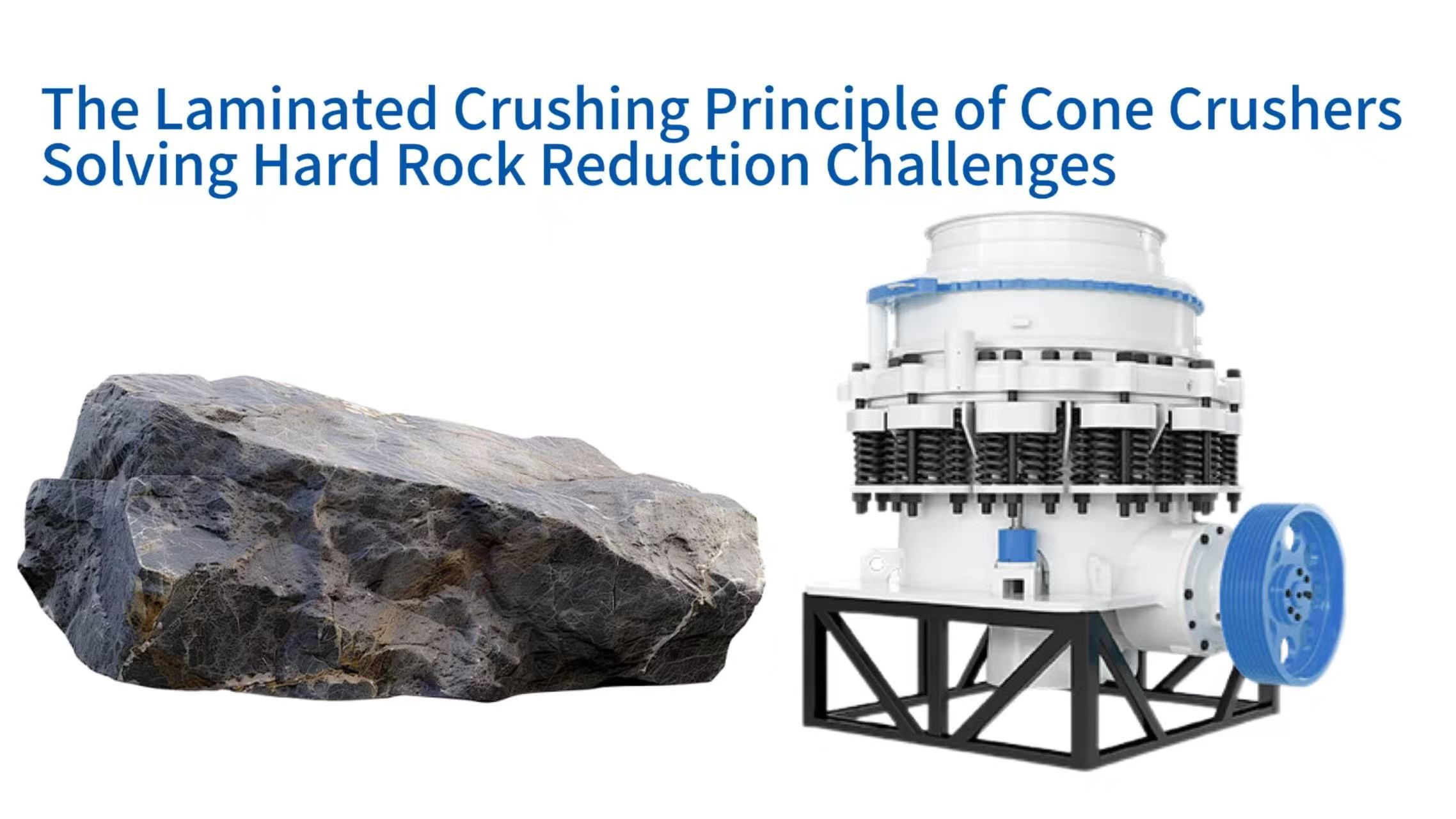
The process of reducing hard rocks like granite and basalt into smaller fragments presents a significant engineering challenge. These materials possess high compressive strength, often exceeding 300 megapascals. Traditional crushing methods that rely on impact or simple compression frequently encounter difficulties when processing such materials. These difficulties manifest as high energy consumption, rapid wear of machine components, and poor shape of the final product particles. The laminated crushing principle, implemented within the modern cone crusher, offers an advanced solution to these problems. This approach does not rely on a single force to break individual pieces. Instead, it applies pressure across a dense layer of material. Rocks within this layer are forced against each other, causing breakage along natural internal weaknesses. This mechanism leads to more efficient use of energy, reduced wear on metal parts, and the production of aggregates with a superior cubic shape. The technology fundamentally changes how industries approach hard rock processing.
The Fundamental Definition and Core Mechanism of Laminated Crushing
A cone crusher is a specialized machine designed for secondary, tertiary, and quaternary crushing stages. Its primary purpose is to reduce the size of material received from a primary crusher, such as a jaw crusher. The machine integrates robust mechanical components with hydraulic systems and automation technology. It achieves fine and ultra-fine crushing through the application of its core operational logic: the laminated crushing principle. This principle distinguishes the cone crusher from other crushing equipment and makes it particularly effective for hard and abrasive rocks. The entire design of the machine, from its drive system to its crushing chamber, is optimized to facilitate this specific type of material reduction.
Laminated Crushing Core Mechanism Flow
The Power Transmission System Creating Stable Driving Force
The crushing cycle begins with a powerful electric motor. This motor transmits rotational energy through a system of belts, pulleys, and a drive coupling to the crusher's transmission shaft. The transmission shaft then drives an eccentric assembly. This eccentric component is the heart of the machine's motion. Its offset design converts simple rotation into the complex gyrating movement of the main shaft. The main shaft, in turn, supports the movable cone, also known as the mantle. This entire transmission path is engineered for high efficiency and reliability. It ensures that the substantial power from the motor is converted into the immense crushing forces needed to break the hardest rocks, maintaining stable operation under peak loads without significant energy loss or mechanical fluctuation.
The Core Logic of Inter-Particle Communication in the Crushing Chamber
The essence of laminated crushing lies within the machine's crushing chamber. This chamber is the space between the mantle, which gyrates, and the concave, which remains stationary. Material enters from the top and does not remain as individual particles. It accumulates, forming a dense, continuous mass or layer. As the mantle gyrates toward the concave, it compresses this entire layer of rock. The force is not applied to single stones in isolation. Instead, the immense pressure travels through the mass, causing individual particles to press and grind against their neighbors. This inter-particle contact transmits energy through the material. Breakage occurs along natural fault lines, cracks, and grain boundaries within each rock. This rock-on-rock action is the fundamental logic of laminated crushing, proving more energy-efficient than methods focusing force on single particles.
The Intelligent Control System for Real-Time Response and Precision
Modern cone crushers rely on sophisticated control systems to manage the crushing process. These systems typically use a programmable logic controller, or PLC, as their central brain. An array of sensors constantly monitors critical operational parameters. These parameters include the power draw of the main motor, the pressure within the hydraulic system, the temperature of the lubricating oil, and the level of material in the crushing chamber. The control system uses this data to make automatic adjustments. It can modify the feed rate to prevent overloading. If an uncrushable object like a piece of steel enters the chamber, the hydraulic system instantly responds. It lowers the mantle to let the object pass and then immediately resets the crusher to its original operating position. This intelligent control ensures the machine operates at peak efficiency while protecting itself from damage, requiring minimal direct human intervention.
The Integrated Safety and Energy-Saving Design Principles
Cone crusher design incorporates safety and efficiency at a fundamental level. A centralized lubrication system is critical for safety and longevity. It continuously supplies filtered oil under pressure to all moving parts, including the eccentric bushing and thrust bearings. This oil film prevents metal-to-metal contact, reducing friction and wear. The circulating oil also serves as a coolant, carrying away the significant heat generated by crushing forces and maintaining stable operating temperatures. Energy efficiency is achieved through the optimized geometry of the crushing chamber and the precisely engineered motion of the mantle. These design elements ensure that the maximum amount of input energy is directed toward breaking rock within the material layer, rather than being wasted as heat or unnecessary wear on the machine's liners. This integrated approach supports reliable, long-term operation in demanding environments.
The Main Types of Cone Crushers and Their Applications in Hard Rock Processing
Comparison of Cone Crusher Types
The diverse requirements of different crushing stages and rock types have led to the development of several distinct cone crusher designs. Each type possesses unique structural and operational characteristics that make it particularly suitable for specific applications. Selecting the correct type is a critical decision for any processing operation. It directly influences the efficiency of the entire circuit, the quality of the final product, and the overall cost of production. The primary modern types are distinguished by their method of providing crushing force and adjusting the discharge setting, with spring, single-cylinder hydraulic, and multi-cylinder hydraulic designs being the most prevalent.
Multi-Cylinder Hydraulic Cone Crushers in Fine Granite Crushing
MH series multi-cylinder hydraulic cone crushers are renowned for their immense crushing power and ability to generate an excellent laminated crushing effect. This makes them the ideal choice for the fine crushing of the hardest rocks, such as granite and basalt. Their design incorporates multiple hydraulic cylinders arranged around the main frame. These cylinders provide not only the clamping force to hold the bowl liner in place but also a powerful and rapidly adjustable crushing force. In a typical three-stage hard rock crushing circuit, this machine takes the role of the tertiary crusher. It receives material from the secondary crusher, often a smaller cone or an impactor, and reduces it further. It can consistently produce high-quality aggregate in the 12 to 30 millimeter range, characterized by a low percentage of flat or elongated particles. This product meets the stringent specifications for high-performance concrete and asphalt.
Single-Cylinder Hydraulic Cone Crushers in Medium-Hard Ore Reduction
Single-cylinder hydraulic cone crushers offer a simpler and often more cost-effective solution for many applications. Their design features a single large hydraulic cylinder located beneath the main shaft. This cylinder supports the shaft and controls the crusher's setting and overload protection. The simplicity of this design translates to easier maintenance and lower operational costs. These crushers are highly effective for processing medium-hard rocks, such as limestone and dolomite, as well as a wide range of metal ores in the secondary or tertiary stages. In a cement plant, for instance, a single-cylinder machine reliably crushes raw materials to the correct size for the raw mill. In a mineral processing operation, it efficiently reduces ore to a size suitable for the grinding circuit, providing a consistent and stable feed. For specific applications in cement manufacturing, this type of crusher offers an excellent balance of performance and cost.
Spring Cone Crushers in Large-Scale Quarry Secondary Operations
The spring cone crusher represents the classic and time-tested design of this machine category. It is renowned for its robust construction, mechanical reliability, and ability to handle a wide variety of materials. Its overload protection system relies on a set of heavy-duty coil springs. If uncrushable material enters the chamber, the crushing forces overcome the spring tension. The bowl assembly is allowed to lift, releasing the object and preventing damage to the main shaft or frame. In large aggregate quarries, this type of crusher frequently serves as the secondary machine. It takes the product from the primary jaw crusher, typically in the range of 150 to 300 millimeters, and reduces it down to a manageable size for final crushing. Its output, often between 30 and 60 millimeters, acts as a consistent and reliable feed for tertiary cone crushers or vertical shaft impactors.
The Importance of Chamber Configuration for Product Size Control
A single cone crusher model is not limited to producing only one product size. The machine's versatility is greatly enhanced by the ability to change its crushing chamber configuration. By replacing the mantle and concave liners, operators can select from a range of preset chamber profiles. These profiles are typically categorized by their intended application, such as extra coarse, coarse, medium, fine, or extra fine. The choice of chamber directly dictates the machine's maximum feed size and its production capacity for a given closed side setting. For an operation focused on producing a large volume of fine aggregates, a short head fine chamber is the appropriate selection. For a plant needing high throughput of a coarser intermediate product, a standard medium chamber would be more suitable. This modular approach allows a single machine to adapt to different production needs throughout its life.
The Core Functions of Laminated Crushing and Their Value for Hard Rock
The laminated crushing principle endows the cone crusher with a set of capabilities that directly address the most difficult aspects of hard rock processing. These functions are not independent features; they work together synergistically. They provide solutions to the persistent industry problems of high energy consumption, rapid wear part degradation, and poor product shape. Understanding these core functions reveals why the cone crusher has become an indispensable machine for modern mining and aggregate production, offering tangible improvements in both efficiency and final product quality.
Ultra-High Crushing Force for Effective Size Reduction of Hard Materials
The fundamental requirement for crushing hard rock is the application of sufficient force to overcome its internal strength. The cone crusher is engineered to generate this force. The robust support structure, including the main shaft, the mantle, and the main frame, is designed to withstand immense loads. The gyrating motion powered by the eccentric translates into a crushing force that can reach hundreds of tons. This force is applied not to a single point but across the entire surface of the mantle. When this massive pressure is exerted on a layer of high-strength granite or basalt, it creates stresses within each particle that exceed the material's fracture point. This reliable generation of ultra-high force ensures that even the most challenging rocks are effectively broken down in a controlled manner.
Inter-Particle Compression Enhancing Energy Utilization and Throughput
One of the most significant advantages of laminated crushing is its efficient use of energy. In a single-particle crushing event, a large portion of the input energy is lost as heat, noise, and localized wear on the crushing surfaces. The energy is dissipated in the small area where the metal strikes the rock. In laminated crushing, the energy is distributed across countless contact points within the material bed. Particles transfer energy to each other, causing breakage through internal stress. This mechanism dramatically improves energy utilization. Industry data and operational experience indicate that laminated crushing can reduce specific energy consumption by 20 to 30 percent compared to traditional single-particle crushing methods. This means that for the same amount of power, a cone crusher can achieve a significantly higher crushing capacity, directly lowering the cost per ton of material processed.
Superior Product Shape Enhancing Market Value of Aggregates
The shape of the final crushed particles is a critical quality parameter, especially in construction applications. Aggregates with a high proportion of flat or elongated particles are undesirable. They create voids in concrete and asphalt mixes, reducing strength and requiring more binding material. The laminated crushing process naturally produces particles with a superior, more cubic shape. Because the rocks are squeezed and ground against each other from multiple directions, they tend to break along their natural planes, creating more equidimensional fragments. The resulting material has a significantly lower content of flat and elongated particles. This high-quality, cubical aggregate commands a premium price in the market. It is the preferred material for high-strength concrete, asphalt pavements, and railway ballast, where durability and performance are essential. Applications such as aggregate processing for infrastructure projects rely heavily on this superior particle shape.
Uniform Wear Mechanism Extending the Lifespan of Wear Components
The wear parts of a crusher, primarily the mantle and concave liners, represent a significant ongoing operational expense. The nature of laminated crushing contributes to a more favorable wear profile for these components. In impact crushing, the wear is often concentrated on specific areas of the hammer or blow bar, leading to rapid and uneven consumption. In a cone crusher, the entire surface of the mantle and concave is in contact with the moving mass of material. Wear occurs as rock particles slide and roll across these surfaces. This action distributes the wear much more evenly across the liner. Furthermore, a layer of rock material can become trapped in the recesses of the liner profile, creating a protective "autogenous" layer that shields the metal from direct abrasion. This combination of even wear distribution and autogenous protection can extend liner life by several times compared to components in impact crushers, significantly reducing maintenance costs and downtime.
Tramp Iron Protection and Automatic Reset for Uninterrupted Operation
Contamination of the feed material with metal objects, such as excavator teeth or drill bits, is an unavoidable risk in mining and quarrying. These objects are known as tramp iron and can cause catastrophic damage to a crusher. The hydraulic systems of modern cone crushers provide a highly effective defense. When a piece of tramp iron enters the crushing chamber, the crushing force spikes instantly. Sensors detect this spike, and the hydraulic system immediately acts. It rapidly lowers the mantle, increasing the discharge size and allowing the metal object to pass through the chamber without contacting the liners. Once the object is discharged, the hydraulic system automatically returns the mantle to its original closed side setting. This entire sequence occurs in a matter of seconds, without stopping the crusher. This automatic protection ensures continuous production and prevents costly damage to the machine's core components.
The Main Varieties of Hard Rock Processed and Their Specific Requirements
Hard Rock Types Processed by Cone Crushers
The term "hard rock" encompasses a wide range of geological materials, each with distinct mineral compositions, structural characteristics, and physical properties. These differences mean that no single crushing approach works equally well for all types. The cone crusher's design, particularly its ability to vary chamber geometry and operational parameters, allows it to be precisely matched to the specific requirements of each rock type. This adaptability is key to achieving optimal efficiency and product quality when processing materials that range from coarse-grained granites to dense, fine-grained basalts.
Efficient Granite Crushing for Premium Aggregate Production
Granite is a common igneous rock known for its high hardness, durability, and abrasive nature due to its high quartz and feldspar content. These characteristics make it a challenging material for crushing equipment. The powerful laminated crushing action of a cone crusher, particularly a multi-cylinder model, is well-suited to this task. The machine's immense force effectively fractures the crystalline structure of the granite. By carefully selecting the appropriate crushing chamber and optimizing the closed side setting, the crusher can produce aggregates with an excellent cubical shape and a consistent gradation. These premium aggregates are in high demand for critical infrastructure projects. They are used in the production of high-strength concrete for skyscrapers and bridges, as well as in the construction of high-speed railway tracks and durable airport runways. Dedicated granite crushing operations depend on this technology to meet market demands for quality.
Controlling Flakiness in Basalt Crushing for Asphalt Applications
Basalt is another volcanic rock prized for its exceptional strength, wear resistance, and dark color. These properties make it the preferred aggregate for the top layer of high-performance asphalt pavements. However, basalt's dense, fine-grained structure, often lacking well-defined cleavage planes, presents a specific challenge. Traditional crushing methods can produce a high proportion of unwanted flat and elongated particles. The laminated crushing mechanism of a cone crusher provides an effective solution. By forcing the material to break through inter-particle compression rather than direct impact, the crusher encourages fracture along the rock's natural, albeit less defined, weaknesses. This results in a product with a significantly lower flakiness index. Controlling particle shape is critical for asphalt, as flat particles do not interlock as effectively and can degrade under traffic loads, compromising the pavement's long-term skid resistance and durability. Specialized basalt crushing solutions focus on this critical aspect of particle geometry.
Secondary and Tertiary Crushing of Metal Ores in Mineral Processing
In the mineral processing industry, the goal is to liberate valuable minerals from the waste rock matrix. This process begins with crushing. After primary crushing in a jaw or gyratory crusher, the ore, which may be iron ore, copper ore, or gold ore, is typically in the range of 150 to 200 millimeters. This material must be further reduced to a size suitable for the grinding mills, often 15 to 25 millimeters or finer. Cone crushers are the workhorses of this secondary and tertiary crushing stage. They operate with high throughput and a high reduction ratio, efficiently processing the large tonnages common in mining. The consistent and stable product size distribution they provide is crucial. It ensures that the downstream grinding mills receive a uniform feed, which optimizes their efficiency and contributes to the overall effectiveness of the mineral recovery process within the broader field of mining and quarrying.
The Role of Cone Crushers in Pebble Crushing for Sand Production
River pebbles are a natural source of high-quality aggregate, but their composition, often primarily quartz or siliceous rock, makes them extremely hard and abrasive. Using them to produce manufactured sand is a demanding application. The typical processing route involves several stages. A jaw crusher first reduces the large pebbles. The output then feeds into a cone crusher, which acts as the critical intermediate stage. The cone crusher efficiently breaks the hard, abrasive pebbles down to a smaller size, typically under 40 millimeters. This prepared material is then an ideal feed for a vertical shaft impactor, or VSI crusher, which performs the final shaping and sand-making task. By using a cone crusher in this intermediate role, the operation benefits from its wear-resistant design and efficient processing of hard rock, preparing the material perfectly for the final VSI stage and ensuring the economic viability of the entire manufactured sand plant.
The Detailed Processing Principles and Engineering Behind Laminated Crushing
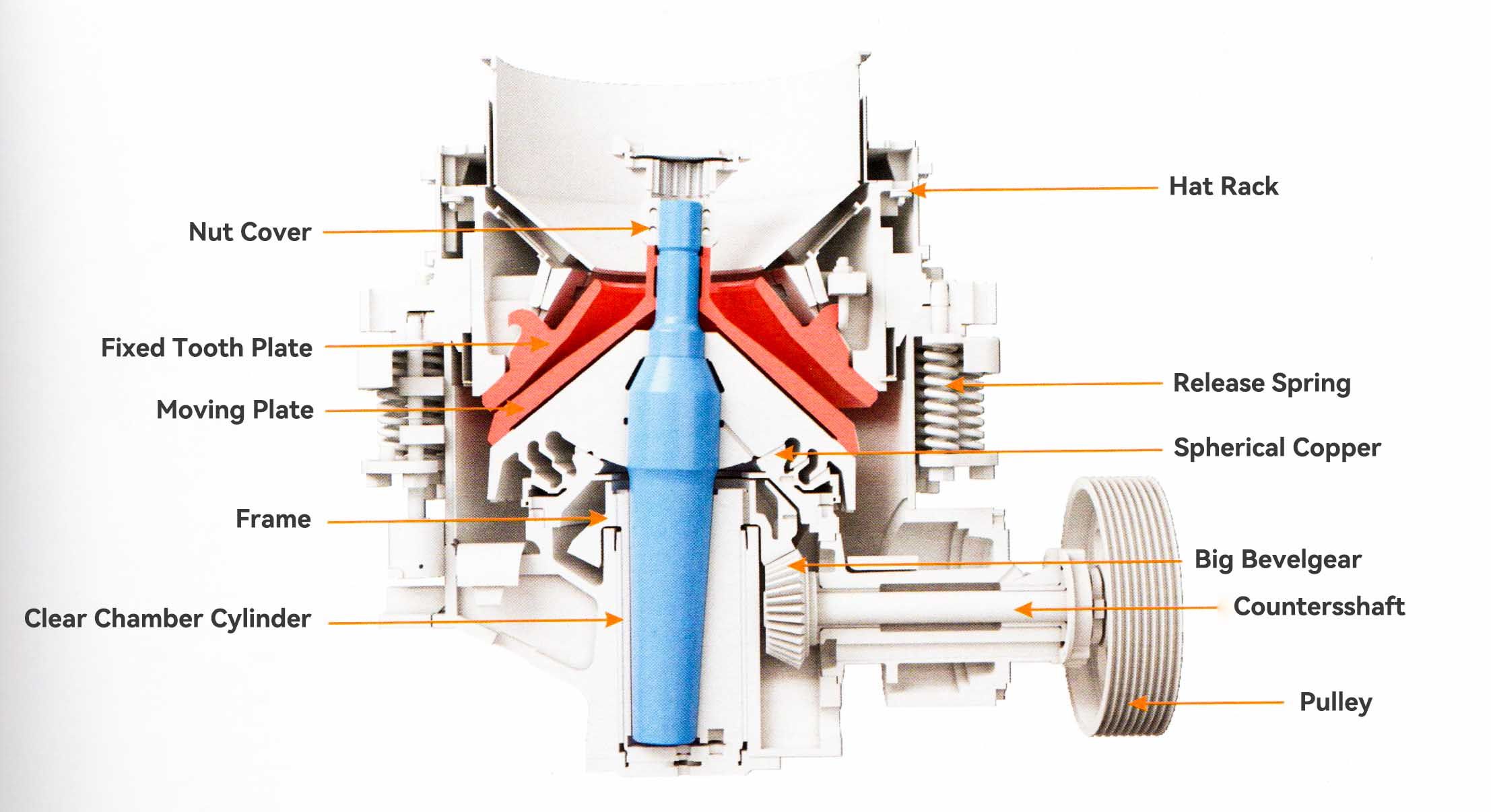
Engineering Principles of Laminated Crushing
The effectiveness of the laminated crushing principle is not a matter of chance. It is the result of deliberate and sophisticated engineering applied to every aspect of the cone crusher's design. From the macro-scale geometry of the crushing chamber to the micro-scale properties of the wear materials, each element is carefully considered and optimized. The goal is to create a controlled environment where inter-particle crushing can occur most effectively, maximizing energy transfer to the rock while protecting the machine itself. This involves principles drawn from mechanics, kinematics, material science, and fluid dynamics.
The Geometric Design of the Crushing Chamber Based on Mechanical Principles
The shape of the crushing chamber is the primary factor determining how material flows and breaks within the crusher. Modern cone crushers use chambers designed with the aid of advanced computer simulation. The profile of the chamber, defined by the curves of the mantle and concave, is not a simple straight line. It is carefully calculated to create a specific relationship between height and cross-sectional area. In the upper part of the chamber, the geometry is more open to allow material to enter freely and begin to form a dense bed. As the material moves downward, the space between the liners gradually decreases. In the lower, parallel zone, the liners are almost parallel for a precisely engineered length. This parallel zone is where the final compression and shaping of the particles occur. This scientifically designed geometry ensures that the correct forces are applied at the correct stage of the crushing process, maximizing the laminated effect and producing a uniform product.
The Optimization of Mantle Gyratory Motion Based on Kinematic Principles
The specific path traced by the mantle as it gyrates is another critical design variable, governed by kinematics. This path is determined by the design of the eccentric assembly and the suspension point of the main shaft. Engineers optimize this motion to achieve two complementary goals simultaneously. At the top of the chamber, a larger, more powerful swing is desirable. This large stroke helps to grip and initiate the fracture of the largest particles entering the crusher. As the motion travels down the mantle, its characteristics change. In the lower parallel zone, the motion is designed to be a more powerful squeeze. This repeated compression in the parallel zone is what gives the final product its excellent cubical shape and tight gradation. This optimized kinematic profile ensures that the entire vertical height of the crushing chamber is used effectively for its intended purpose, from initial bite to final product shaping.
The Application of Wear-Resistant Materials Based on Tribological Principles
The mantle and concave liners operate in an extremely hostile environment. They are subjected to immense pressure and constant abrasion from hard rock. Their longevity is therefore a key factor in the economic performance of the crusher. The science of tribology, which studies friction and wear, guides the selection and development of materials for these components. The most common material is austenitic manganese steel, often referred to as Hadfield steel. This alloy possesses a unique property: under the high impact and pressure of crushing, its surface work-hardens. The hardness of the surface layer can increase dramatically, from around 200 HB to over 450 HB, creating a tough, wear-resistant skin. The core of the liner, however, remains tough and ductile. This combination provides resistance to the severe abrasion of the rock while maintaining the strength needed to withstand the crushing forces without cracking.
The Lubrication and Cooling Technology Based on Fluid and Thermal Dynamics
The powerful forces and motions inside a cone crusher generate significant heat, particularly in the bearings and bushings that support the main shaft and eccentric. A dedicated, high-pressure lubrication system is essential for managing this heat and ensuring reliable operation. This system, based on principles of fluid dynamics, continuously circulates cool, filtered oil to all critical friction points. The oil is forced under pressure into the gaps between moving parts, creating a thin hydrodynamic film. This film separates the metal surfaces, preventing direct contact. This fluid-film lubrication reduces friction to an absolute minimum, preventing wear and seizure. The oil also acts as a heat transfer medium, absorbing the heat generated in the bearings and carrying it away to a cooling radiator. This thermal management system maintains all internal components within a safe and consistent operating temperature, enabling the crusher to run continuously for long hours under full load without overheating.
The Core Value and Investment Return for Mining and Aggregate Operations
Cone Crusher Investment Value Decision Flow
Investing in a modern cone crusher is a significant capital decision for any mining or quarrying company. The justification for this investment extends far beyond the simple need to reduce rock size. It is a strategic choice that impacts the entire production chain, from operational costs and product quality to the long-term sustainability and competitiveness of the business. The value delivered by the machine's advanced laminated crushing technology can be measured in concrete financial terms, offering a clear and compelling return on investment over the equipment's operational life. The machine's ability to consistently deliver a high crushing ratio is a key factor in this economic equation.
Cost Efficiency Through Reduced Operating and Wear Part Expenses
The high energy efficiency and favorable wear characteristics of the laminated crushing principle translate directly into lower operational costs. The significant reduction in specific energy consumption, often 20 to 30 percent lower than other methods, leads to substantial savings in electricity bills over a year of continuous operation. Furthermore, the extended lifespan of the mantle and concave liners, which can be two to three times longer than wear parts in other crusher types, dramatically reduces consumable costs. The time and labor required for maintenance and liner changes are also significantly reduced, contributing to lower overall maintenance expenses. When these factors are combined, the total cost per ton of material produced with a modern cone crusher is markedly lower, directly improving the operation's profitability. Companies like MSW Technology, with over 15 years of direct experience in this field, have consistently demonstrated these cost efficiencies in installations worldwide.
Quality Improvement and Market Premium for Superior Aggregates
The ability to consistently produce high-quality, cubical aggregates with a stable gradation opens up more lucrative market opportunities. Material from a cone crusher meets the strict specifications required for premium applications. This includes high-performance concrete for major infrastructure, high-spec asphalt for highways, and railway ballast. These premium products command a significantly higher price in the market compared to standard, run-of-mill aggregate used for general fill or low-grade construction. By upgrading their processing capabilities with advanced cone crushers, operations can transition from being a supplier of a basic commodity to a supplier of a high-value engineered product. This quality improvement enhances the company's reputation and allows it to compete for more profitable, technically demanding projects.
Production Efficiency via Continuous, Automated, and Reliable Operation
Modern cone crushers are designed for maximum uptime and autonomous operation. The sophisticated control systems monitor and adjust the machine's performance in real-time, optimizing for changing feed conditions without human intervention. This automation ensures the crusher is always operating at its peak capacity, maximizing throughput. The robust design and reliable hydraulic components minimize the risk of unexpected mechanical failures. The automatic tramp iron protection system prevents damage from contaminants, avoiding costly and lengthy repairs. This combination of high uptime, consistent peak performance, and automated protection translates directly into higher overall plant production efficiency. It allows operators to plan their production with confidence, knowing that the core of their secondary or tertiary crushing circuit will deliver the required output day after day.
With over 15 years of direct experience in the field of rock reduction machinery, MSW Technology offers deep expertise in cone crusher applications. The company provides robust and reliable equipment designed to meet the rigorous demands of modern mining and quarrying. Their team works closely with clients to ensure the selected solution aligns perfectly with their operational goals and material characteristics, delivering long-term value and performance.