Specialized Anti-Corrosion Coating for Cone Crushers in Coastal Quarries: A Technical Case Study
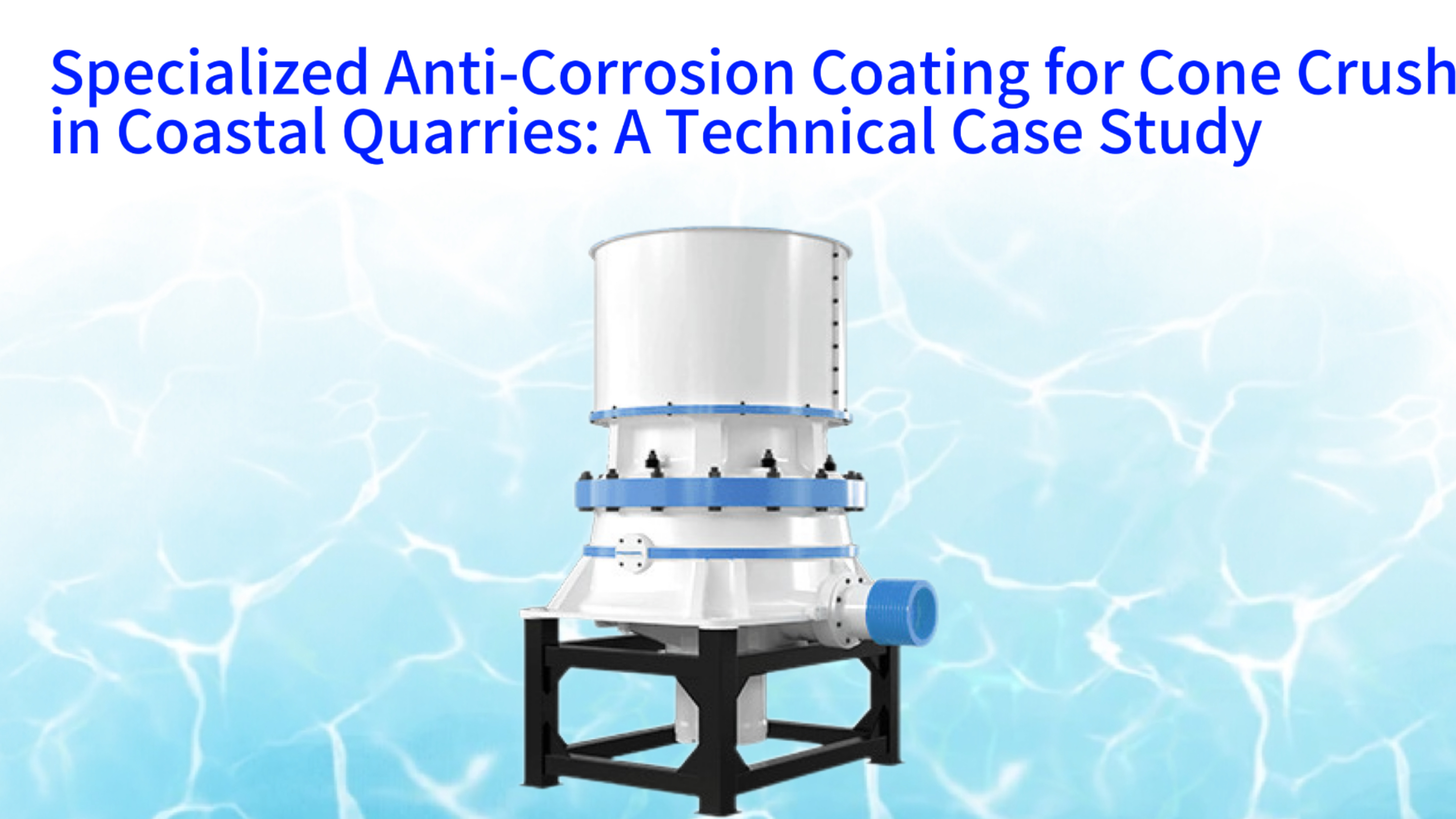
Overall Corrosion Protection Workflow for Coastal Cone Crushers
1. Environment Analysis
C5-M Corrosion Assessment
2. Coating System Design
Multi-Layer Defense Setup
3. Execution & Preparation
Sa 2.5 Blasting & Coating
4. Verification & Monitoring
NDT & Scheduled Inspections
5. Benefit Realization
Extended Lifespan & ROI
Operating heavy industrial machinery like cone crushers in coastal environments presents a distinct and formidable set of challenges. The persistent presence of salt-laden air, elevated humidity, and intense ultraviolet radiation creates a highly corrosive atmosphere that aggressively attacks unprotected steel components. This case study provides a comprehensive examination of a proven strategy to combat this degradation: the application of advanced, multi-layer anti-corrosion coating systems. We will analyze the specific corrosion mechanisms at work in seaside quarries, detail the scientific methodology for coating selection and surface preparation, and outline rigorous quality control protocols. Furthermore, a thorough evaluation of the long-term performance and economic return on investment demonstrates how this proactive approach significantly extends equipment service life, reduces unscheduled maintenance, and ensures operational continuity for crushing plants located near marine settings.
The Aggressive Corrosion Environment of Coastal Operations
Coastal Corrosion Environment: Impacts & Mechanisms
| Corrosion Factor | Mechanism | Timeframe of Impact | Key Consequence |
|---|---|---|---|
| Salt-Laden Air (NaCl) | Hygroscopic Electrolyte Film Formation | Continuous | Localized Pitting & Crevice Corrosion |
| UV Radiation + Thermal Cycling | Polymer Binder Degradation & Coating Delamination | Daily/Seasonal | Coating Chalking & Adhesion Loss |
| Unprotected Steel Components | Electrochemical Metal Dissolution | 18 - 24 Months | Significant Structural Section Loss |
| Corroded Hydraulic Cylinders/Bolts | Material Degradation & Seizure | 5 - 12 Months | Unscheduled Downtime & Leaks |
Coastal and offshore quarry sites subject machinery to an unrelenting assault from environmental factors far more severe than typical inland conditions. The constant suspension of microscopic salt particles in the air, driven by wind and wave action, settles on every exposed surface. This salt, primarily sodium chloride, is hygroscopic, meaning it actively attracts and retains moisture from the humid marine air. The result is a perpetual, thin electrolyte film coating the metal, which facilitates rapid electrochemical corrosion processes. Unlike the gradual oxidation seen in dry climates, this environment promotes localized pitting and crevice corrosion, which can penetrate deep into structural components long before visible surface rust becomes widespread. The combination of UV radiation from intense sunlight and thermal cycling from daily temperature fluctuations further degrades standard protective paints, causing them to become brittle, chalk, and lose adhesion.
For cone crushers, this environmental cocktail has a disproportionately damaging effect on productivity and maintenance budgets. Critical but often overlooked areas, such as the main frame assembly, the hydraulic adjustment ring, the external surfaces of the clamping cylinders, and the myriad of bolted connection points, are exceptionally vulnerable. Field data indicates that in such environments, unprotected or inadequately painted structural components can experience significant corrosion-related section loss within 18 to 24 months. This degradation compromises structural integrity, leads to hydraulic fluid leaks from corroded cylinder housings, and causes bolts to seize, transforming routine maintenance tasks into complex, time-consuming repair operations. The financial impact extends beyond part replacement, encompassing costly production downtime and the safety risks associated with weakened load-bearing structures.
Electrochemical Mechanisms of Salt-Induced Corrosion
The primary driver of metal loss in marine settings is an electrochemical reaction initiated by chloride ions. When a saltwater film covers steel, it creates an anode and a cathode on the metal surface. At the anode sites, iron atoms lose electrons and dissolve into the solution as ferrous ions, a process fundamentally constituting metal loss. The released electrons travel through the steel to cathode areas, where they combine with oxygen and water to form hydroxide ions. The chloride ions are not consumed but act as a persistent catalyst, aggressively penetrating microscopic defects in paint films and breaking down passive oxide layers that might otherwise protect the steel. This process leads to the characteristic deep pits that can cause functional failure even when the majority of a component's surface appears intact, representing a significant threat to the longevity of a cone crusher's main frame and other vital structures.
The Physical Degradation Cycle of Coatings
Beyond electrochemical attack, the physical environment systematically breaks down protective barriers. Daily cycles of warming and cooling cause the underlying steel and the applied coating to expand and contract at different rates. This differential movement induces stress at the coating-substrate interface, leading to the formation of micro-cracks and a gradual loss of adhesion known as delamination. Simultaneously, high-intensity ultraviolet radiation from the sun photochemically degrades the polymer binders in many organic coatings. This degradation manifests as chalking, where the surface layer powders and erodes, and as a loss of gloss and flexibility. Once the coating's integrity is compromised, even at a microscopic level, it provides a direct pathway for moisture and chloride ions to reach the steel substrate, accelerating the corrosion process exponentially and undermining the crusher's operational reliability.
Designing a Multi-Layer Coating Defense System
Multi-Layer Coating System (ISO 12944 C5-M)
| Coating Layer | Key Material | Core Function | Critical Specifications | Target Application |
|---|---|---|---|---|
| Primer | Epoxy-Based Zinc-Rich | Galvanic Cathodic Protection | ≥80% Zn Dry Film Weight; Excellent Adhesion | Main Frame, Adjusting Ring |
| Intermediate | High-Build Epoxy | Physical Barrier & Insulation | Thick Dry Film; Low Corrosive Diffusion | Clamping Cylinders, Bolted Connections |
| Topcoat | Aliphatic Polyurethane / Fluoropolymer | UV & Chemical Weathering Resistance | Gloss Retention; Flexibility; Impact Resistance | External Exteriors, Mining & Quarrying Equipment |
Combating the severe coastal corrosion category, classified as C5-M in the ISO 12944 standard, requires a systematic, multi-stage coating strategy rather than a single layer of paint. This strategy is analogous to building a fortress with multiple defensive walls, each serving a specific and complementary function. The selection process begins with a meticulous assessment of the operational environment, considering not just atmospheric salinity but also factors like potential immersion, abrasion from wind-blown sand, and chemical exposure. The chosen coating system must work in harmony, from the initial primer that bonds to the steel to the final topcoat that faces the elements. This engineering approach ensures long-term protection for demanding applications across various mining and quarrying sectors where equipment durability is paramount.
The foundation of any effective system is the surface preparation and the primer. For coastal applications, a primer containing a high loading of zinc dust is typically specified. This zinc-rich primer provides galvanic or cathodic protection. In this mechanism, the zinc particles, being more electrochemically active than steel, sacrificially corrode first when the coating is breached, thereby protecting the underlying iron substrate. Above this, a high-build epoxy intermediate coat is applied. This layer serves to dramatically increase the total dry film thickness of the system, creating a formidable physical barrier that lengthens the diffusion path for corrosive agents. Its primary role is one of superior insulation and barrier protection, enhancing the overall robustness of the defense.
The Critical Role of the Primer Layer
The primer is the most critical layer for ensuring long-term adhesion and initiating active corrosion protection. Epoxy-based zinc-rich primers are favored for their excellent adhesion to properly prepared steel and their robust sacrificial protection. The zinc content, often comprising over 80% of the dry film weight, ensures a continuous conductive matrix that remains electrochemically active. For maximum durability on components like the adjusting ring which undergoes mechanical stress, the application must achieve a uniform, specified film thickness to guarantee a sufficient reservoir of zinc for prolonged protection, even if the top layers are locally damaged by impact or abrasion during service.
Selecting the Final Topcoat for Durability
The topcoat serves as the first line of defense against environmental weathering and must possess exceptional durability. Aliphatic polyurethane topcoats are widely specified for this purpose due to their outstanding resistance to UV radiation, which prevents chalking and gloss loss, and their excellent mechanical properties including flexibility and impact resistance. For the most severe exposures, fluoropolymer-based topcoats offer even greater longevity and color retention, though at a higher initial cost. The topcoat's formulation also includes additives for chemical resistance, ensuring it can withstand not just salt spray but also occasional exposure to fuels, lubricants, and other chemicals present in a quarry environment, thereby safeguarding the aesthetic and protective qualities of the entire coating system on visible crusher exteriors.
Execution: Surface Preparation and Precision Application
Surface Preparation & Coating Execution (C5-M Standard)
| Execution Item | International Standard | Key Parameters | Control Requirements | Target Component |
|---|---|---|---|---|
| Surface Preparation | ISO 8501-1 (Sa 2.5) | 50 - 100 μm Surface Profile;<5% Stain Remaining | Remove Mill Scale, Rust, Oil & Grease Completely | Main Shaft Housing |
| Coating Application | ISO 12944 | Specified Wet/Dry Film Thickness; No Pinholes/Runs | Steel Temp > Dew Point; Certified Technicians | Hydraulic Adjustment Ring |
| Recoat Window | Coating Manufacturer Specs | Timeframe Varies by Temperature & Chemistry | Avoid Early/Late Recoating; Ensure Intercoat Adhesion | Clamping Cylinders |
| Curing Process | ASTM Coating Standards | Full Chemical/Mechanical Property Development | Monitor Temp & Humidity; Avoid Solvent Trapping | Bolted Connection Points |
The performance of even the most technologically advanced coating system is entirely dependent on the quality of the surface preparation and the control of the application environment. Industry experts often state that the longevity of a coating is seventy percent determined by surface preparation and only thirty percent by the paint itself. For structural steel in a C5-M environment, the international standard mandates abrasive blast cleaning to a minimum level of Sa 2.5. This process must remove all mill scale, rust, previous coatings, and any surface contaminants such as oil or grease, leaving a uniformly clean, grey-metallic substrate. Crucially, this cleaning must also create a specific surface profile or anchor pattern, typically between 50 and 100 micrometers, to provide the mechanical keying necessary for the primer to achieve optimal adhesion strength.
Following preparation, the application phase requires strict environmental controls. Coatings must not be applied when the surface temperature of the steel is at or below the dew point, as this leads to condensation and subsequent adhesion failure. Temperature and humidity ranges specified by the coating manufacturer must be rigorously adhered to. The application itself, whether by airless spray or other advanced methods, must be conducted by certified technicians to ensure each coat achieves its specified dry film thickness without runs, sags, or pinholes. Intervals between coats, known as recoat windows, are critical; applying a subsequent layer too soon or too late can compromise intercoat adhesion. This level of precision is essential for protecting complex assemblies such as the main shaft housing and other critical geometries.
Achieving the Required Surface Cleanliness Standard
Abrasive blasting is the only method capable of consistently achieving the Sa 2.5 standard required for long-term coastal protection. This standard, defined by ISO 8501-1, requires that all visible mill scale, rust, and previous coatings be completely removed, with any remaining stains limited to no more than 5% of the unit area. The process utilizes controlled propulsion of abrasive media, such as steel grit or copper slag, at high velocity to clean and profile the steel. The resulting surface must be free of all dust and abrasive residues before primer application, a step typically achieved using clean, dry, oil-free compressed air and vacuum equipment. This meticulous preparation is non-negotiable for ensuring the coating system's designed service life, a principle well-understood through extensive field experience.
Controlled Application and Curing Parameters
The successful application of multi-layer coatings is a science of controlled parameters. Ambient conditions, including air temperature, relative humidity, and steel temperature, are continuously monitored and recorded. Modern airless spray equipment is calibrated to deliver the correct pressure and fluid output to achieve the specified wet film thickness, which is verified on-site using wet film thickness gauges. After application, the curing process is equally important. Each coat must be allowed to cure sufficiently before the next is applied, a timeframe that varies with temperature and the specific chemistry of the product. Rushing this process can trap solvents, leading to soft films and poor intercoat adhesion, while excessive delay can require abrasive sweep blasting to reintroduce a profile, adding cost and time. Proper curing ensures the coating develops its full chemical and mechanical properties.
Verification and Long-Term Performance Monitoring
Verification & Long-Term Performance Monitoring
| Testing/Monitoring Method | Relevant Standard | Core Purpose | Key Metrics | Application Scenario |
|---|---|---|---|---|
| Dry Film Thickness (DFT) Gauge | ISO 2808 | Verify Coating Barrier Thickness | Compliance with Specified Minimum Thickness | All Coated Components, Aggregate Processing Equipment |
| Pull-Off Adhesion Testing | ASTM D4541 | Quantify Coating-Substrate Adhesion | Tensile Strength for Coating Detachment | Main Frame, Adjusting Ring |
| Holiday Detection | ASTM D5162 | Identify Pinholes/Voids in Coating | Low/High Voltage Leakage Detection | Epoxy Intermediate & Topcoat Layers |
| Visual Corrosion Rating | ASTM D610 (Rust), ASTM D714 (Blistering) | Long-Term Coating Degradation Tracking | Standardized Rust/Blister Severity Rating | Quarterly/Biannual Scheduled Inspections |
Implementing a high-performance coating system necessitates a parallel regime of verification and ongoing surveillance to ensure the as-built condition matches the design intent and to track its performance over time. This process begins with immediate post-application inspections before the equipment is returned to service. Key metrics include the final dry film thickness, measured at multiple points with a magnetic or electronic gauge to ensure compliance with the specification minimums, and adhesion testing, often performed using a simple cross-cut test or a more quantitative pull-off adhesion tester. These initial checks provide a baseline quality record and confirm that the application was executed correctly.
Long-term monitoring shifts the focus from construction quality to in-service durability. Establishing a scheduled inspection program, conducted quarterly or biannually, is essential. During these inspections, trained personnel visually assess the coating for early signs of failure modes specific to marine environments: underfilm corrosion, blistering, chalking, cracking, or delamination. The location and extent of any defects are documented photographically and logged. This proactive monitoring allows for the planning of targeted, minor touch-up repairs during planned maintenance shutdowns, preventing small defects from escalating into widespread coating failure and substrate corrosion. This systematic approach to asset preservation is a hallmark of professional plant management for aggregate processing facilities.
Establishing a Baseline with Non-Destructive Testing
Non-destructive testing methods are indispensable for creating an objective baseline of the coating system's installed quality. Dry film thickness gauges provide a quantitative measure of whether the specified barrier thickness has been achieved across all geometries. Adhesion testing, particularly the pull-off method described in ASTM D4541, quantitatively measures the tensile strength required to detach a coating from the substrate. This data provides a numerical benchmark for future comparisons. Additionally, holiday detection, using low- or high-voltage detectors, is employed on all coats to identify any pinholes or voids in the insulating layers that could become initiation sites for corrosion. These tests collectively form a comprehensive quality assurance dossier for the coated asset.
Implementing a Proactive Inspection and Maintenance Schedule
The transition from reactive to proactive maintenance is achieved through a disciplined inspection schedule. This schedule should detail the specific components to be examined, such as weld seams, sharp edges, and areas behind liners that are prone to moisture entrapment. Inspection reports should utilize standardized rating systems for rust and blistering, such as those outlined in ASTM D610 and D714, to ensure consistency over time and between different inspectors. The findings from these regular inspections directly feed into the maintenance planning process, enabling the scheduling of necessary repairs during the next available operational window, thereby avoiding costly emergency interventions and unplanned production stoppages that disrupt material supply.
Quantifying the Economic and Operational Benefits
Economic & Operational Benefits Quantification
| Benefit Category | Standard Coating (5-Year Lifespan) | Advanced C5-M Coating (15-Year Lifespan) | Key Improvement |
|---|---|---|---|
| Component Replacement Cost | Frequent (Every 5 Years); High Capital Expense | Minimal (Every 15 Years); Deferred Capital Expense | Tripled Service Interval; 66% Reduction in Replacement Costs |
| Operational Downtime | High Unscheduled Downtime; Corrosion-Related Failures | Low; Predictable Maintenance During Planned Shutdowns | Significantly Improved Equipment Availability & Utilization |
| Lifecycle Cost (15-20 Years) | High (Frequent Repaints, Replacements, Production Losses) | Low (Higher Initial Cost, Minimal Ongoing Expenses) | Positive ROI Achieved Within First Few Years |
| Asset Valuation & Safety | Reduced Residual Value; Corrosion-Related Safety Risks | High Residual Value; Preserved Structural Integrity | Safer Working Environment; Greater Financial Flexibility |
| Production Efficiency | Compromised Crushing Ratio; Reduced Energy Efficiency | Maintained Design Parameters; Optimal Energy Efficiency | Consistent Cost-Effective Production in Competitive Markets |
The decision to invest in a specialized, high-durability coating system is fundamentally justified by a compelling economic and operational return on investment. While the initial capital outlay is higher than that for a standard industrial paint scheme, the total cost of ownership over the asset's lifespan is dramatically reduced. The most direct financial benefit is the extension of component service life. For example, a structural component like a crusher base frame that might require major repair or replacement due to corrosion after 5 years under a standard system can often remain in sound condition for 15 years or more with a proper C5-M coating, effectively tripling its service interval and deferring a major capital expense.
Operational benefits are equally significant. The reduction in corrosion-related failures translates directly into increased equipment availability and utilization. Unscheduled downtime, which is extraordinarily costly in terms of lost production and emergency labor, is minimized. Maintenance activities become more predictable and can be scheduled during planned plant shutdowns, improving overall operational efficiency. Furthermore, preserving the structural integrity of the crusher ensures that it operates within its original design parameters, maintaining optimal crushing ratio and energy efficiency, which are critical for cost-effective production in competitive markets. The cumulative effect is a stronger, more reliable production line with lower operating costs.
Lifecycle Cost Analysis and Return on Investment
A formal lifecycle cost analysis provides a clear financial picture. This analysis compares the present value of all costs associated with different coating strategies over a defined period, typically 15 to 20 years. For a standard system, costs include more frequent full repaints, potential steel replacement, and the production losses from more frequent and longer downtime episodes. For the advanced system, the analysis accounts for the higher initial application cost, but then factors in vastly reduced repaint frequency, minimal corrective maintenance, and higher overall equipment availability. In nearly all cases for coastal applications, the advanced system demonstrates a lower total lifecycle cost and a positive return on investment within the first few years, making it the economically rational choice for responsible asset management.
Enhancing Safety and Asset Valuation
The benefits extend beyond direct economics into the realms of safety and asset valuation. Corroded structures pose inherent safety risks; thinning metal can lead to catastrophic failure under load. A robust coating system that preserves metal thickness directly contributes to a safer working environment by maintaining the crusher's structural integrity. From a financial and accounting perspective, well-maintained equipment retains a higher residual value. A cone crusher with documented, high-standard corrosion protection is a more valuable asset on a company's balance sheet and is significantly more attractive in the used equipment market, providing greater financial flexibility. This holistic view of value preservation underscores the strategic importance of the investment.
Synthesizing Best Practices for Lasting Protection
Best Practices for Long-Term Coastal Corrosion Protection
| Best Practice Category | Core Actions | Key Objectives | Target Impact |
|---|---|---|---|
| Maintenance Culture Integration | Standardize Coating Protection SOPs; Stock Proper Touch-Up Materials; Scheduled Coating Inspections | Embed Corrosion Protection into Routine Maintenance | Maximize Coating Lifespan; Minimize Small Defect Escalation |
| Technical Partnership | Collaborate with Corrosion Experts; Access Latest Polymer Technology; Tailor to Micro-Climate | Address Unique Coastal & Equipment Challenges | Optimize Coating System for Specific Jaw Crusher/Cone Crusher Needs |
| Documentation & Knowledge Management | Retain Coating Specs, Preparation Reports, Inspection Data & Maintenance Records | Build Institutional Knowledge; Enable Informed Decision-Making | Support Future Repairs/Upgrades; Provide Clear Asset Audit Trail |
| Long-Term Mindset | View Corrosion Protection as a Core Asset Component; Prioritize Lifecycle Cost Over Initial Cost | Ensure Resilient & Profitable Coastal Operations | Maximize ROI of Multi-Cylinder Hydraulic Cone Crushers & Other Assets |
The successful implementation of a corrosion management strategy for coastal crushing equipment is not a one-time event but an ongoing commitment integrated into the operational philosophy. It begins with the recognition of the environment as a key design factor and the selection of equipment designed and finished for such duty. Partnering with coating suppliers and applicators who possess specific expertise in the C5-M marine corrosion category is crucial, as their technical guidance on product selection and application specifics is invaluable. The commitment must extend to the training of on-site maintenance personnel, ensuring they understand the importance of the coating system and are equipped to perform competent inspections and proper touch-up repairs using the correct materials and techniques.
Documenting every step creates an institutional knowledge base that pays dividends over decades. This includes retaining records of the coating specification, surface preparation reports, application parameters, inspection results, and all maintenance interventions. This history allows for informed decision-making when planning repairs or upgrades and provides a clear audit trail for asset management. Ultimately, viewing advanced corrosion protection not as a discretionary expense but as a fundamental and necessary component of the capital asset itself leads to more resilient and profitable operations. This mindset ensures that machinery such as a multi-cylinder hydraulic cone crusher, a significant investment, delivers its full potential over an extended service life despite the challenging coastal setting.
Integrating Protection into the Maintenance Culture
For long-term success, corrosion protection must be woven into the fabric of the plant's maintenance culture. This involves creating and enforcing standard operating procedures that protect coated surfaces during routine servicing, such as using proper lifting points and avoiding impact damage. It means stocking the correct touch-up paint materials and ensuring they are readily available for quick repairs. It also requires that the coating system's inspection be a formal, scheduled line item in the preventative maintenance software, with the same priority as checking lubrication levels or wear liner thickness. When every member of the operational team views the preservation of the coating as integral to machine health, the system's longevity is maximized, safeguarding productivity.
The Role of Technical Partnership and Experience
Navigating the complexities of high-performance coating systems for severe environments benefits greatly from established technical partnerships. Collaborating with material scientists and engineers who specialize in industrial corrosion mitigation provides access to the latest advancements in polymer technology and application methodologies. This expertise is particularly valuable when addressing unique challenges, such as protecting the intricate components of a jaw crusher feed opening or the high-wear areas around a crushing chamber. The value of applied experience, accumulated over numerous projects in diverse and demanding settings, cannot be overstated when tailoring a generic specification to the precise needs of a specific machine operating in a unique micro-climate.